Wake Tech’s business training programs are designed to boost your resume and sharpen the skills employers value.
Gain practical knowledge in areas like Lean Six Sigma, notary services, developing clear organizational procedures and communicating effectively across generations and cultures. Whether you’re looking to advance your career or expand your skill set, our courses give you the tools to stand out in today's workplace.
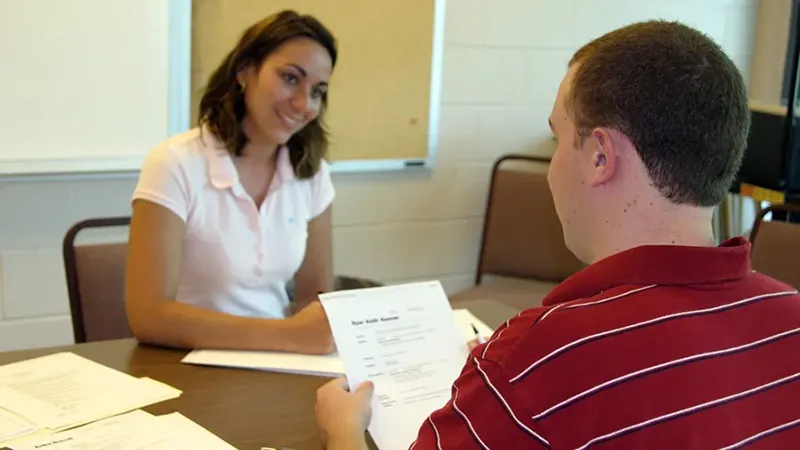
Ready to land your dream job? Get resume tips and interview coaching at Wake Tech's Career Services Office.









Business Career Field Courses
Activity Coordinator for Long-Term Care
- Course ID: HSE-3264A4
- Overview
- Course Outline
- Requirements
- Intended Audience
- More Details
Course Objectives
Upon successfully completion of this course, participants will be able to perform the skills necessary to develop a program of activities in accordance with federal and state regulations and the interests and physical, mental and psychological well-being of each resident in long-term care. Participants are qualified to work in a nursing facility as an activity coordinator/director.
Outline of Instruction
Overview of the Activity Professional (Historical background, agencies and institutions, the activity professional and regulations)
Human Development (Introduction, physical changes in body appearance and composition and impact of illness and dysfunction on normal aging medications)
The Elderly (Universal needs of the elderly, human development and aging, spirituality of aging and psychosocial needs of the elderly)
Standards of Practice (Code of ethics, personal health management, personal characteristics, professional standards, professional attitude toward residents and right-to-life/right-to-die issues)
Communication with Residents and Staff
Activity Care Planning for Quality of Life (Frame of reference for care planning and documentation)
Methods of Service Delivery in the Activity Profession (Resident, program scope and adaptations)
Contact Hours
60
CEUs
Yes
Industry Standard, State or National Certification
Certification
None
Website
None
Certification Learning Outcomes/Requirements
CE or CU Articulation
No
Prerequisites
High school diploma
Learning Supplies Needed
All required handouts provided by the instructor. Recommended textbook "Long-Term Care for Activity Professionals and Recreation Therapy" by Elizabeth Best-Martini, MS CTRS, ACC Mary Anne Weeks, MPH, SSC, and Pricilla Wirth, MS, RRA ISBN :978 1882 883691
Clinical Site/Special Facilities
25 hours of practicum are required. Students are responsible to complete their practicum by the end of the class. Instructor will guide the students with referrals for practicum.
Requirements for Successful Completion
90% attendance
All required assignments and practicum sessions must be completed.
Accreditation/Special Approval Requirements
N/A
Intended Audience
People who have a strong desire to help individuals in a senior environment.
Specific Industry or Business Support Needs
Nursing home, adult day care homes, health care facilities, senior center camps
Wake County Need for Industry Positions
NC Works
Industry or Job Titles Related to Training Outcomes for Employment
Activity planners
Activity coordinator
Activity supervisor
No active courses available at this time.
To be notified when this course becomes available, please use
Wake Tech’s Notify Me service
for HSE-3264A4-Activity Coordinator for Long-Term Care
.
Business & Marketing Writing
- Course ID: COM-3711GE
- Overview
- Course Outline
- Requirements
- Intended Audience
- More Details
Course Objectives
Learn how business and marketing objectives affect writing choices.
Study practical writing instruction in grammar, clarity, structure and more.
Understand issues unique to this discipline, such as buzzwords, working with a team, and marketing ethics.
Outline of Instruction
Lesson 1 - The Role of Business and Marketing Writing
The first lesson starts off with a discussion about the purpose of marketing and the goals of writing, and then talks about the unique roles, responsibilities, and challenges of business and marketing writing. You'll learn exactly what business and marketing writers do as you begin exploring this exciting field.
Lesson 2 - The Ins and Outs of Image
Before you can write or recognize successful copy, you'll need to understand your corporate identity: who the company is and what the company offers. In this lesson, you'll delve into all the aspects of corporate image that writers and marketing professionals need to ponder before producing effective projects.
Lesson 3 - Writing Approaches and Strategies
Now that you understand image, what can you do with it? In this lesson, you'll analyze business and marketing goals-and the needs of your audience-to figure out the appropriate writing style for any project.
Lesson 4 - Media
It's a creative field, but certain projects require certain conventions. In this lesson, you'll see how a particular medium or project type can guide your writing style and approach, helping you save time and stay on target.
Lesson 5 - Putting It All Together: Writing Project
This lesson will gather up the information you explored in the previous four lessons and put it all together. It will illustrate how to apply everything you've learned so far as you develop an original writing project from start to finish.
Lesson 6 - Complete and Incomplete Sentences
Do you need to write in complete sentences? What is a complete sentence, anyway? This lesson will give you a brief refresher on sentence construction and then go over some guidelines for using fragments in business writing. You'll also learn to recognize and fix one of the most common errors in modern writing: the comma splice.
Lesson 7 - Word Choices
You can't write without words! In this lesson, you'll learn to make accurate word choices. The lesson will discuss the level of vocabulary appropriate for business writing and show you how to choose words that reinforce a project's theme. It'll also clarify some tricky word pairs and discuss word-choice problems whose usage can undermine the professionalism of your writing.
Lesson 8 - Internal Communication
In this lesson, you'll take a critical look at the inside of a company. First, you'll see how to develop "marketing" projects for audiences within a company. Then you'll explore the roles of the various specialists who contribute to a single marketing piece-bosses, clients, editors, junior writers, artists, and designers. You'll learn how to work with all of them to create smoother relationships and better projects.
Lesson 9 - Banishing the Bureaucracy
For even the most experienced writers, bureaucratic influences can creep in to reduce creativity and impede communication. In this lesson, you'll take a look at buzzwords and jargon, and then explore some ways to achieve maximum power and effectiveness by keeping your writing clear, concise, and active.
Lesson 10 - Editing, Proofreading and Evaluating
In this lesson, you'll explore the final steps. You'll learn to enhance and refine business and marketing projects during the editing and proofreading processes. You'll also learn to evaluate finished pieces and even test their effectiveness in the real world!
Lesson 11 - Putting It All Together: Editing Project
In this lesson, you'll once again be putting it all together, but this time as an editor. You'll apply everything you've learned so far in the course, editing a project from beginning to end.
Lesson 12 - Marketing Ethics
Marketing involves images, and it's easy to lose sight of the truth. In the final lesson of the course, you'll go over some important considerations that marketing professionals need to think about.
Contact Hours
24
CEUs
Yes
Industry Standard, State or National Certification
Certification
None
Website
None
Certification Learning Outcomes/Requirements
CE or CU Articulation
No
Prerequisites
There are no prerequisites to take this course.
Learning Supplies Needed
Hardware Requirements:
This course can be taken on either a PC, Mac, or Chromebook.
Software Requirements:
PC: Windows 8 or later.
Mac: macOS 10.6 or later.
Browser: The latest version of Google Chrome or Mozilla Firefox are preferred. Microsoft Edge and Safari are also compatible.
Adobe Acrobat Reader.
Software must be installed and fully operational before the course begins.
Other:
Email capabilities and access to a personal email account.
Instructional Material Requirements:
The instructional materials required for this course are included in enrollment and will be available online.
Clinical Site/Special Facilities
None
Requirements for Successful Completion
90% attendance
• Students must successfully pass 10 quizzes with a minimum grade of 70% by the second quiz attempt.
• If all quizzes are not passed with 70 or better by the second attempt, the final exam score must be 70% or higher on the first attempt for successful completion.
• The Final Exam must be taken by the Wake Tech course end date
Accreditation/Special Approval Requirements
N/A
Intended Audience
This course is for you if you are interested in expanding your writing skills and learning to create copy that achieves business and marketing goals.
Specific Industry or Business Support Needs
N/A
Wake County Need for Industry Positions
N/A
Industry or Job Titles Related to Training Outcomes for Employment
Related Courses
Course Contact Information
Non-Credit Online Learning https://ceonline.waketech.edu
919-532-5847
[email protected]
No active courses available at this time.
To be notified when this course becomes available, please use
Wake Tech’s Notify Me service
for COM-3711GE-Business & Marketing Writing
.
The Keys to Effective Editing
- Course ID: COM-3711LE
- Overview
- Course Outline
- Requirements
- Intended Audience
- More Details
Course Objectives
Learn essential self-editing tools to give their manuscripts the professional look that publishers like to see.
Learn about recent advances in the chosen profession.
Study the fundamentals of top-notch editing for both fiction and nonfiction.
Outline of Instruction
Lesson 1 - What Editors Do
Lesson 2 - The Mechanics of Copyediting
Lesson 3 - Tools to Increase Accuracy
Lesson 4 - Grammar and Punctuation
Lesson 5 - Spelling, Capitalization, and Numbers
Lesson 6 - Syntax and Style
Lesson 7 - Abbreviations and Hyphens, Bibliographies and Copyright Law
Lesson 8 - Photos and Tables, Front and Back Matter
Lesson 9 - Fiction Editing
Lesson 10 - The Editor-Author-Publisher Relationship
Lesson 11 - Word Usage
Lesson 12 - Finding Work as an Editor
Contact Hours
24
CEUs
Yes
Industry Standard, State or National Certification
Certification
None
Website
None
Certification Learning Outcomes/Requirements
CE or CU Articulation
No
Prerequisites
Although this course will teach English grammar, punctuation, and style, you must be fluent in English and have a better-than-average spelling ability.
Learning Supplies Needed
Hardware Requirements:
This course can be taken on either a PC, Mac, or Chromebook.
Software Requirements:
PC: Windows 8 or later.
Mac: macOS 10.6 or later.
Browser: The latest version of Google Chrome or Mozilla Firefox are preferred. Microsoft Edge and Safari are also compatible.
Adobe Acrobat Reader.
Software must be installed and fully operational before the course begins.
Other:
Email capabilities and access to a personal email account.
Instructional Material Requirements:
The instructional materials required for this course are included in enrollment and will be available online.
Clinical Site/Special Facilities
None
Requirements for Successful Completion
90% attendance
• Students must successfully pass 10 quizzes with a minimum grade of 70% by the second quiz attempt.
• If all quizzes are not passed with 70 or better by the second attempt, the final exam score must be 70% or higher on the first attempt for successful completion.
• The Final Exam must be taken by the Wake Tech course end date
Accreditation/Special Approval Requirements
N/A
Intended Audience
This course is intended for anyone aspiring to be an editor!
Specific Industry or Business Support Needs
N/A
Wake County Need for Industry Positions
N/A
Industry or Job Titles Related to Training Outcomes for Employment
Related Courses
Course Contact Information
Non-Credit Online Learning https://ceonline.waketech.edu
919-532-5847
[email protected]
No active courses available at this time.
To be notified when this course becomes available, please use
Wake Tech’s Notify Me service
for COM-3711LE-The Keys to Effective Editing
.
Writing Effective Grant Proposals
- Course ID: COM-3711ME
- Overview
- Course Outline
- Requirements
- Intended Audience
- More Details
Course Objectives
Prepare to help the causes they most admire.
Learn how to become fully familiar with the institution or project for which they are requesting support.
Discover how to put everything together so you can assemble, write, and submit complete grant proposals to foundations, corporations, and wealthy individuals for any number of your pet projects.
Outline of Instruction
Lesson 1 - The Writing Style You Will Need for Your Grant Proposal
Lesson 2 - Thinking About Your Institution the Way Grantors Do
Lesson 3 - Information You Will Need for Your Grant Proposal
Lesson 4 - Special Characteristics of Non-Profit Organizations
Lesson 5 - Finding Funding Sources-Foundations
Lesson 6 - Finding Out About Your Foundation Prospects
Lesson 7 - Finding Out About Your Corporate Prospects
Lesson 8 - Doing the Numbers
Lesson 9 - Assembling Your Proposal
Lesson 10 - So You Don't Get a Gift-What Now?
Lesson 11 - So You Get a Gift-What Now?
Lesson 12 - Some Thoughts About Writing Grant Proposals to Individuals
Contact Hours
24
CEUs
Yes
Industry Standard, State or National Certification
Certification
None
Website
None
Certification Learning Outcomes/Requirements
CE or CU Articulation
No
Prerequisites
There are no prerequisites to take this course.
Learning Supplies Needed
Hardware Requirements:
This course can be taken on either a PC, Mac, or Chromebook.
Software Requirements:
PC: Windows 8 or later.
Mac: macOS 10.6 or later.
Browser: The latest version of Google Chrome or Mozilla Firefox are preferred. Microsoft Edge and Safari are also compatible.
Adobe Acrobat Reader.
Software must be installed and fully operational before the course begins.
Other:
Email capabilities and access to a personal email account.
Instructional Material Requirements:
The instructional materials required for this course are included in enrollment and will be available online.
Clinical Site/Special Facilities
None
Requirements for Successful Completion
90% attendance
• Students must successfully pass 10 quizzes with a minimum grade of 70% by the second quiz attempt.
• If all quizzes are not passed with 70 or better by the second attempt, the final exam score must be 70% or higher on the first attempt for successful completion.
• The Final Exam must be taken by the Wake Tech course end date
Accreditation/Special Approval Requirements
N/A
Intended Audience
If you are interested in writing effective grants, this course is for you!
Specific Industry or Business Support Needs
N/A
Wake County Need for Industry Positions
N/A
Industry or Job Titles Related to Training Outcomes for Employment
Related Courses
Course Contact Information
Non-Credit Online Learning https://ceonline.waketech.edu
919-532-5847
[email protected]
No active courses available at this time.
To be notified when this course becomes available, please use
Wake Tech’s Notify Me service
for COM-3711ME-Writing Effective Grant Proposals
.
Project Management Fundamentals
- Course ID: MLS-3810IE
- Overview
- Course Outline
- Requirements
- Intended Audience
- More Details
Course Objectives
Master the essentials of project management.
Learn about project politics and ethics, project measurements, and project closure.
Develop a variety of powerful techniques to generate project ideas.
Outline of Instruction
Lesson 1 - Project Management Overview
Lesson 2 - The Power of Planning
Lesson 3 - The Power of Control
Lesson 4 - The Project Manager and the Project Team
Lesson 5 - Stakeholder Interactions and Expectations
Lesson 6 - Project Management Soft Skills
Lesson 7 - Project Cost Management
Lesson 8 - The Project Plan (Part 1)
Lesson 9 - The Project Plan (Part 2)
Lesson 10 - Project Implementation
Lesson 11 - Project Control
Lesson 12 - Project Closure
Contact Hours
24
CEUs
Yes
Industry Standard, State or National Certification
Certification
None
Website
None
Certification Learning Outcomes/Requirements
CE or CU Articulation
No
Prerequisites
There are no prerequisites to take this course.
Learning Supplies Needed
Hardware Requirements:
This course can be taken on either a PC, Mac, or Chromebook.
Software Requirements:
PC: Windows 8 or later.
Mac: macOS 10.6 or later.
Browser: The latest version of Google Chrome or Mozilla Firefox are preferred. Microsoft Edge and Safari are also compatible.
Adobe Acrobat Reader.
Applications must be installed and fully operational before the course begins.
Other:
Email capabilities and access to a personal email account.
Instructional Material Requirements:
The instructional materials required for this course are included in enrollment and will be available online.
Clinical Site/Special Facilities
None
Requirements for Successful Completion
90% attendance
• Students must successfully pass 10 quizzes with a minimum grade of 70% by the second quiz attempt.
• If all quizzes are not passed with 70 or better by the second attempt, the final exam score must be 70% or higher on the first attempt for successful completion.
• The Final Exam must be taken by the Wake Tech course end date.
Accreditation/Special Approval Requirements
N/A
Intended Audience
This course is intended for project managers or project team members.
Specific Industry or Business Support Needs
N/A
Wake County Need for Industry Positions
N/A
Industry or Job Titles Related to Training Outcomes for Employment
Related Courses
Course Contact Information
Non-Credit Online Learning https://ceonline.waketech.edu
919-532-5847
[email protected]
| Details | Section | Date(s) | Location | Price | Seats | |
|---|---|---|---|---|---|---|
| 334042 | 10/14/26 - 12/04/26 | Online | 77.00 | 15 | Register |
If you would like to be notified when additional sections become available, please use Wake Tech’s Notify Me service for MLS-3810IE-Project Management Fundamentals .
Effective Business Writing
- Course ID: SEF-3001EE
- Overview
- Course Outline
- Requirements
- Intended Audience
- More Details
Course Objectives
Study brainstorming technique that will help make writing easier and more fun for you right away.
Learn how to disentangle the efforts of your creative and critical sides, and you'll come to understand why both sides are important components of good writing.
Learn why writing is one of the best problem-solving tools around.
Outline of Instruction
Contact Hours
24
CEUs
Yes
Industry Standard, State or National Certification
Certification
None
Website
None
Certification Learning Outcomes/Requirements
CE or CU Articulation
No
Prerequisites
There are no prerequisites to take this course.
Learning Supplies Needed
Hardware Requirements:
This course can be taken on either a PC, Mac, or Chromebook.
Software Requirements:
PC: Windows 8 or later.
Mac: macOS 10.6 or later.
Browser: The latest version of Google Chrome or Mozilla Firefox are preferred. Microsoft Edge and Safari are also compatible.
Adobe Acrobat Reader.
Software must be installed and fully operational before the course begins.
Other:
Email capabilities and access to a personal email account.
Instructional Material Requirements:
The instructional materials required for this course are included in enrollment and will be available online.
Clinical Site/Special Facilities
None
Requirements for Successful Completion
90% attendance
• Students must successfully pass 10 quizzes with a minimum grade of 70% by the second quiz attempt.
• If all quizzes are not passed with 70 or better by the second attempt, the final exam score must be 70% or higher on the first attempt for successful completion.
• The Final Exam must be taken by the Wake Tech course end date.
Accreditation/Special Approval Requirements
N/A
Intended Audience
This course will help you identify gaps and eliminate problem areas in your writing skills.
Specific Industry or Business Support Needs
N/A
Wake County Need for Industry Positions
N/A
Industry or Job Titles Related to Training Outcomes for Employment
Related Courses
Course Contact Information
Non-Credit Online Learning https://ceonline.waketech.edu
919-532-5847
[email protected]
No active courses available at this time.
To be notified when this course becomes available, please use
Wake Tech’s Notify Me service
for SEF-3001EE-Effective Business Writing
.
Real Estate Law
- Course ID: RLS-3700AE
- Overview
- Course Outline
- Requirements
- Intended Audience
- More Details
Course Objectives
Build a strong knowledge base as you discover how legal concepts are put into practice every day.
Learn to identify key words and phrases and define them on the spot.
Learn worded descriptions of real property
Outline of Instruction
Lesson 1 - The Law of Property
If you've ever considered becoming a real estate broker, buying or selling a home, investing in real estate, or getting into real estate law, this is the course for you! In Lesson 1, you'll learn about the key differences between real and personal property, as well as some of the unique characteristics of land. You'll also get an overview of all the varied classifications of real property-you may be surprised by all the possibilities!
Lesson 2 - All About Estates
If you own property, does that mean you can do anything you like with it? In today's lesson, you'll learn about what kinds of titles carry which kinds of rights. There's one type of title you'll want above all others, and you need to know about it long before you ever think about buying any real estate. We'll also look at what happens when two or more people own property together. This can get complicated, so we'll untangle who has the right to do what
Lesson 3 - The Importance of Property Boundaries
Most people don't know anything about property boundaries . . . until they're unpleasantly surprised by someone knocking down their back fence. In this lesson, you'll discover how to read and understand the different types of property descriptions, how to avoid disputes about them, and how to make this inside knowledge work for you
Lesson 4 - Sales and Foreclosures
In this lesson, you'll learn about the basic contract requirements involved in selling property. Don't worry, though-it's not just dry theory! I'll also introduce you to the typical people involved in a sale and walk you through the usual procedures. Then we'll dive into a topic many people regard as a potential gold mine: foreclosures. We'll straighten out some common misconceptions and see just what's involved in bidding on foreclosed property
Lesson 5 - Fixtures, Easements, Licenses, and Liens
When you sell property, what items can you take with you and what must remain? This issue involves the law of fixtures, and most buyers and sellers don't know anything about it. But you will! You'll learn how and why a seller can remove a refrigerator but not the antique doorknobs. We'll also look at the important issue of easements, which give a non-owner the right to use part of someone else's land. Both of these topics are absolutely essential for anyone considering buying or selling real estate
Lesson 6 - What You Need to Know About Contracts
In this lesson, we'll track the negotiations that go on when you buy and sell real estate. You'll learn what a contract actually does, and you'll explore two of the most common real estate contracts: the "listing agreement" and the "offer to purchase and contract of sale." Then we'll follow a sale from the posting of the For Sale sign to the offers, counteroffers, rejections, and finally to the acceptance
Lesson 7 - Landlord-Tenant Law
If you've ever been a tenant or plan to become a landlord, then you should pay particular attention to this lesson. Here we'll examine landlord-tenant law, exploring what rights and obligations each has to the other. You'll see when and how a landlord can evict a tenant and how tenants can protect themselves. And we'll walk step-by-step through the terms of a typical lease
Lesson 8 - The Ins and Outs of Deeds
Anyone who plans on owning real estate must know about deeds. A deed simply transfers ownership rights, but if you've ever tried to read one, you know just how confusing they can be. In this lesson, we'll decipher all the parts of the deed, clarifying what each clause means and how each part impacts your ownership rights. We'll also discuss ways to make sure the owner transfers all of his or her legal rights in the property to you.
Lesson 9 - Demystifying Mortgages
Mortgages can be just as confusing as deeds! So in this lesson, we'll demystify them by discussing what a mortgage is, what "prequalification" and "preapproval" are, and what lenders look for before entering into a mortgage with a borrower (especially credit issues). You'll also see what types of mortgages you can choose from and understand the good and bad points of each.
Lesson 10 - What Happens at the Closing?
Real estate closings often seem overwhelming. So many papers are flying around, and if you're the buyer, you're signing things without really knowing what they are. And then there's the whole issue of closing costs, which can add several thousand dollars to the sale. In this lesson, you'll meet the people involved in a typical closing, see what documents the closing professional needs, learn about the ones a buyer must sign, and what the costs are and where they come from. By the time you finish this lesson, you'll feel much more comfortable with this process!
Lesson 11 - Zoning and Restrictive Covenants
Who creates zoning rules and how? What can a zoning ordinance regulate? How are they enforced? If you need to get around one, can you? These are just some of the questions you'll find answers to in this lesson. We'll also take a look at an area of law most people don't know about-but it can have a huge impact on all types of property owners. That's restrictive covenants. Last, you'll learn what kind of action you can take if your neighbor becomes a big nuisance.
Lesson 12 - Real Estate Professions
In our final lesson, we'll survey the various types of professions tied to real estate. If you're interested in becoming a real estate agent, you'll learn about the process here. We'll also discuss the advantages and disadvantages of real estate investing to help you decide if this is something you'd like to do. And we'll finish up by profiling other careers, such as surveyors, real estate paralegals, appraisers, inspectors, and more
Contact Hours
24
CEUs
Yes
Industry Standard, State or National Certification
Certification
None
Website
None
Certification Learning Outcomes/Requirements
CE or CU Articulation
No
Prerequisites
There are no prerequisites to take this course.
Learning Supplies Needed
Hardware Requirements:
This course can be taken on either a PC, Mac, or Chromebook.
Software Requirements:
PC: Windows 8 or later.
Mac: macOS 10.6 or later.
Browser: The latest version of Google Chrome or Mozilla Firefox are preferred. Microsoft Edge and Safari are also compatible.
Adobe Acrobat Reader.
Software must be installed and fully operational before the course begins.
Other:
Email capabilities and access to a personal email account.
Instructional Material Requirements:
The instructional materials required for this course are included in enrollment and will be available online.
Clinical Site/Special Facilities
None
Requirements for Successful Completion
80% attendance
• Students must successfully pass 10 quizzes with a minimum grade of 70% by the second quiz attempt.
• If all quizzes are not passed with 70 or better by the second attempt, the final exam score must be 70% or higher on the first attempt for successful completion.
• The Final Exam must be taken by the Wake Tech course end date.
Accreditation/Special Approval Requirements
N/A
Intended Audience
If you're interested in learning the basics of real estate law, including investing, title searching, and mortgages this course is for you!
Specific Industry or Business Support Needs
N/A
Wake County Need for Industry Positions
N/A
Industry or Job Titles Related to Training Outcomes for Employment
Related Courses
Course Contact Information
Non-Credit Online Learning https://ceonline.waketech.edu
919-532-5847
[email protected]
| Details | Section | Date(s) | Location | Price | Seats | |
|---|---|---|---|---|---|---|
| 336250 | 10/14/26 - 12/04/26 | Online | 77.00 | 19 | Register |
If you would like to be notified when additional sections become available, please use Wake Tech’s Notify Me service for RLS-3700AE-Real Estate Law .
Creative Real Estate Investing
- Course ID: SEF-3001A2
- Overview
- Course Outline
- Requirements
- Intended Audience
- More Details
Course Objectives
Students will be able to define basic real estate terminology, determine if real estate investing is suited for individual student, learn to buy and profit from real estate investing.
Outline of Instruction
Class 1
Introduction to Real Estate Investing
• What are the first steps to take when deciding to invest in real estate
• Are you going to be an active or passive investor
• Investing for income, capital appreciation, personal use or combination
• Is this something you will do full-time or on the sideline
• What is your time frame
• Tax benefits of Real Estate Investing
• Investing for tax considerations
• Schedule E
• De-mystifying tax questions on Real Estate Investing
Forming your Real Estate Team
Review of the steps to follow when embarking on purchasing investment property
Class 2
The most common mistakes real estate investors make and how to avoid them
• Financing or not getting financing ahead of time
• Doing everything on your own
• Overpaying
• Underestimating expenses
• Inadequate research
Building a Portfolio: How to evaluate, find and choose rental properties
• Tenant screening
• Importance of a home inspection/ negotiating on a home inspection
• Property manager pros and cons
• General good practices with tenants
• Fannie Mae Guide to Becoming a Landlord
Class 3
Building a Portfolio Part 2
• How to evaluate, find and choose rental property
• Evaluating risk and return
• Researching the market: avoiding mistakes
• Foreclosures and Short Sales: pros and cons
• Flipping properties
• What to look for before making a bid on the property. Inspections and appraisals
Financing Options for Investment Property
• Financing options for different types of properties (duplex, vacation home, etc.)
• Paying with cash vs. financing
• Equity repositioning
• What affects your interest rate and down payment terms
• Concept of leverage and what makes up the interest rate and rate of return
• De-Mystifying tax questions on Real Estate Investing
Conclusion: Making a retirement plan for your future with Real Estate Investing
Contact Hours
12
CEUs
Yes
Industry Standard, State or National Certification
Certification
None
Website
None
Certification Learning Outcomes/Requirements
CE or CU Articulation
No
Prerequisites
None
Learning Supplies Needed
Provided
Clinical Site/Special Facilities
None
Requirements for Successful Completion
100% attendance
Accreditation/Special Approval Requirements
N/A
Intended Audience
Anyone interested in the field of analyzing properties and investing in real estate.
Specific Industry or Business Support Needs
N/A
Wake County Need for Industry Positions
N/A
Industry or Job Titles Related to Training Outcomes for Employment
Related Courses
Course Contact Information
Community & Career Education Staff
919-532-5700
[email protected]
No active courses available at this time.
To be notified when this course becomes available, please use
Wake Tech’s Notify Me service
for SEF-3001A2-Creative Real Estate Investing
.
Project Management Applications
- Course ID: OST-3100PE
- Overview
- Course Outline
- Requirements
- Intended Audience
- More Details
Course Objectives
Understand the stages of team development, and you'll gain skills in developing and motivating team leaders.
Learn how to understand and relate to an organizational culture and the differing characteristics of its work groups.
Learn about project software, statistics, change management, processes, and estimating.
Outline of Instruction
Wednesday - Lesson 01
In our first lesson, you'll learn how to use a variety of project management data collection tools including check sheets, histograms, performance charts, and process definition tools such as work breakdown structure (WBS) and flowcharts. After you master these tools, you'll be able to increase your project management effectiveness by leaps and bounds.
Friday - Lesson 02
Estimating is a very important activity for every organization. It helps you calculate time and costs for your project. When you successfully use estimates, your actual cost of project work is very close to your projections. In today's lesson, you'll learn how to apply quantitative and qualitative estimating methods, such as historical analogy, the walk through and Delphi methods, expected value, and estimates under uncertainty.
Wednesday - Lesson 03
Earned value is gaining in popularity in project management circles. Although some people view it as a new concept, they're often surprised to learn that it's been around for more than 30 years. In today's lesson, I'll define earned value, describe its history, and discuss its benefits. You'll learn about the graphical and mathematical overview of earned value, and discover how to create a step-by-step earned value performance measurement (EVPM) system.
Friday - Lesson 04
Gantt charts, along with work breakdown structure (WBS), earned value performance measurement (EVPM), and the precedence diagram method (PDM), make up the big four of project management. A Gantt chart may be the most popular tool associated with project management because it's an easy to follow timeline chart. In today's lesson, you'll learn about the history of Gantt charts, find out how to create one, and discover their benefits and limitations.
Wednesday - Lesson 05
Network scheduling, along with earned value, represents one of the most technical aspects of project management. If you enjoy working with charts and numbers, this lesson is right up your alley! As with earned value, the precedence diagram method (PDM) includes a fair amount of terminology and a little bit of tricky math. Today you'll learn the basics of networks and see how they relate to project management. You'll discover activity-on-arc (AOA) and activity-on-node (AON) network scheduling methods and understand how to use task dependencies, dummy activities, and float time.
Friday - Lesson 06
In today's lesson, we'll take a break from using calculators and studying elaborate models. You'll learn how resource planning, work flow diagrams, and storyboards can help you create and implement an effective project plan. I'll also show you how to define and implement a project change control system and to how control project costs.
Wednesday - Lesson 07
Today, we'll discuss a few more tools to help you with your projects. We'll begin with cost-volume analysis, a tool to help you optimize choices using costs, volume, and desired profits. We'll move on to Monte Carlo simulation, a sophisticated tool you can use when you deal with completely random conditions. You'll learn how to use force field analysis, a tool that helps you evaluate a decision based on pros and cons, and apply the Pareto principle, a 200-year-old concept that helps you to focus on what's important.
Friday - Lesson 08
I believe that too many people in the project management field place too high of an emphasis on the role of project management software. While it has an important role to play as a tool, software is not a substitute for sound planning, effective implementation and control, and positive leadership. In today's lesson, I'll discuss the nature of project management software and help you identify winning techniques and processes. You'll read two case studies to help you understand issues pertaining to software implementation. You'll learn why some people are reluctant to use project management software, and discover ways to evaluate and select a software supplier.
Wednesday - Lesson 09
Many project managers and team members struggle to improve their projects' output. Despite their best efforts to improve customer satisfaction, project personnel are often unable to make much progress. The best way to succeed is to use statistics and a data-driven approach to characterize and improve your projects. Today, you'll learn about the measures of location (median, mode, and mean), the normal curve, and measures of dispersion (range, mean absolute deviation, variance, and standard deviation). You'll see how the Taguchi loss function is an alternative to traditional go/no-go inspection. You'll also learn how to measure variation, use prevention, and apply statistical process control (SPC) to help you produce predictable and acceptable results.
Friday - Lesson 10
Today, we'll discuss the dimensions of the project team. For your project to succeed, you need a skilled project manager and committed capable project team members. You'll learn how to identify essential competencies of an effective project manager, and how to establish a winning project team. You'll understand what it takes to recruit, evaluate, and select project team members. And you'll also learn about the concepts of a core team, extended team, and the overly important project team.
Wednesday - Lesson 11
I believe a potent combination of a high-functioning project team and a capable project manager is essential for your success in project management. Effective project teams come together through careful planning and action. In today's lesson, we'll discuss work group theory, contrast formal and informal work groups, and identify informal work group characteristics. You'll learn about the stages of team development, understand why change is so important for your project, and find out why people are reluctant to change. You'll learn how to overcome resistance to change and empower your project team.
Friday - Lesson 12
Today, we'll discuss fundamental organizational concepts. You'll discover the purpose of an organization chart and learn why a matrix organization is a common project management organizational structure. You'll understand key coordinating principles such as authority, responsibility, accountability, and power. And you'll gain insights into organizational culture by developing a deeper understanding of values and beliefs, the elements of successful delegation, and various theories of motivation and leadership.
Contact Hours
24
CEUs
Yes
Industry Standard, State or National Certification
Certification
PMP and Certified Associate in Project Management
Website
Certification Learning Outcomes/Requirements
CE or CU Articulation
No
Prerequisites
Completion of Project Management Fundamentals (or equivalent experience).
Learning Supplies Needed
Hardware Requirements:
This course can be taken on either a PC, Mac, or Chromebook.
Software Requirements:
PC: Windows 8 or later.
Mac: macOS 10.6 or later.
Browser: The latest version of Google Chrome or Mozilla Firefox are preferred. Microsoft Edge and Safari are also compatible.
Adobe Acrobat Reader.
Software must be installed and fully operational before the course begins.
Other:
Email capabilities and access to a personal email account.
Instructional Material Requirements:
The instructional materials required for this course are included in enrollment and will be available online.
Clinical Site/Special Facilities
None
Requirements for Successful Completion
90% attendance
• Students must successfully pass 10 quizzes with a minimum grade of 70% by the second quiz attempt.
• If all quizzes are not passed with 70 or better by the second attempt, the final exam score must be 70% or higher on the first attempt for successful completion.
• The Final Exam must be taken by the Wake Tech course end date.
Accreditation/Special Approval Requirements
N/A
Intended Audience
If you are interested in learning how to to maximize your project's chance of success and become proficient at recruiting and empowering your project's team members, this course is for you! This course will also help you prepare for the internationally recognized Project Management Professional (PMP®) and Certified Associate in Project Management (CAPM®) exams offered by the Project Management Institute, PMI®.
Specific Industry or Business Support Needs
N/A
Wake County Need for Industry Positions
N/A
Industry or Job Titles Related to Training Outcomes for Employment
Related Courses
Course Contact Information
Non-Credit Online Learning https://ceonline.waketech.edu
919-532-5847
[email protected]
| Details | Section | Date(s) | Location | Price | Seats | |
|---|---|---|---|---|---|---|
| 334040 | 10/14/26 - 12/04/26 | Online | 77.00 | 20 | Register |
If you would like to be notified when additional sections become available, please use Wake Tech’s Notify Me service for OST-3100PE-Project Management Applications .
Certificate in Legal and Ethical Issues in Healthcare
- Course ID: SEF-3001JE
- Overview
- Course Outline
- Requirements
- Intended Audience
- More Details
Course Objectives
Examine the legal implications of the Health Insurance Portability and Accountability Act (HIPAA), and consider the issues that arise from on-the-job situations such as medication errors, organ donation, and workplace violence.
Explore how the rise of social media has impacted the healthcare industry.
Gain a solid grasp of crucial topics in the healthcare industry that are important to anyone working in the medical field.
Outline of Instruction
Lesson 1 - Legal Issues in Healthcare
Healthcare professionals today are acutely aware of the need to understand the legal environment in which they practice. Ever-shrinking resources, shorter lengths of stay, high-acuity patients, availability of more complex information, diverse patient populations, and the use of technology mean that healthcare professionals must understand the legal risks inherent in their practice.
Lesson 2 - Ethical Foundations in Healthcare
Healthcare professionals face ethical dilemmas every day of their professional lives. Ethical decision-making is an important part of the care they provide to their patients and clients. A sound understanding of key ethical issues helps healthcare providers make appropriate ethical decisions during the course of their care.
Lesson 3 - Contemporary Ethical Dilemmas in Healthcare
With the advent of astounding scientific and technological advances in every area of health care, today's healthcare environment is increasingly fraught with complex patient care issues. Healthcare professionals often have varying views on legal and ethical dilemmas that make it difficult to act in ways consistent with their own support for patient autonomy. The variation in individual state approaches to laws and professional standards, as well as specific codes of ethics, makes ethical dilemmas challenging for many healthcare providers and patients and family members.
Lesson 4 - HIPAA and Patient Privacy
Personal health information is protected under federal law. The Health Insurance Portability and Accountability Act (HIPAA) provides for the protection and security of personal health information. Both healthcare professionals and consumers must understand the legal and ethical implications of this law and the effects of violations on the patient and the provider.
Lesson 5 - Medication Errors
Medications promote healing, reduce suffering, and contribute to modern medical miracles. However, because thousands of new drugs have been developed recently, because the healthcare environment is increasingly complex, and because patients are older and often sicker, there is increasing risk for medication errors.
Lesson 6 - Social Media and Healthcare
Social media has many characteristics and has become part of the very fabric of today's society. It can be immediate, irreverent, and incredibly powerful. The use of social media in all areas of life, especially health care, is growing exponentially. Used to effectively communicate and connect with other healthcare professionals, the community, and patients, social media also has tremendous risks when not used professionally. Guidelines to ensure its safe and proper use are essential.
Lesson 7 - Organ and Tissue Donation and Recovery
The gift of organ donation is the gift of life. However, the gap between those who need an organ or tissue donation and the number of donations available is wide and growing. Healthcare providers need to understand the issues surrounding organ and tissue donation and recovery so they can effectively support the needs of donor families and donor recipients.
Lesson 8 - Workplace Violence in Healthcare
Workplace violence is an increasing problem in organizations today and is especially challenging in the healthcare industry. Considered a human rights issue, workplace violence affects the dignity of millions of people worldwide and is a major source of inequality, discrimination, stigmatization, and workplace conflict. The consequences to organizations and employees are staggering and include negative financial, safety, and health-related outcomes.
Contact Hours
12
CEUs
No
Industry Standard, State or National Certification
Certification
None
Website
None
Certification Learning Outcomes/Requirements
CE or CU Articulation
No
Prerequisites
There are no prerequisites to take this course.
Learning Supplies Needed
Hardware Requirements:
This course can be taken on either a PC, Mac, or Chromebook.
Software Requirements:
PC: Windows 10 or later.
Mac: macOS 10.6 or later.
Browser: The latest version of Google Chrome or Mozilla Firefox are preferred. Microsoft Edge and Safari are also compatible.
Adobe Acrobat Reader.
Software must be installed and fully operational before the course begins.
Other:
Email capabilities and access to a personal email account.
Instructional Material Requirements:
The instructional materials required for this course are included in enrollment and will be available online.
Clinical Site/Special Facilities
None
Requirements for Successful Completion
90% attendance
• Students must successfully pass 10 quizzes with a minimum grade of 70% by the second quiz attempt.
• If all quizzes are not passed with 70 or better by the second attempt, the final exam score must be 70% or higher on the first attempt for successful completion.
• The Final Exam must be taken by the Wake Tech course end date.
Accreditation/Special Approval Requirements
N/A
Intended Audience
This course is intended for Medical Professionals.
Specific Industry or Business Support Needs
N/A
Wake County Need for Industry Positions
N/A
Industry or Job Titles Related to Training Outcomes for Employment
Related Courses
Course Contact Information
Non-Credit Online Learning https://ceonline.waketech.edu
919-532-5847
[email protected]
No active courses available at this time.
To be notified when this course becomes available, please use
Wake Tech’s Notify Me service
for SEF-3001JE-Certificate in Legal and Ethical Issues in Healthcare
.
Fundamentals of Supervision and Management
- Course ID: MLS-3808DE
- Overview
- Course Outline
- Requirements
- Intended Audience
- More Details
Course Objectives
Learn how to make a successful transition from employee to manager and you'll learn how to manage your time so that you can deal with the constant demands of a managerial job.
Study the skills required to delegate responsibility and motivate your employees.
Explore how to solve problems and resolve conflicts so you can accomplish your job more effectively.
Outline of Instruction
Lesson 1 - Introduction to Managerial Work
How has management theory evolved over the last 100 years? In this lesson, we'll take a fascinating glimpse back into the days of assembly lines and scientific management. Why did we need managers in the first place? We'll look at the ways organizations are structured and describe managerial jobs in terms of the technical and managerial tasks that are performed.
Lesson 2 - Making the Transition Into Management
It's time to identify the characteristics of a typical supervisor's day and how they handle daily challenges. In this lesson, you will learn how to make the supervisor's path smoother, such as empowerment and communication. How does one begin to think, act, and look like a manager?
Lesson 3 - The Tasks of a Manager
Is leadership distinct from management? Do you have what it takes to be a leader, or are you cut out to be just a manager? In this lesson, we'll look at the evolution of leadership research and begin to discuss the fascinating field of motivation. Believe it or not, a good leader can build motivation right into the design of a job.
Lesson 4 - Managing Tasks, Performance, and Time
In this lesson, you will learn how a supervisor can handle the challenges of delegation, performance management, and time management. Once you understand the challenges of the typical day, you will understand the importance of time management to a supervisor.
Lesson 5 - Introduction to Motivation
It's time to really dig into the topic dear to many managers' hearts-motivation! In this lesson, we'll clarify what managers need to understand about human motivation, and help you to understand the links between motivation and productivity.
Lesson 6 - The Best-Known Researchers in Motivation
Motivational theories are great as long as they truly help you to manage people at work every day. We'll look closely at four theories that pass that test in this lesson: Maslow's hierarchy of needs, Herzberg's two-factor theory of motivation, the three levels of human need in Alderfer's theory, and the three needs outlined by McClelland.
Lesson 7 - Motivation Theories
Do you believe that people naturally want to do a good job? Or are people lazy by nature and need to be watched? In this lesson, find out if you're a Theory X or a Theory Y-type of manager. There are self-fulfilling prophecies to each of those beliefs.
Lesson 8 - Understanding the Theories of Motivation
This lesson defines two more very practical and influential motivational theories; equity theory and expectancy theory. This lesson wraps up the theoretical about the importance of creating a motivational environment.
Lesson 9 - Introduction to Conflict Resolution and Problem-Solving
Now comes the hard part: when real life doesn't work out the way the theories said it should. What happens when conflict arises? This lesson explores conflict and conflict resolution. You will learn about specific techniques of negotiation, a particular type of conflict management.
Lesson 10 - Models of Conflict Resolution and Problem-Solving
This less about conflict and problem-solving in work groups? This lesson identifies means of solving conflict between groups. You will also learn a problem-solving model that is useful in work and in life.
Lesson 11 - Working Through Problems
This lesson explores the problem-solving model and talks about the importance of establishing objectives, generating alternatives, and choosing a solution.
Lesson 12 - Implementing Solutions to Problems and Conflicts
Your final lesson concludes the problem-solving model discussion and gives you the tools you need to carry the plan through to completion. You will explore the conflicts that may arise while solving problems and completing action plans.
Contact Hours
24
CEUs
Yes
Industry Standard, State or National Certification
Certification
None
Website
None
Certification Learning Outcomes/Requirements
CE or CU Articulation
No
Prerequisites
There are no prerequisites to take this course.
Learning Supplies Needed
Hardware Requirements:
This course can be taken on either a PC, Mac, or Chromebook.
Software Requirements:
PC: Windows 8 or later.
Mac: macOS 10.6 or later.
Browser: The latest version of Google Chrome or Mozilla Firefox are preferred. Microsoft Edge and Safari are also compatible.
Adobe Acrobat Reader.
Software must be installed and fully operational before the course begins.
Other:
Email capabilities and access to a personal email account.
Instructional Material Requirements:
The instructional materials required for this course are included in enrollment and will be available online.
Clinical Site/Special Facilities
None
Requirements for Successful Completion
90% attendance
• Students must successfully pass 10 quizzes with a minimum grade of 70% by the second quiz attempt.
• If all quizzes are not passed with 70 or better by the second attempt, the final exam score must be 70% or higher on the first attempt for successful completion.
• The Final Exam must be taken by the Wake Tech course end date.
Accreditation/Special Approval Requirements
N/A
Intended Audience
For anyone interested in learning the skills in managing time, delegating responsibility, motivating your employees, solving problems and resolving conflicts so you can accomplish your job more effectively.
Specific Industry or Business Support Needs
N/A
Wake County Need for Industry Positions
N/A
Industry or Job Titles Related to Training Outcomes for Employment
Related Courses
Course Contact Information
Non-Credit Online Learning https://ceonline.waketech.edu
919-532-5847
[email protected]
No active courses available at this time.
To be notified when this course becomes available, please use
Wake Tech’s Notify Me service
for MLS-3808DE-Fundamentals of Supervision and Management
.
How to Start a Food Truck Business
- Course ID: SEF-3001B3
- Overview
- Course Outline
- Requirements
- Intended Audience
- More Details
Course Objectives
learn the requirements for starting a food truck business. At the conclusion of the course students will have the knowledge of federal, state and local regulations, zoning, licenses, and permits needed. Students will also gain the knowledge of the major components needed to construct a business plan as well. Food truck owners are required to have a certification in Serv Safe, and at the end of this course all students are required to take and pass the Serv Safe exam.
Outline of Instruction
Wake County Environmental Services-
Teacher Intro and Student Intro (Why did you sign up for this course?)
Speaking the Same Language ,
Role of Wake County Environmental Services
NC Rules and NC Food Code
Top Ten Most Common Mistakes
What is a Commissary and Commissary Requirements (Wake Co. Video)
Basic Construction
Water and Sewer Tanks
Why an LP Gas Inspection? (Philly Explosion 2 videos)
Where can I operate (Local and Statewide)
Wake County Food Truck Application Process
Tour a Food Truck and Q&A with owners
Tips for Menu Design
The Yellow Submarine (Individual Exercise/Class Discussion)
Required Food Truck Equipment
Equipment Installation (Wake Co. Video)
New Build Versus Used
Water Heaters and Generators
Supplemental Cook Rooms
Wake County Food Truck Application Process
Design a Food Truck and Menu (Groups Activity and Class Presentation)
Questions and Answers
Zoning & City Requirements
Introduction to City of Raleigh guidelines to operating a food truck, both on private property and the public right of way. Understanding who
you need to contact within the municipality. What permits, agreements or licenses may be required for the home base of the food truck business
and the municipalities the food truck will be operating in.
How to determine if a property is eligible to allow the operation of a food truck. Understanding how specific Zoning districts could impact
this .Understanding the difference between sole proprietorships, corporations, limited liability companies and general partnerships.
Understanding the purpose, need and process to secure a N.C. Sales and Use Certificate. Understanding Insurance requirements and
additional insured endorsements. Preparing a successful submittal package and sketch plan of the property you wish to operate on.
Business Plan, Loans, Marketing, etc.-
Ways to Start Your Business, Pros & Cons of Starting Your Own Business, Pros & Cons of Franchising, Developing a Business Plan,
Capitalizing/Financing types of Legal Entities. Which legal structures is best for you, Business Insurance, Business Licenses & Permits, Accounting
Basics & Business, Marketing & Advertising . Guest Speakers related to the Food Truck Industry
ServSafe Certification-
Providing Safe Food, Forms of Contamination, The Safe Food Handler, The Flow of Food An Introduction , Purchasing, Receiving, Storage,
The Flow of Food (Preparation), The Flow of Food (Holding, Serving), Food Safety Management, Safe Facilities and Pest Management, Cleaning
and Sanitizing. Final Exam is given on last day of class.
Contact Hours
33
CEUs
No
Industry Standard, State or National Certification
Certification
ServSafe Certification
Website
Certification Learning Outcomes/Requirements
Students will be certified in proper food handling techniques as required by the Health Department
CE or CU Articulation
No
Prerequisites
None
Learning Supplies Needed
Books will be provided to the students for use only.
Clinical Site/Special Facilities
None
Requirements for Successful Completion
90% attendance
Class participation and successful completion of ServSafe Certification Exam by obtaining 75% or higher grade as per the National Restaurant Association.
Accreditation/Special Approval Requirements
N/A
Intended Audience
Food Truck Owners & Operators, Restaurants, Small Business, Chefs,
Specific Industry or Business Support Needs
Food Truck Entrepreneur's and Cooks, Chefs etc.
Wake County Need for Industry Positions
Food Truck Industry is one of the fastest growing industries in the country right now . Wake County is considered the top 3 Foodie Town with the top food trucks in the country.
According to IBISWorld industry research, food trucks generate $857 million in annual revenue and employ nearly 15,000 people. The industry has grown by around 10 percent annually over the last five years and is expected to generate $2.7 billion by 2017.Overall employment of cooks is projected to grow 4 percent from 2014 to 2026.
Industry or Job Titles Related to Training Outcomes for Employment
No active courses available at this time.
To be notified when this course becomes available, please use
Wake Tech’s Notify Me service
for SEF-3001B3-How to Start a Food Truck Business
.
Real Estate Provisional Broker (Pre-Licensing)
- Course ID: RLS-3700A2
- Overview
- Course Outline
- Requirements
- Intended Audience
- More Details
Course Objectives
Learn the basic knowledge and skills necessary to act as a licensed real estate broker in a manner that protects and serves the public interest and
Prepare for the real estate license examination
Outline of Instruction
Course Orientation and Overview
Basic Real Estate Concepts
Property Ownership and Interests
Property Taxation and Assessment
Transfer of Title to Real Property
Land Use Controls
Environmental Issues in Real Estate
Brokerage Relationships: Laws and Practice
Agency Contracts (Sales) and Related Practices
Basic Contract Law
Sales Contracts and Related Procedures
Real Estate Financing
Closing a Sales Transaction
Real Property Valuation
Landlord and Tenant
Property Management
Fair Housing
Federal Income Taxation of Home Ownership/Sale
Basic House Construction
Basic Real Estate Investment
Real Estate License Law and Commission Rules
Agent Safety
Real Estate Mathematics
Review
Final Exam
Contact Hours
90
CEUs
Yes
Industry Standard, State or National Certification
Certification
North Carolina Real Estate Commission
Website
Certification Learning Outcomes/Requirements
Students who successfully complete this course will qualify to apply to the NCREC to take the state exam for official licensure.
CE or CU Articulation
No
Prerequisites
To help ensure student success, participants who do not have a college degree are encouraged to obtain a Silver Level Career Readiness Certificate before taking this course.
Learning Supplies Needed
For the most up-to-date textbook and technology requirements, please click on the Details button.
Clinical Site/Special Facilities
None
Requirements for Successful Completion
80% attendance
Note especially the requirements for a 75% minimum passing score on the end-of-course examination
Accreditation/Special Approval Requirements
N/A
Intended Audience
Individuals seeking Real Estate license.
Specific Industry or Business Support Needs
N/A
Wake County Need for Industry Positions
N/A
Industry or Job Titles Related to Training Outcomes for Employment
Related Courses
Course Contact Information
Community & Career Education Staff
919-532-5700
[email protected]
If you would like to be notified when additional sections become available, please use Wake Tech’s Notify Me service for RLS-3700A2-Real Estate Provisional Broker (Pre-Licensing) .
Associate Professional In Human Resources (aPHR) Certification Prep
- Course ID: SEF-3001FH1
- Overview
- Course Outline
- Requirements
- Intended Audience
- More Details
Course Objectives
Upon successful completion of this prep course, participants are prepared to take the certification exam administered by the Human Resources Certification Institute.
Outline of Instruction
HR Operations
*Organizational Strategy
*Organizational Culture
*Legal and Regulatory Environment
*Confidentiality and Privacy Rules
*Business Functions
*HR Policies and Procedures
*Data Compilation
*Reporting
*Presentation Techniques
*Impact of Technology on HR
*Records Management
*Job Classifications
*Job Analysis
*Communication Techniques
Recruitment and Selection
*Regulations and Laws
*Applicant Databases
*Recruitment Sources
*Staffing Practices
*Interviewing Techniques
*Post-Offer Activities
Compensation and Benefits
*Regulations and Laws
*Pay Structures and Programs
*Total Rewards Statements
*Benefit Programs
*Payroll Processes
*Survey Usage
*Claims Processing Requirements
*Work-Life Balance Practices
Human Resource Development and Retention
*Regulations and Laws
*Training Delivery Format
*Techniques to Evaluate Training Programs
*Career Development
*Performance Appraisal Methods
*Performance Management Practices
Employee Relations
*Regulations and Laws
*Employee and Employer Rights and Responsibilities
*Methods and Processes for Collecting Employee Feedback
*Workplace Behavior Issues
*Methods for Investigating Complaints or Grievances
*Progressive Discipline
*Off-Boarding or Termination Activities
*Employee Relations Programs
*Workforce Reduction and Restructuring Terminology
Health, Safety and Security
*Regulations and Laws
*Risk Mitigation
*Security Risks
Contact Hours
24
CEUs
Yes
Industry Standard, State or National Certification
Certification
None
Website
None
Certification Learning Outcomes/Requirements
CE or CU Articulation
No
Prerequisites
N/A
Learning Supplies Needed
N/A
Clinical Site/Special Facilities
N/A
Requirements for Successful Completion
80% attendance
Accreditation/Special Approval Requirements
N/A
Intended Audience
Specific Industry or Business Support Needs
N/A
Wake County Need for Industry Positions
N/A
Industry or Job Titles Related to Training Outcomes for Employment
Related Courses
Course Contact Information
Community & Career Education Staff
919-532-5700
[email protected]
No active courses available at this time.
To be notified when this course becomes available, please use
Wake Tech’s Notify Me service
for SEF-3001FH1-Associate Professional In Human Resources (aPHR) Certification Prep
.
The Professional in Human Resources(PHR) and Senior Professional in Human Resources(SPHR) Certification Prep
- Course ID: SEF-3001JR1
- Overview
- Course Outline
- Requirements
- Intended Audience
- More Details
If so, we have the perfect program for you. Advance your HR career by earning the Professional in Human Resources(PHR) or Senior Professional in Human Resources(SPHR).
Wake Technical Community College has partnered with the Human Resources Certification Institute (HRCI), the governing body of the PHR/SPHR exam, to offer this program.
Course Objectives
Upon successful completion of this prep course, participants are prepared to take the certification exam administered by the Human Resources Certification Institute.
Outline of Instruction
Business Management/Leadership and Strategy
Talent Planning and Acquisition
Learning and Development
Total Rewards
Employee and Labor Relations/Employee Engagement
Contact Hours
36
CEUs
Yes
Industry Standard, State or National Certification
Certification
None
Website
None
Certification Learning Outcomes/Requirements
CE or CU Articulation
No
Prerequisites
PHR: One year of experience in a professional-level HR position and a master's degree or higher; or at least two years of experience in a professional-level HR position and a bachelor's degree; or at least four years of experience in a professional-level HR position and a high school diploma
SPHR: Four years of experience in a professional-level HR position and a master's degree or higher; or five years of experience in a professional-level HR position and a bachelor's degree; or seven years of experience in a professional-level HR position and a high school diploma
Learning Supplies Needed
N/A
Clinical Site/Special Facilities
N/A
Requirements for Successful Completion
80% attendance
Accreditation/Special Approval Requirements
N/A
Intended Audience
Specific Industry or Business Support Needs
N/A
Wake County Need for Industry Positions
N/A
Industry or Job Titles Related to Training Outcomes for Employment
No active courses available at this time.
To be notified when this course becomes available, please use
Wake Tech’s Notify Me service
for SEF-3001JR1-The Professional in Human Resources(PHR) and Senior Professional in Human Resources(SPHR) Certification Prep
.
Decision Making for Leaders
- Course ID: SEF-3001NB2
- Overview
- Course Outline
- Requirements
- Intended Audience
- More Details
Course Objectives
Build awareness about their own process for making decisions.
Learn 2-3 tools and frameworks to more effectively prioritize and understand their motivations in decisions.
Gain understanding and practice on how to apply these skills for themselves and with their teams.
Create a personalized plan on what they will do to more effectively to make decisions, for themselves and for their teams.
Outline of Instruction
What is decision making?
How our mindset influences our decision-making.
Tools and frameworks for decision-making.
Application and next steps.
Contact Hours
3
CEUs
No
Industry Standard, State or National Certification
Certification
None
Website
None
Certification Learning Outcomes/Requirements
CE or CU Articulation
No
Prerequisites
n/a
Learning Supplies Needed
Provided in class
Clinical Site/Special Facilities
n/a
Requirements for Successful Completion
100% attendance
Accreditation/Special Approval Requirements
n/a
Intended Audience
This is a private class for customer.
Specific Industry or Business Support Needs
N/A
Wake County Need for Industry Positions
N/A
Industry or Job Titles Related to Training Outcomes for Employment
Related Courses
Course Contact Information
Community & Career Education Staff
919-532-5700
[email protected]
No active courses available at this time.
To be notified when this course becomes available, please use
Wake Tech’s Notify Me service
for SEF-3001NB2-Decision Making for Leaders
.
Electronic Notary
- Course ID: SEF-3001OU2
- Overview
- Course Outline
- Requirements
- Intended Audience
- More Details
Participants are required to have a copy of the 2026 Notary Public Manual (ISBN: 978-1-64238-140-5) prior to the start of the course.
Course Objectives
Understand the Elements of Electronic Notarization
Perform a Electronic Notarization
Recognize Electronic Notarization Security Standards
Outline of Instruction
N.C. eCommerce History
Eligibility and Registration
The Notary Public Act
Elements of Electronic Notarization
Performing an Electronic Notarization
Electronic Notarization Solutions
Security Standards
Electronic Notary Solution Providers
Ethics
Consequences of Misconduct
Electronic Notary Journal
Best Practices and Recommendations
Final Exam
Contact Hours
4
CEUs
Yes
Industry Standard, State or National Certification
Certification
None
Website
None
Certification Learning Outcomes/Requirements
CE or CU Articulation
No
Prerequisites
Valid commission as a North Carolina notary public and a valid driver's license
Learning Supplies Needed
2026 Notary Public Manual (ISBN: 9781642381405)
Clinical Site/Special Facilities
N/A
Requirements for Successful Completion
100% attendance
Accreditation/Special Approval Requirements
N/A
Intended Audience
Anyone who wants to successfully pass the Electronic Notarization exam
Specific Industry or Business Support Needs
N/A
Wake County Need for Industry Positions
N/A
Industry or Job Titles Related to Training Outcomes for Employment
Related Courses
SEF-3001O2
SEF-75651
Course Contact Information
Community & Career Education Staff
919-532-5700
[email protected]
| Details | Section | Date(s) | Location | Price | Seats | |
|---|---|---|---|---|---|---|
| 335155 | 10/10/26 - 10/10/26 | Public Safety Education Campus | 85.00 | 10 | Register | |
| 335712 | 10/26/26 - 10/26/26 | Microsoft Teams | 85.00 | 0 | ||
| 335466 | 10/31/26 - 10/31/26 | Public Safety Education Campus | 85.00 | 15 | Register | |
| 336243 | 11/10/26 - 11/10/26 | Microsoft Teams | 85.00 | 16 | Register | |
| 336245 | 11/16/26 - 11/16/26 | Microsoft Teams | 85.00 | 16 | Register |
If you would like to be notified when additional sections become available, please use Wake Tech’s Notify Me service for SEF-3001OU2-Electronic Notary .
Wake Tech Auctioneer Academy
- Course ID: MKT-3093A2
- Overview
- Course Outline
- Requirements
- Intended Audience
- More Details
Course Objectives
Learn the standards and rules of auctioneering
Learn the bid processes required for auctions
Learn the math and requirements for becoming an auctioneer
Outline of Instruction
Bid Calling, Voice Control, Proper Breathing Techniques and Use and Sequence of Numbers (15 hours)
Advertising and Marketing (4 hours)
Auctioneers Law and Rules and Regulations (8 hours)
Uniform Commercial Code (2 hours)
Drafting and Negotiating Contracts (2 hours)
Closing Statements and Settlements (2 hours)
Accounting and Mathematics (8 hours)
Auctioneering Ethics (2 hours)
Handling Sale Proceeds and Escrow Accounts (2 hours)
Auction Preparation and Setup (2 hours)
Review and Testing (3 hours)
Supplemental topics: Antiques, Heavy Equipment, Real Estate Automobiles, Technology Cattle and Livestock, Environmental Issues, Public Speaking, Computers, Estate Sales, Firearms Appraising, Foreclosure and Bankruptcy Sales, Sales Tax Requirements, Art, Rugs, Jewelry Ring Work, Body Language, Consignment Auctions, Farm Machinery, Cyber Security and Client Property Protection (30+ hours)
Contact Hours
96
CEUs
Yes
Industry Standard, State or National Certification
Certification
North Carolina Auctioneer Board
Website
Certification Learning Outcomes/Requirements
Working knowledge of the auction business including conduct of auctions, auctioneering ethics, contract drafting, bid calling, basic mathematical computations and percentages, advertising,
settlement statements, and laws and rules that relate to the auctioneering profession; the provisions of the licensing law.
CE or CU Articulation
No
Prerequisites
None
Learning Supplies Needed
None
Clinical Site/Special Facilities
None
Requirements for Successful Completion
90% attendance
Pass end-of-course test
Accreditation/Special Approval Requirements
The school must have approval by the North Carolina Auctioneer Board.
Intended Audience
This course prepares students to be Auctioneers.
Specific Industry or Business Support Needs
Auctioneer
Wake County Need for Industry Positions
N/A
Industry or Job Titles Related to Training Outcomes for Employment
Auctioneer
Related Courses
Course Contact Information
Community & Career Education Staff
919-532-5700
[email protected]
No active courses available at this time.
To be notified when this course becomes available, please use
Wake Tech’s Notify Me service
for MKT-3093A2-Wake Tech Auctioneer Academy
.
Data Analytics for Business Professionals
- Course ID: BAS-3120B2
- Overview
- Course Outline
- Requirements
- Intended Audience
- More Details
Course Objectives
Microsoft Excel Fundamentals: Manage worksheets and workbooks, manage data cells and ranges, manage tables and table data, perform operations by using formulas and functions, manage charts and prepare for the certification exam
Excel Data Analysis: Demonstrate basic usage of Excel data analysis techniques; explore external databases, PivotTables and Pivot Charts; import and export data using external sources; cleanse data; and analyze data using PivotTables and PivotCharts
SQL: Create normalized databases, explore how to insert data into tables efficiently and use various techniques to retrieve data from multiple tables
Power BI: Create effective storytelling reports by implementing simple-to-intermediate Power BI features, develop powerful analytical models to extract key insights for changing business needs and build, publish and share impressive dashboards for your organization
Tableau: Develop data visualizations to explain complex data with clarity; explore Data Model capabilities; connect to various data sources; leverage Tableau Prep Builder's capabilities for data cleaning and structuring; create and use calculations to solve problems and enrich the analytics; enable smart decisions with data clustering, distribution and forecasting; and share data stories to build a culture of trust and action
Communicating with Data: Know the fundamental data skills required to work with data, use data visualization to influence change in your organization, apply data techniques to effectively work with data end to end, communicate data points clearly and persuasively and review why different stakeholders have divergent needs and views
Outline of Instruction
Microsoft Excel Fundamentals: Manage Worksheets and Workbooks, manage data cells and ranges, manage tables and table data, perform operations by using formulas and functions, manage charts and prepare for the Excel Core Certification Exam
Excel Data Analysis: Learning basic data analysis techniques, working with data analysis tools, introducing Excel tables, data from external sources, cleaning data, analyzing table data with functions, creating and using PivotTables, performing PivotTable calculations, building PivotCharts and exam certification preparation
SQL: SQL basics; manipulating data; normalization; the SELECT statement; shaping data with the WHERE clause; JOINS; subqueries, cases and views; SQL programming; security and aggregate functions
Power BI: Introduction to business intelligence and Power BI; up and running with Power BI Desktop; connecting and shaping data; creating data models and calculations; unlocking insights; creating the final report; publishing and sharing; using reports in the service; understanding dashboards, apps and security; and data gateways and refreshing datasets
Tableau: Taking off with Tableau; connecting to data in Tableau; moving beyond basic visualizations; calculations and parameters; leveraging level-of-detail calculations; diving deep with table calculations; making visualizations that look great and work well; telling a data story with dashboards; and visual analytics, trends, clustering, distributions and forecasting
Communicating with Data: Communication, data, visualizing data, visualizing data differently, visual elements, methods of communicating with data, implementation strategies for your workplace and tailoring your work to specific departments
Contact Hours
120
CEUs
Yes
Industry Standard, State or National Certification
Certification
Microsoft
Website
https://docs.microsoft.com/en-us/learn/certifications/exams/mo-200
Certification Learning Outcomes/Requirements
Exam MO-200 Microsoft Excel: Manage worksheets and workbooks, manage data cells and ranges, manage tables and table data, perform operations by using formulas and functions and manage charts
CE or CU Articulation
No
Prerequisites
Prior to registering for this course, students should have digital literacy, including basic computer skills.
Learning Supplies Needed
N/A
Clinical Site/Special Facilities
None
Requirements for Successful Completion
80% attendance
Complete assigned labs and projects
Accreditation/Special Approval Requirements
N/A
Intended Audience
Individuals who want to expand their knowledge and skills for employment-readiness or those who want to successfully prepare for the relevant industry certification exam(s).
Specific Industry or Business Support Needs
Data Analyst, Business Analyst, Business Intelligence Analyst, Management Analyst, Systems Analyst
Wake County Need for Industry Positions
According to Burning Glass Technologies, Wake County has a high demand for data analysis skills.
Industry or Job Titles Related to Training Outcomes for Employment
Data Analyst
Business Analyst
Business Intelligence Analyst
Management Analyst
Systems Analyst
| Details | Section | Date(s) | Location | Price | Seats | |
|---|---|---|---|---|---|---|
| 333787 | 09/23/26 - 03/03/27 | Microsoft Teams | 293.00 | 1 | Register | |
| 335730 | 10/15/26 - 03/18/27 | Microsoft Teams | 293.00 | 9 | Register |
If you would like to be notified when additional sections become available, please use Wake Tech’s Notify Me service for BAS-3120B2-Data Analytics for Business Professionals .
Lean Six Sigma Yellow Belt
- Course ID: SEF-3001OQ2
- Overview
- Course Outline
- Requirements
- Intended Audience
- More Details
Course Objectives
Identify Six Sigma and Lean foundations and principles
Understand DMAIC Methodology
Use quality tools for successful application
Outline of Instruction
Introduction to Lean Six Sigma, LSS History, Principles and Strategy, LSS Typical Benefits, Yellow Belt Roles and Responsibilities, Eight Wastes, 5S, Standard Work, Process Flow, Pull vs. Push, Visual Controls and Management, Theory of Constraints (ToC)
DMAIC Framework, Organizational Functions vs. Process, Understanding Variation, Project Charters, SIPOC Diagrams, Voice of the Customer, Value Stream Mapping, Cause and Effects Analysis, 5 Whys, Mistake Proofing, Point of Use, Control Plans
Contact Hours
8
CEUs
Yes
Industry Standard, State or National Certification
Certification
None
Website
None
Certification Learning Outcomes/Requirements
CE or CU Articulation
No
Prerequisites
None
Learning Supplies Needed
What is Lean Six Sigma
Clinical Site/Special Facilities
None
Requirements for Successful Completion
100% attendance
Accreditation/Special Approval Requirements
N/A
Intended Audience
For leaders and emerging leaders in the workforce.
Specific Industry or Business Support Needs
N/A
Wake County Need for Industry Positions
N/A
Industry or Job Titles Related to Training Outcomes for Employment
No active courses available at this time.
To be notified when this course becomes available, please use
Wake Tech’s Notify Me service
for SEF-3001OQ2-Lean Six Sigma Yellow Belt
.
Fusion Bonding of Cinderella Hair Extensions
- Course ID: COS-3205J7
- Overview
- Course Outline
- Requirements
- Intended Audience
- More Details
Course Objectives
Explain why cosmetologists should study wigs and hair additions.
List the considerations for effective hair addition consultations.
Describe the different hair and fiber types used for hair additions and
wigs.
Outline several different methods of attaching hair extensions.
Describe different types of wigs and hairpieces and how to care for
them.
6 Describe several types of hairpieces and their uses.
Outline of Instruction
Infection Control procedures and practices per NCSBCA statues, rules and regulations as it relates to wigs and hair extensions.
The History of wigs and hair extensions.
Theory on wigs and hair extensions.
Consultation for a wig installation and hair extension service.
Demonstration of fusion extensions installation.
Student hands on practice.
Contact Hours
4
CEUs
No
Industry Standard, State or National Certification
Certification
None
Website
None
Certification Learning Outcomes/Requirements
CE or CU Articulation
No
Prerequisites
An active North Carolina's Cosmetology License.
Learning Supplies Needed
supplies included in tuition.
Clinical Site/Special Facilities
None
Requirements for Successful Completion
95% attendance
Accreditation/Special Approval Requirements
North Carolina State Board of Cosmetology License or North Carolina State Board of Barbering License required to take this class.
Intended Audience
Licensed Cosmetologists and or Barbers.
Specific Industry or Business Support Needs
N/A
Wake County Need for Industry Positions
N/A
Industry or Job Titles Related to Training Outcomes for Employment
Related Courses
COS-3201Z7
COS-3201Y7
Course Contact Information
Maribel Jefferies
919-334-1588
[email protected]
No active courses available at this time.
To be notified when this course becomes available, please use
Wake Tech’s Notify Me service
for COS-3205J7-Fusion Bonding of Cinderella Hair Extensions
.
Bookkeeping: Intuit Certified Bookkeeping Professional with QuickBooks Online
- Course ID: ACC-3107B1
- Overview
- Course Outline
- Requirements
- Intended Audience
- More Details
Course Objectives
Apply fundamental bookkeeping concepts and accounting principles to accurately record and organize financial transactions
Perform essential bookkeeping tasks, including managing accounts, reconciling bank accounts and processing payroll
Prepare and interpret key financial reports to support business operations
Use professional bookkeeping practices, including ethical standards and internal controls
Demonstrate the knowledge and skills needed to successfully complete the Intuit Certified Bookkeeping Professional certification exam
Navigate and utilize QuickBooks Online to set up company files, manage account settings and perform essential bookkeeping functions
Apply QuickBooks Online workflows to manage customers, vendors, invoices, payments, expenses, deposits and basic payroll activities
Perform financial recordkeeping tasks, including bank reconciliations and the preparation of standard financial reports
Apply small-business bookkeeping practices using QuickBooks Online to support accurate financial management and daily business operations
Demonstrate the knowledge and skills needed to successfully complete the Intuit QuickBooks Online Certified User certification exam
Outline of Instruction
Introduction to Bookkeeping & Accounting Basics
Financial Transactions & Journal Entries
General Ledger & Trial Balance
Accounts Payable & Accounts Receivable
Payroll Fundamentals
Banking & Reconciliation
Financial Statements & Reporting
Capstone and Intuit Certified Bookkeeping Professional Certification Exam
Introduction to Bookkeeping and QuickBooks Basics
QuickBooks Online Company Setup and Configuration
Customers & Sales
Vendors & Expenses
Payroll & Employees
Bank Reconciliation
Reports & Financial Statements
Contact Hours
96
CEUs
Yes
Industry Standard, State or National Certification
Certification
Intuit Certified Bookkeeping Professional and Intuit QuickBooks Online Certified User
Website
https://certiport.pearsonvue.com/Certifications/Intuit/Certifications/C…, https://certiport.pearsonvue.com/Certifications/Intuit/Certifications/C…
Certification Learning Outcomes/Requirements
Demonstrate proficiency in the bookkeeping knowledge and skills measured by the Intuit Certified Bookkeeping Professional certification, including recording financial transactions, maintaining journals and ledgers, and managing accounts payable and accounts receivable
Successfully complete the Intuit Certified Bookkeeping Professional certification exam by meeting the minimum passing score established by Intuit
Demonstrate proficiency in the use of QuickBooks Online features and functions, including setting up company files, managing customers and vendors, recording transactions and maintaining accurate financial data
Apply QuickBooks Online skills to perform common accounting tasks, including invoicing, expense tracking, bank reconciliations, reporting and financial record management
Successfully complete the Intuit QuickBooks Online Certified User certification exam by meeting the minimum passing score established by Intuit
CE or CU Articulation
No
Prerequisites
Prior to course enrollment, students should have basic technology skills and be able to demonstrate technological literacy or have equivalent knowledge and skills.
Learning Supplies Needed
Textbook and access codes are included in registration fees.
Clinical Site/Special Facilities
N/A
Requirements for Successful Completion
90% attendance
Successful completion of the Intuit Certified Bookkeeping Professional certification exam,Successful completion of the Intuit QuickBooks Online Certified User certification exam
Accreditation/Special Approval Requirements
N/A
Intended Audience
Individuals who want to expand their knowledge and skills in bookkeeping or accounting and those who want to prepare for the relevant industry certification exam(s).
Specific Industry or Business Support Needs
Bookkeeper, bookkeeping, accounting, accountant, administrative assistant
Wake County Need for Industry Positions
According to Lightcast, Wake County has a high demand for bookkeeping skills. Employers across many industries continue to seek individuals with bookkeeping and accounting software skills. The Intuit Certified Bookkeeping Professional and Intuit QuickBooks Online Certified User credentials validate industry-recognized competencies and prepare participants for entry-level bookkeeping, accounting support and administrative finance roles. These certifications help meet workforce needs by providing participants with practical skills in financial recordkeeping and QuickBooks Online applications that are valued by employers.
Industry or Job Titles Related to Training Outcomes for Employment
Bookkeeper
Accounting
Accountant
Administrative assistant
Bookkeeping
Related Courses
HRD-3004BI2
ACC-3150BE
ACC-3150F2
SEF-3001BMG
SEF-3001GH1
SEF-77282
SEF-7994CL
SEF-8479CL
Course Contact Information
Melanie Thomas
919-866-5859
[email protected]
No active courses available at this time.
To be notified when this course becomes available, please use
Wake Tech’s Notify Me service
for ACC-3107B1-Bookkeeping: Intuit Certified Bookkeeping Professional with QuickBooks Online
.
Bookkeeping: Intuit QuickBooks Certified User Online
- Course ID: ACC-3150F2
- Overview
- Course Outline
- Requirements
- Intended Audience
- More Details
Course Objectives
Navigate and use QuickBooks Online to set up company files, manage account settings and perform essential bookkeeping functions
Apply QuickBooks Online workflows to manage customers, vendors, invoices, payments, expenses, deposits and basic payroll activities
Perform financial recordkeeping tasks, including bank reconciliations and the preparation of standard financial reports
Apply small-business bookkeeping practices using QuickBooks Online to support accurate financial management and daily business operations
Demonstrate the knowledge and skills needed to successfully complete the Intuit QuickBooks Online Certified User certification exam
Outline of Instruction
Introduction to Bookkeeping and QuickBooks Basics
QuickBooks Online Company Setup and Configuration
Customers and Sales
Vendors and Expenses
Payroll and Employees
Bank Reconciliation
Reports and Financial Statements
Final Review and Intuit QuickBooks Online Certification Preparation
Contact Hours
48
CEUs
Yes
Industry Standard, State or National Certification
Certification
Intuit QuickBooks Online Certified User
Website
https://certiport.pearsonvue.com/Certifications/Intuit/Certifications/C…
Certification Learning Outcomes/Requirements
Demonstrate proficiency in the use of QuickBooks Online features and functions, including setting up company files, managing customers and vendors, recording transactions and maintaining accurate financial data
Apply QuickBooks Online skills to perform common accounting tasks, including invoicing, expense tracking, bank reconciliations, reporting and financial record management
Successfully complete the Intuit QuickBooks Online Certified User certification exam by meeting the minimum passing score established by Intuit
CE or CU Articulation
No
Prerequisites
Prior to course enrollment, students should be able to demonstrate knowledge and proficiency using computers and common digital tools.
Learning Supplies Needed
Textbook and access codes are included in registration fees.
Clinical Site/Special Facilities
N/A
Requirements for Successful Completion
90% attendance
Pass the Intuit QuickBooks Online Certified User certification exam
Accreditation/Special Approval Requirements
N/A
Intended Audience
Individuals who want to expand their knowledge and skills for employment readiness or those who want to prepare for the relevant industry certification exam(s)
Specific Industry or Business Support Needs
Bookkeeper, bookkeeping, accounting, accountant, administrative assistant
Wake County Need for Industry Positions
According to Lightcast, Wake County has a high demand for bookkeeping skills.
Industry or Job Titles Related to Training Outcomes for Employment
Administrative assistant
Accountant
Accounting
Bookkeeper
Bookkeeping
Related Courses
HRD-3004BI2
ACC-3150BE
Course Contact Information
Melanie Thomas
919-866-5859
[email protected]
| Details | Section | Date(s) | Location | Price | Seats | |
|---|---|---|---|---|---|---|
| 335934 | 10/14/26 - 12/16/26 | Southern Wake Campus | 379.00 | 12 | Register |
If you would like to be notified when additional sections become available, please use Wake Tech’s Notify Me service for ACC-3150F2-Bookkeeping: Intuit QuickBooks Certified User Online .
Microsoft Excel Level 1
- Course ID: SEF-3001OV2
- Overview
- Course Outline
- Requirements
- Intended Audience
- More Details
Course Objectives
Understand basic terminology and concepts
Create worksheets and workbooks
Perform basic calculations
Outline of Instruction
Getting Started
Performing Calculations
Modifying a Worksheet
Formatting a Worksheet
Printing Workbooks
Managing Workbooks
Contact Hours
7
CEUs
Yes
Industry Standard, State or National Certification
Certification
None
Website
None
Certification Learning Outcomes/Requirements
CE or CU Articulation
No
Prerequisites
Prior to course enrollment, students should type at least 35 words per minute and have a basic ability to navigate the Windows operating system.
Learning Supplies Needed
N/A
Clinical Site/Special Facilities
N/A
Requirements for Successful Completion
90% attendance
Demonstrate an understanding of at least 70% of course material taught.
Accreditation/Special Approval Requirements
N/A
Intended Audience
Anyone with little to no experience using Microsoft Excel
Specific Industry or Business Support Needs
N/A
Wake County Need for Industry Positions
N/A
Industry or Job Titles Related to Training Outcomes for Employment
Related Courses
SEF-3001IO2
Course Contact Information
Community & Career Education Staff
919-532-5700
[email protected]
No active courses available at this time.
To be notified when this course becomes available, please use
Wake Tech’s Notify Me service
for SEF-3001OV2-Microsoft Excel Level 1
.
Microsoft Excel Level 2
- Course ID: SEF-3001OW2
- Overview
- Course Outline
- Requirements
- Intended Audience
- More Details
Course Objectives
Work with Functions
Analyze Data
Visualize Data with Charts
Outline of Instruction
Working with Functions
Working with Lists
Analyzing Data
Visualizing Data with Charts
Using PivotTables and PivotCharts
Contact Hours
8
CEUs
Yes
Industry Standard, State or National Certification
Certification
None
Website
None
Certification Learning Outcomes/Requirements
CE or CU Articulation
No
Prerequisites
Prior to class enrollment, students should have taken Excel Level 1 or have equivalent experience.
Learning Supplies Needed
Textbook is included with the course.
Clinical Site/Special Facilities
N/A
Requirements for Successful Completion
90% attendance
Demonstrate an understanding of at least 70% of course material taught.
Accreditation/Special Approval Requirements
N/A
Intended Audience
Anyone interested in Excel's data visualization features to analyze, summarize and graphically represent information
Specific Industry or Business Support Needs
N/A
Wake County Need for Industry Positions
N/A
Industry or Job Titles Related to Training Outcomes for Employment
Related Courses
SEF-3001JX2
Course Contact Information
Community & Career Education Staff
919-532-5700
[email protected]
| Details | Section | Date(s) | Location | Price | Seats | |
|---|---|---|---|---|---|---|
| 333906 | 10/12/26 - 10/12/26 | Western Wake Campus | 130.00 | 11 | Register |
If you would like to be notified when additional sections become available, please use Wake Tech’s Notify Me service for SEF-3001OW2-Microsoft Excel Level 2 .
Microsoft Excel Level 3
- Course ID: SEF-3001OX2
- Overview
- Course Outline
- Requirements
- Intended Audience
- More Details
Course Objectives
Know how to make workbook edits with multiple users
Understand how to analyze data
Use Excel features to structure and visualize data
Use PivotTables and PivotCharts
Outline of Instruction
Working with Multiple Worksheets and Workbooks
Sharing and Protecting Workbooks
Automating Workbook Functionality
Using Lookup Functions, Dynamic Arrays and Formula Auditing
Forecasting Data
Creating Sparklines and Mapping Data
Contact Hours
8
CEUs
Yes
Industry Standard, State or National Certification
Certification
None
Website
None
Certification Learning Outcomes/Requirements
CE or CU Articulation
No
Prerequisites
Prior to course enrollment, participants should have Microsoft Excel 2016 Level 2 or equivalent experience.
Learning Supplies Needed
N/A
Clinical Site/Special Facilities
N/A
Requirements for Successful Completion
90% attendance
Demonstrate an understanding of at least 70% of course material taught.
Accreditation/Special Approval Requirements
N/A
Intended Audience
Prior to course enrollment, participants should have an interest in using Microsoft Excel to analyze and present data.
Specific Industry or Business Support Needs
N/A
Wake County Need for Industry Positions
N/A
Industry or Job Titles Related to Training Outcomes for Employment
Related Courses
SEF-3001ML2
Course Contact Information
Community & Career Education Staff
919-532-5700
[email protected]
| Details | Section | Date(s) | Location | Price | Seats | |
|---|---|---|---|---|---|---|
| 333907 | 11/16/26 - 11/16/26 | Western Wake Campus | 130.00 | 15 | Register |
If you would like to be notified when additional sections become available, please use Wake Tech’s Notify Me service for SEF-3001OX2-Microsoft Excel Level 3 .
Freight Broker/Agent Training
- Course ID: SEF-3001CFG
- Overview
- Course Outline
- Requirements
- Intended Audience
- More Details
Course Objectives
Obtain insight into the industry to determine which avenue fits you best and will give you guidance to obtain the highest ratios for success.
Understand why great software, quality contracts, and correct documentation are the backbone of your business.
Review transportation laws and how they affect your business.
Learn the workings of the industry and how to translate that into your relations with your shippers and carriers.
Fine-tune your ability to find a fair but profitable balance in rate quotes to keep your clients satisfied and coming back.
Outline of Instruction
The Basics of Freight Brokering
Setting Up Your Business
Setting Goals for Your Business
Setting Up Your Shipper Packet and Your Carrier Packet
Operations and Using Operations Software
Types of Freight and Exploring Niche Markets
Transportation Law
Broker-Carrier Contracts
Broker-Shipper Contracts
Insurance for Carriers and Brokers
Recordkeeping, Accounting, and Financial Management
Determining Your Rate Quotes
Carrier Relations and Solutions for Success
Sales and Profitability
Advanced Marketing
Develop Your Negotiation Skills
Contact Hours
100
CEUs
No
Industry Standard, State or National Certification
Certification
None
Website
None
Certification Learning Outcomes/Requirements
CE or CU Articulation
No
Prerequisites
There are no prerequisites to take this course. However, since this course focuses solely on U.S. domestic freight brokering, it is recommended you are interested in doing business in the United States.
Learning Supplies Needed
Hardware Requirements:
This course can be taken on either a PC, Mac, or Chromebook.
Software Requirements:
PC: Windows 10 or later.
Mac: macOS 10.6 or later.
Browser: The latest version of Google Chrome or Mozilla Firefox is preferred. Microsoft Edge and Safari are also compatible.
Microsoft Word Online
Adobe Acrobat Reader
Software must be installed and fully operational before the course begins.
Other:
Email capabilities and access to a personal email account.
Instructional Material Requirements:
The instructional materials required for this course are included in enrollment and will be available online.
Clinical Site/Special Facilities
None
Requirements for Successful Completion
80% attendance
Student must score 70% or better on the final exam.
Accreditation/Special Approval Requirements
N/A
Intended Audience
If you are interested in learning more about becoming a Freight Broker, this course is for you!
Specific Industry or Business Support Needs
N/A
Wake County Need for Industry Positions
N/A
Industry or Job Titles Related to Training Outcomes for Employment
Related Courses
Course Contact Information
Non-Credit Online Learning https://ceonline.waketech.edu
919-532-5847
[email protected]
| Details | Section | Date(s) | Location | Price | Seats | |
|---|---|---|---|---|---|---|
| 329827 | 09/01/26 - 03/01/27 | Online | 2180.00 | 20 |
Course Cancelled
|
If you would like to be notified when additional sections become available, please use Wake Tech’s Notify Me service for SEF-3001CFG-Freight Broker/Agent Training .
Lean Six Sigma Green Belt
- Course ID: MFG-3000A2
- Overview
- Course Outline
- Requirements
- Intended Audience
- More Details
Course Objectives
Communicate Lean Six Sigma concepts
Use Lean Six Sigma concepts to create an alignment between processes and business mission and objectives
Understand and apply the DMAIC model as a framework to organize process-improvement activity
Implement process improvement techniques, including design of experiments, Kaizen event and 5S within the DMAIC model
Develop a Lean Six Sigma project using the DMAIC model
Outline of Instruction
Supply Chain Management, Paradigms and Group Think, Systems Management, Definition of Lean, ToC, Six Sigma, Stages of a Rapid Improvement Event (RIE), Team Building, LSS Roles and Responsibilities, Introduction to SigmaXL, Takt, Cycle, Lead Time, Preview of Statistical Errors
Steps for Statistical Tests, Capability Analysis Preview, Cost of Poor Quality, Failure Modes and Effects Analysis, Project Charter, Goal Statement, Scope Statement, Understanding Customer's CTQs, SIPOC Diagrams
Communication Planning, Stakeholder Analysis, Communication Plan, Tollgate Reviews, Risk Analysis, Project Documentation, Introduction to Statistics, Central Limit Theorem, Applied Statistics, Introduction to Probability
Introduction to Probability, Data Collection, Process Mapping, Value Stream Mapping, Measurement Systems Analysis, Green Belt Improvement Tools, Lean to Remove Waste, Brainstorming, Spaghetti Diagram, 5S
Batch Size Reduction, Functional Layout, Cellular Flow, Point-of-Use Storage, Flexible Operators, Quality at the Source, Mistake Proofing, TPM, Quick Changeover, Standard Work
Theory of Constraints (ToC), Lean Principles, Push vs. Pull, Line Balancing, Kanbans, Check Sheets, Run Chart, Histogram, Dot Plot, Pareto Chart, Scatter Plots, Correlation, SPC Control Charts
Capability Analysis, Root Cause Analysis, Box Plots, Hypothesis Testing, F-Tests for Variance, Analysis of Variance, Regression Analysis, Sources of solutions, Piloting the Solution
Introduction to DoE, Improvement Newspaper, Target Progress Report, Control Plans, Final Exam
Contact Hours
64
CEUs
Yes
Industry Standard, State or National Certification
Certification
None
Website
None
Certification Learning Outcomes/Requirements
CE or CU Articulation
No
Prerequisites
Yellow Belt Course Completion Certificate
Learning Supplies Needed
Laptop computer equipped with Microsoft Excel and PowerPoint, SigmaXL Statistical Software (not provided), pen or pencil
Clinical Site/Special Facilities
None
Requirements for Successful Completion
85% attendance
Satisfactory completion of final exam
Accreditation/Special Approval Requirements
N/A
Intended Audience
Leaders and emerging leaders in workforce
Specific Industry or Business Support Needs
N/A
Wake County Need for Industry Positions
N/A
Industry or Job Titles Related to Training Outcomes for Employment
Project Management
No active courses available at this time.
To be notified when this course becomes available, please use
Wake Tech’s Notify Me service
for MFG-3000A2-Lean Six Sigma Green Belt
.
Marketing Your Nonprofit
- Course ID: MKT-3419IE
- Overview
- Course Outline
- Requirements
- Intended Audience
- More Details
Course Objectives
Learn how to further the ideals and goals of a nonprofit by learning to compete more effectively for members, media attention, donors, clients and volunteers
Outline of Instruction
Nonprofit Marketing Defined
Setting Goals
Positioning Your Nonprofit
Market Readiness
Marketing Strategies
Advertising and Promotion
Advertising and Marketing on the Internet
Marketing and Volunteers
Publicity, Media and Public Relations
Developing Your Own Market Plan
Developing a Promotion Plan
Evaluating Your Marketing Efforts
Contact Hours
24
CEUs
Yes
Industry Standard, State or National Certification
Certification
None
Website
None
Certification Learning Outcomes/Requirements
CE or CU Articulation
No
Prerequisites
N/A
Learning Supplies Needed
Hardware requirements:
This course can be taken on either a PC, a Mac or a Chromebook.
Software requirements:
PC: Windows 8 or later
Mac: macOS 10.6 or later
Browser: The latest version of Google Chrome or Mozilla Firefox is preferred. Microsoft Edge and Safari are also compatible.
Adobe Acrobat Reader
Software must be installed and fully operational before the course begins.
Other:
Email capabilities and access to a personal email account
Instructional material requirements:
The instructional materials required for this course are included in enrollment and will be available online.
Clinical Site/Special Facilities
N/A
Requirements for Successful Completion
90% attendance
Students must pass 10 quizzes with a minimum grade of 70% by the second quiz attempt. If all quizzes are not passed with 70% or better by the second attempt, the final exam score must be 70% or higher on the first attempt. The final exam must be taken by the Wake Tech course end date.
Accreditation/Special Approval Requirements
N/A
Intended Audience
This course is intended for anyone interested in learning more about marketing their nonprofit.
Specific Industry or Business Support Needs
N/A
Wake County Need for Industry Positions
N/A
Industry or Job Titles Related to Training Outcomes for Employment
No active courses available at this time.
To be notified when this course becomes available, please use
Wake Tech’s Notify Me service
for MKT-3419IE-Marketing Your Nonprofit
.
Customer Service Fundamentals
- Course ID: MKT-3438AE
- Overview
- Course Outline
- Requirements
- Intended Audience
- More Details
Course Objectives
Learn how to correctly anticipate and meet customers' needs.
Discover effective methods to bring out their best customer service skills and learn how to motivate other people they work with while serving as an ambassador for their company.
Outline of Instruction
Lesson 1 - Winning Customer Service
Lesson 2 - Customers Revealed
Lesson 3 - Customer Expectations
Lesson 4 - Customer Service: Why Do It?
Lesson 5 - The Decline (And Revival) of Customer Service
Lesson 6 - Moving Forward With the Four P's
Lesson 7 - Traits of Outstanding Customer Reps
Lesson 8 - Measuring Customer Service
Lesson 9 - Customer Service Communication
Lesson 10 - Helping Upset Customers
Lesson 11 - Motivating Your Team Part I
Lesson 12 - Motivating Your Team Part II
Contact Hours
24
CEUs
No
Industry Standard, State or National Certification
Certification
None
Website
None
Certification Learning Outcomes/Requirements
CE or CU Articulation
No
Prerequisites
There are no prerequisites to take this course.
Learning Supplies Needed
Hardware Requirements:
This course can be taken on either a PC, Mac, or Chromebook.
Software Requirements:
PC: Windows 8 or later.
Mac: macOS 10.6 or later.
Browser: The latest version of Google Chrome or Mozilla Firefox are preferred. Microsoft Edge and Safari are also compatible.
Adobe Acrobat Reader.
Software must be installed and fully operational before the course begins.
Other:
Email capabilities and access to a personal email account.
Instructional Material Requirements:
The instructional materials required for this course are included in enrollment and will be available online.
Clinical Site/Special Facilities
None
Requirements for Successful Completion
90% attendance
• Students must successfully pass 10 quizzes with a minimum grade of 70% by the second quiz attempt.
• If all quizzes are not passed with 70 or better by the second attempt, the final exam score must be 70% or higher on the first attempt for successful completion.
• The Final Exam must be taken by the Wake Tech course end date.
Accreditation/Special Approval Requirements
N/A
Intended Audience
This course is intended for anyone who is interested in improving customer service skills.
Specific Industry or Business Support Needs
N/A
Wake County Need for Industry Positions
N/A
Industry or Job Titles Related to Training Outcomes for Employment
No active courses available at this time.
To be notified when this course becomes available, please use
Wake Tech’s Notify Me service
for MKT-3438AE-Customer Service Fundamentals
.
Making Marketing More Profitable
- Course ID: MKT-3419D3
- Overview
- Course Outline
- Requirements
- Intended Audience
- More Details
Course Objectives
Gain valuable insights about marketing basics
Learn how much should a marketing campaign cost
Understand how long should it take to have a proven marketing strategy
Learn ways external vendors should support your marketing efforts
See how sales, advertising, promotion and public relations all work together
Plan detailed marketing strategies, tactics, goals and objectives
Discover the keys of buyer behavior
Learn how to develop and stick to a marketing budget
Outline of Instruction
What Marketing Includes
Market Segmentation
The Pareto Principle 80-20 Rule
Customer and Product Orientation
The Purchase Decision-Making Process
Strategic Marketing Offers
Results Capture, Tracking and Measurement
Inbound-Outbound Marketing Integration
Marketing Effectiveness Testing
Marketing Budgeting Basics
Marketing Planning Basics
Summary Conclusion, Action Steps
Contact Hours
36
CEUs
Yes
Industry Standard, State or National Certification
Certification
None
Website
None
Certification Learning Outcomes/Requirements
CE or CU Articulation
No
Prerequisites
N/A
Learning Supplies Needed
Notebook or journal and pen/pencil
Clinical Site/Special Facilities
N/A
Requirements for Successful Completion
90% attendance
Accreditation/Special Approval Requirements
N/A
Intended Audience
Anyone who needs a better understanding of what marketing is and how to make it profitable. New marketing staff or small-business owners who need a quick boost of awareness about marketing fundamentals. Experienced marketers who need to increase marketing results to the next level. Managers with staff challenged by executing effective marketing campaigns.
Specific Industry or Business Support Needs
N/A
Wake County Need for Industry Positions
N/A
Industry or Job Titles Related to Training Outcomes for Employment
Marketing
Related Courses
CTP-3001DP1
SBC-3601B1
SBC-3601AA1
CTP-IX01
EIT-3001DF1
Course Contact Information
Community & Career Education Staff
919-532-5700
[email protected]
No active courses available at this time.
To be notified when this course becomes available, please use
Wake Tech’s Notify Me service
for MKT-3419D3-Making Marketing More Profitable
.
Certified Social Media Manager
- Course ID: SEF-3001DMG
- Overview
- Course Outline
- Requirements
- Intended Audience
- More Details
Course Objectives
Develop a social media strategy: Learn how to develop a social media strategy that aligns with your business goals, target audience, and industry trends. This will include understanding how to set goals, create a content calendar, and measure the success of your social media campaigns.
Study Content creation: Learn how to create compelling and engaging social media content, including text, images, and video. This will include understanding how to use different types of content to achieve different goals, such as building brand awareness or driving conversions.
Explore Social media advertising: Learn how to create and manage social media advertising campaigns on platforms such as Facebook, Instagram, and LinkedIn with additional optional training for HubSpot, Twitter, and YouTube.
Learn about Community management: Understand how to engage with your followers and manage your social media communities effectively. This will include understanding how to respond to comments and messages, handling negative feedback, and building brand loyalty.
Study Analytics and reporting: Discover how to track and analyze social media metrics, such as reach, engagement, and conversions, using tools such as Google Analytics and social media analytics platforms.
Outline of Instruction
Introduction to Social Media Marketing
Creating Compelling Content
Social Media Advertising
Community Management
Analytics and Reporting
Social Media Tools
Legal and Ethical Considerations
Emerging Trends and Technologies
Case Studies and Best Practices
Final Project
Contact Hours
240
CEUs
No
Industry Standard, State or National Certification
Certification
None
Website
None
Certification Learning Outcomes/Requirements
CE or CU Articulation
No
Prerequisites
There are no prerequisites to complete this course.
Learning Supplies Needed
Hardware Requirements:
This course can be taken on either a PC or Mac. Chromebooks are not compatible.
Software Requirements:
PC: Windows 10 or later.
Mac: macOS 10.6 or later.
Browser: The latest version of Google Chrome or Mozilla Firefox is preferred. Microsoft Edge and Safari are also compatible.
Microsoft Word Online
Adobe Acrobat Reader
Software must be installed and fully operational before the course begins.
Other:
Email capabilities and access to a personal email account.
Instructional Material Requirements:
The instructional materials required for this course are included in enrollment and will be available online.
Clinical Site/Special Facilities
None
Requirements for Successful Completion
90% attendance
Accreditation/Special Approval Requirements
Certification Requirements:
To be eligible for the Certified Social Media Manager credential:
Successfully complete this course and the Social Media Manager Certification Exam
Intended Audience
If you are interested in learning what it takes to effectively manage social media, this course is for you!
Specific Industry or Business Support Needs
N/A
Wake County Need for Industry Positions
N/A
Industry or Job Titles Related to Training Outcomes for Employment
No active courses available at this time.
To be notified when this course becomes available, please use
Wake Tech’s Notify Me service
for SEF-3001DMG-Certified Social Media Manager
.
Chartered Tax Professional
- Course ID: SEF-3001DRG
- Overview
- Course Outline
- Requirements
- Intended Audience
- More Details
Course Objectives
Master preparing taxes for individuals, small businesses, partnerships, and sole proprietorships.
Learn how to conduct a professional tax preparation client interview.
Learn how to prepare tax returns for all individual U.S. taxpayers.
Understand the ethical responsibilities of tax professionals.
Outline of Instruction
Individual Income Tax Preparation
Small Business Income Tax Preparation
Contact Hours
180
CEUs
No
Industry Standard, State or National Certification
Certification
None
Website
None
Certification Learning Outcomes/Requirements
CE or CU Articulation
No
Prerequisites
A high school diploma or equivalent is a prerequisite for this course. Accounting and specific math skills aren't required, just the aptitude to work with numbers and people and to read and interpret the tax laws.
If you are taking this course to begin a career in taxation you will need to meet the following requirements:
Complete Comprehensive Tax Course (located within the course)
Register with the IRS and get a PTIN
Begin preparing tax returns as a tax preparer
Learning Supplies Needed
Hardware Requirements:
This course can be taken on either a PC or Mac.
Software Requirements:
PC: Windows 8 or later.
Mac: macOS 10.6 or later.
Browser: The latest version of Google Chrome or Mozilla Firefox are preferred. Microsoft Edge and Safari are also compatible.
Adobe Acrobat Reader.
Software must be installed and fully operational before the course begins.
Other:
Email capabilities and access to a personal email account.
Instructional Material Requirements:
The instructional materials required for this course are included in enrollment. The following materials will be shipped to you approximately 7-10 business days after enrollment:
Federal Forms
Federal Worksheets
Instructions
Publication
Tax Preparer Resources
Clinical Site/Special Facilities
None
Requirements for Successful Completion
90% attendance
Accreditation/Special Approval Requirements
N/A
Intended Audience
This course is for anyone interested in learning how to prepare individual tax returns for almost all U.S. taxpayers!
Specific Industry or Business Support Needs
N/A
Wake County Need for Industry Positions
N/A
Industry or Job Titles Related to Training Outcomes for Employment
No active courses available at this time.
To be notified when this course becomes available, please use
Wake Tech’s Notify Me service
for SEF-3001DRG-Chartered Tax Professional
.
Real Estate Riches: Mastering Wealth and Unleashing Passive Income Potential
- Course ID: SEF-3001PQ2
- Overview
- Course Outline
- Requirements
- Intended Audience
- More Details
Course Objectives
learn how to interpret market trends and identify investment opportunities.
analyze various real estate investment strategies, including long and short-term rentals.
assess traditional and non-traditional financing options.
Outline of Instruction
Understanding market trends and identifying lucrative investment opportunities.
Exploring various real estate investment strategies, including long and short-term rentals.
Leveraging financing options and maximizing returns on your investments.
Developing a passive income stream through real estate.
Building and diversifying your real estate portfolio for long-term wealth creation.
Navigating market conditions and tenant management considerations in real estate investing.
Harnessing the power of non-traditional lending and funding options for informed investment decisions.
Tax strategies, LLC considerations, and a host of other widely misunderstood topics to help you start and grow financial security.
Contact Hours
10
CEUs
No
Industry Standard, State or National Certification
Certification
None
Website
None
Certification Learning Outcomes/Requirements
CE or CU Articulation
No
Prerequisites
None.
Learning Supplies Needed
Textbook is provided by instructor.
Clinical Site/Special Facilities
None.
Requirements for Successful Completion
80% attendance
Accreditation/Special Approval Requirements
None.
Intended Audience
This course is intended for anyone interested in generating income through real-estate investments. No broker's license is required.
Specific Industry or Business Support Needs
N/A
Wake County Need for Industry Positions
N/A
Industry or Job Titles Related to Training Outcomes for Employment
No active courses available at this time.
To be notified when this course becomes available, please use
Wake Tech’s Notify Me service
for SEF-3001PQ2-Real Estate Riches: Mastering Wealth and Unleashing Passive Income Potential
.
Introduction to 3D Printing/Additive Manufacturing
- Course ID: MEC-3010L1
- Overview
- Course Outline
- Requirements
- Intended Audience
- More Details
Course Objectives
Be able to set up and operate a Polylactic Acid (PLA) 3D printer safely using 100% biodegradable (plant-based) plastic filament
Learn how to generate 3D solid models using 3D CAD software
Learn how to download and modify preexisting models for 3D Fused Deposition Modeling (FDM) printer
Know how to optimize models for successful printing with CAM software
Learn post-processing of printed parts
Troubleshoot common printer and slicing issues
Outline of Instruction
Holistic view of the additive manufacturing process
Basic operation and safety rules of a LulzBot TAZ FDM printer
Materials used in FDM printing
Introduction to CAD and CAM software
Download programs of preexisting models to a 3D (FDM) printer
Creating 3D solid parts from specifications
Slicing and printing
Troubleshooting printer and slicing issues
Cumulative project and evaluation
Contact Hours
120
CEUs
No
Industry Standard, State or National Certification
Certification
Manufacturing Production Technician Certification
Website
Certification Learning Outcomes/Requirements
Manufacturing processes, maintenance awareness, quality and safety
CE or CU Articulation
No
Prerequisites
High School Graduate or GED; at least 18 years of age; reading level of 10th grade or higher.
Learning Supplies Needed
Make: Getting Started with 3D Printing (2nd Edition) by Kloski & Kloski (2021); student guides, 3D Printers and associated tools and equipment, laptops provided by students to use Tinkercad.
Clinical Site/Special Facilities
3D printers and associated materials/supplies.
Requirements for Successful Completion
90% attendance
Completion of all assigned objectives and successful completion of a final printing project
Accreditation/Special Approval Requirements
None.
Intended Audience
This course is intended for personnel who wish to be employed in an industry position that utilizes 3D Printer Operator/Technicians, Post-processing Technicians, Model Maker, Additive Manufacturing Technologist/Engineer, Manufacturing Production Technician, and Industrial Maintenance Technician.
Specific Industry or Business Support Needs
3D Printer Operator/Technicians, Post-Processing Technicians, Model Maker, Additive Manufacturing Technologist/Engineer, Manufacturing Production Technician, Industrial Maintenance Technician
Wake County Need for Industry Positions
This is a skill gap area for the light manufacturing in Wake County that is dependent on Manufacturing and Production skilled technicians to keep manufacturing systems operating.
Industry or Job Titles Related to Training Outcomes for Employment
3D Printer Operator/Technicians
Post-processing Technicians
Model Maker
Additive Manufacturing Technologist/Engineer
Manufacturing Production Technician
Industrial Maintenance Technician
Related Courses
Course Contact Information
No active courses available at this time.
To be notified when this course becomes available, please use
Wake Tech’s Notify Me service
for MEC-3010L1-Introduction to 3D Printing/Additive Manufacturing
.
Real Estate: Broker-in-Charge Update Course (BICUP)
- Course ID: SEF-3001PT2
- Overview
- Course Outline
- Requirements
- Intended Audience
- More Details
Course Objectives
Identify key changes in real estate rules and laws; areas of disciplinary concern; and brokerage practices, which affect compliance with NC statutes and Commission rules.
Outline of Instruction
Environmental Material Facts.
NCREC Frequently Asked Questions.
Permits.
Education Update.
Law and Rules Update.
BIC Responsibility and Supervision.
Contact Hours
4
CEUs
Yes
Industry Standard, State or National Certification
Certification
None
Website
None
Certification Learning Outcomes/Requirements
CE or CU Articulation
No
Prerequisites
Participants must be a Broker-in-Charge or a broker who is BIC-eligible.
Learning Supplies Needed
None
Clinical Site/Special Facilities
None
Requirements for Successful Completion
90% attendance
Provide legal name and license number. ,Present broker's pocket card or photo identification card. ,Perform all work required to complete the course.,Absences during the last 10% of the course are not permitted without instructor approval.
Accreditation/Special Approval Requirements
N/A
Intended Audience
Real Estate Brokers-in-Charge or brokers who are BIC-eligible.
Specific Industry or Business Support Needs
N/A
Wake County Need for Industry Positions
N/A
Industry or Job Titles Related to Training Outcomes for Employment
No active courses available at this time.
To be notified when this course becomes available, please use
Wake Tech’s Notify Me service
for SEF-3001PT2-Real Estate: Broker-in-Charge Update Course (BICUP)
.
Real Estate: General Update
- Course ID: SEF-3001PU2
- Overview
- Course Outline
- Requirements
- Intended Audience
- More Details
Course Objectives
Identify key changes in real estate rules and laws; areas of disciplinary concern; and brokerage practices, which affect compliance with NC statutes and Commission rules.
Outline of Instruction
Environmental Material Facts.
NCREC Frequently Asked Questions.
Permits.
Education Update.
Law and Rules Update.
Contact Hours
4
CEUs
Yes
Industry Standard, State or National Certification
Certification
None
Website
None
Certification Learning Outcomes/Requirements
CE or CU Articulation
No
Prerequisites
Participants must be a broker or a provisional broker.
Learning Supplies Needed
None
Clinical Site/Special Facilities
None
Requirements for Successful Completion
90% attendance
Provide legal name and license number.,Present broker's pocket card or photo identification card.,Perform all work required to complete the course.,Absences during the last 10% of the course are not permitted without instructor approval.
Accreditation/Special Approval Requirements
N/A
Intended Audience
This course is intended for all provisional and non-provisional brokers who are not Brokers-in-Charge and/or do not have BIC-eligible status.
Specific Industry or Business Support Needs
N/A
Wake County Need for Industry Positions
N/A
Industry or Job Titles Related to Training Outcomes for Employment
No active courses available at this time.
To be notified when this course becomes available, please use
Wake Tech’s Notify Me service
for SEF-3001PU2-Real Estate: General Update
.
Six Sigma: Total Quality Fundamentals
- Course ID: MLS-3230JE
- Overview
- Course Outline
- Requirements
- Intended Audience
- More Details
Course Objectives
Learn the fundamentals, history, and key concepts of the total quality movement.
Study how to increase the value of your company through motivational models, leadership, teamwork, and quality standards.
Outline of Instruction
Lesson 1 - Introduction to Quality
Lesson 2 - Customers and Organization
Lesson 3 - Nonquality Costs and Variation
Lesson 4 - Assessment and Leadership
Lesson 5 - Motivation and Change
Lesson 6 - Team Building and Training
Lesson 7 - TEI and Measuring Performance
Lesson 8 - Standards and Auditing
Lesson 9 - External and Internal Auditing
Lesson 10 - ISO 9000
Lesson 11 - More Standards and Systems
Lesson 12 - Quality Culture and Fallacies
Contact Hours
24
CEUs
No
Industry Standard, State or National Certification
Certification
None
Website
None
Certification Learning Outcomes/Requirements
CE or CU Articulation
No
Prerequisites
There are no prerequisites to take this course.
Learning Supplies Needed
Hardware Requirements:
This course can be taken on either a PC, Mac, or Chromebook.
Software Requirements:
PC: Windows 8 or later.
Mac: macOS 10.6 or later.
Browser: The latest version of Google Chrome or Mozilla Firefox are preferred. Microsoft Edge and Safari are also compatible.
Adobe Acrobat Reader.
Software must be installed and fully operational before the course begins.
Other:
Email capabilities and access to a personal email account.
Instructional Material Requirements:
The instructional materials required for this course are included in enrollment and will be available online.
Clinical Site/Special Facilities
None
Requirements for Successful Completion
90% attendance
• Students must successfully pass 10 quizzes with a minimum grade of 70% by the second quiz attempt.
• If all quizzes are not passed with 70 or better by the second attempt, the final exam score must be 70% or higher on the first attempt for successful completion.
• The Final Exam must be taken by the Wake Tech course end date.
Accreditation/Special Approval Requirements
N/A
Intended Audience
If you are interested in learning how to increase the value of your company through motivational models, leadership, teamwork, and quality standards, this course is for you!
Specific Industry or Business Support Needs
N/A
Wake County Need for Industry Positions
N/A
Industry or Job Titles Related to Training Outcomes for Employment
No active courses available at this time.
To be notified when this course becomes available, please use
Wake Tech’s Notify Me service
for MLS-3230JE-Six Sigma: Total Quality Fundamentals
.
Notary Public Education (Book Not Included)
- Course ID: SEF-3001QC2
- Overview
- Course Outline
- Requirements
- Intended Audience
- More Details
When you arrive for class, you must have both the required textbook and a valid photo ID. The class tuition fee does not include the required textbook.
Course Objectives
Be able to acknowledge signatures, administer oaths and affirmations and verify or prove signatures
Outline of Instruction
How to Become a North Carolina Notary Public
Review Forms
Notary Public Act 10B
Notary Public Administrative Rules
Real Property Electronic Recording
FAQs
Review of Sample Documents
Guidebook
Opinion of Telephonic Oaths
Notary Instructor Logon
Things a Notary Public Should Know About the Notary Law
Instructors for Online Notary
Exam and Reappointment
Electronic Notary
Contacting Secretary of State Notary Division
Contact Hours
8
CEUs
No
Industry Standard, State or National Certification
Certification
The North Carolina Department of the Secretary of State Notary Public Section
Website
https://www.sosnc.gov/divisions/notary
Certification Learning Outcomes/Requirements
N.C. Notary Public
CE or CU Articulation
No
Prerequisites
N/A
Learning Supplies Needed
Required textbook for Notary Public Education class: "North Carolina Notary Public Manual, 2026 edition" (ISBN: 9781642381405)
Clinical Site/Special Facilities
N/A
Requirements for Successful Completion
100% attendance
Accreditation/Special Approval Requirements
Must not be a felon, must be a legal resident, must be 18 years of age
Intended Audience
Anyone who is needing, or wanting, to serve as a notary public in North Carolina
Specific Industry or Business Support Needs
NC Notary Publics are used throughout the state, in various job functions, and are essential to business transactions throughout the state.
Wake County Need for Industry Positions
N/A
Industry or Job Titles Related to Training Outcomes for Employment
Related Courses
Course Contact Information
Community & Career Education Staff
919-532-5700
[email protected]
| Details | Section | Date(s) | Location | Price | Seats | |
|---|---|---|---|---|---|---|
| 334791 | 10/03/26 - 10/03/26 | Public Safety Education Campus | 95.00 | 8 | Register | |
| 334789 | 10/03/26 - 10/03/26 | Beltline Education Center | 95.00 | 16 |
Course Cancelled
|
|
| 335670 | 10/06/26 - 10/08/26 | Microsoft Teams | 95.00 | 0 | ||
| 335159 | 10/10/26 - 10/10/26 | Western Wake Campus | 95.00 | 4 | Register | |
| 335680 | 10/13/26 - 10/15/26 | Microsoft Teams | 95.00 | 12 | Register | |
| 335681 | 10/20/26 - 10/22/26 | Microsoft Teams | 95.00 | 14 | Register | |
| 335314 | 10/24/26 - 10/24/26 | Public Safety Education Campus | 95.00 | 13 | Register | |
| 335317 | 10/24/26 - 10/24/26 | Northern Wake Campus | 95.00 | 11 | Register | |
| 336246 | 11/02/26 - 11/03/26 | Microsoft Teams | 95.00 | 16 | Register | |
| 335945 | 11/07/26 - 11/07/26 | Public Safety Education Campus | 95.00 | 16 | Register | |
| 335948 | 11/07/26 - 11/07/26 | Beltline Education Center | 95.00 | 16 | Register | |
| 336239 | 11/14/26 - 11/14/26 | Public Safety Education Campus | 95.00 | 16 | Register | |
| 336249 | 11/17/26 - 11/19/26 | Microsoft Teams | 95.00 | 16 | Register |
If you would like to be notified when additional sections become available, please use Wake Tech’s Notify Me service for SEF-3001QC2-Notary Public Education (Book Not Included) .
Direct Marketing Basics
- Course ID: MKT-3419F2
- Overview
- Course Outline
- Requirements
- Intended Audience
- More Details
• Direct marketing is a marketing strategy that involves communicating or distributing directly to consumers, rather than through an indirect third parties. It can be used to build brand awareness, generate interest in products and services and generate sales leads.
• Direct marketing is a useful tool to market your goods or services. It allows you to target certain user groups without wasting time and money on mass marketing.
• Direct marketing involves promoting, typically through specific channels like emails, mailers or telemarketing, bypassing intermediaries. It aims to establish direct and personalized connections with the target audiences.
• Direct marketing is a type of communication that provides methods for marketplace response directly to the marketer or seller. It is also sometimes called direct response marketing. Direct mail is also called mail order.
Why is direct marketing important for businesses? Can direct marketing be integrated with other marketing strategies? What are the common mistakes to avoid in direct marketing? These questions and more are addressed and answered in this course.
Course Objectives
Learn about how to effectively design, target and execute direct marketing campaigns, including understanding audience segmentation, crafting messaging, choosing the right format, optimizing mail for maximum impact, tracking results and integrating direct marketing with other marketing channels.
The class includes four key components:
• The direct marketing creative
• The format of correspondence
• The offers/incentives
• Target responsive list segments
The course consists of lectures and written assignments. Quizzes at the close of each lesson help clarify comprehension of the material.
Outline of Instruction
Introduction to Direct Marketing
a. Why general advertising techniques don't work with direct marketing?
b. Growth and origins of direct marketing
c. The direct marketing process
Direct Marketing Planning
Establishing Direct Marketing Objectives
Direct Marketing Segmentation and Targeting
Questions to Ask When Choosing Targets
a. Market differences
i. Business-to-business
ii. Consumer
iii. Nonprofit
iv. Marketing databases
Effective Offers
a. Which offers work best?
Direct Marketing Testing
a. Testing methodology
b. How to avoid mistakes when setting up tests?
c. What does it take to write and recognize successful copy?
Results Analysis
a. What response rate and profit level can we expect?
b. Marketing break even
c. Lifetime customer value
d. Direct marketing and customer relationship management (CRM)
Any New Direct Marketing Techniques We Should Be Using?
What Advantages Are There, If Any, to Multimedia Integration?
Direct Marketing Terminology
Conclusion
Contact Hours
20
CEUs
No
Industry Standard, State or National Certification
Certification
None
Website
None
Certification Learning Outcomes/Requirements
CE or CU Articulation
No
Prerequisites
N/A
Learning Supplies Needed
Notebook or journal and pen/pencil
Clinical Site/Special Facilities
N/A
Requirements for Successful Completion
90% attendance
Accreditation/Special Approval Requirements
N/A
Intended Audience
This training is for those who work in an organization’s marketing and communications team or, as part of their job, use direct marketing to assist with an organization's overall marketing strategy. Anyone who is responsible for direct marketing results – beginners through intermediates.
You should attend if you're new to direct marketing or need to expand your knowledge from other areas of marketing. Anyone who influences the success of an organization's marketing, promotions or other direct marketing efforts!
• Account executives
• Database marketing managers
• Marketing analysts
• Marketing communication specialists
• Product managers
Specific Industry or Business Support Needs
N/A
Wake County Need for Industry Positions
N/A
Industry or Job Titles Related to Training Outcomes for Employment
Related Courses
SEF-3001AK
Course Contact Information
Community & Career Education Staff
919-532-5700
[email protected]
No active courses available at this time.
To be notified when this course becomes available, please use
Wake Tech’s Notify Me service
for MKT-3419F2-Direct Marketing Basics
.
Direct-Response Copywriting
- Course ID: SEF-3001QK2
- Overview
- Course Outline
- Requirements
- Intended Audience
- More Details
Course Objectives
Appreciate the difference between direct-response copywriting and other forms of copywriting
Identify ways copy/content stimulates consumer response into immediate response
Understand writing tactics that persuasively use emotional stories and feelings
Get responses directly using coupons, fliers, phone numbers, product descriptions, brochures, menus, website landing pages, emails, call center telemarketing scripts, screenwriting for videos, etc.
Outline of Instruction
Introduction to direct response
Writing powerful, action-oriented headlines that make readers want to know more
Identifying compelling solutions to readers' problems
Asking people what they want and building around their needs
Ways to stimulate offer response with customer-oriented emotional curiosity
Use your prospect's words and purchase reason feedback to gain trust and retention
Which calls to action (CTA) are most effective to generate response
Discover the keys and techniques all great direct-response copywriters writers know
Generating response for both expensive and inexpensive offers
Understand ways to develop your copy to motivate readers to the direct responses you want
Conclusion
Contact Hours
20
CEUs
No
Industry Standard, State or National Certification
Certification
None
Website
None
Certification Learning Outcomes/Requirements
CE or CU Articulation
No
Prerequisites
N/A
Learning Supplies Needed
Notebook or journal and pen/pencil
Clinical Site/Special Facilities
N/A
Requirements for Successful Completion
90% attendance
Accreditation/Special Approval Requirements
N/A
Intended Audience
People in communications, freelance or technical writing, advertising copywriters, educators, storytellers, artists, content developers, authors, journalists, editors, bloggers
Specific Industry or Business Support Needs
N/A
Wake County Need for Industry Positions
N/A
Industry or Job Titles Related to Training Outcomes for Employment
Related Courses
SEF-3001AK
Course Contact Information
Community & Career Education Staff
919-532-5700
[email protected]
No active courses available at this time.
To be notified when this course becomes available, please use
Wake Tech’s Notify Me service
for SEF-3001QK2-Direct-Response Copywriting
.
Basics of Direct Mail Marketing
- Course ID: MKT-3419G2
- Overview
- Course Outline
- Requirements
- Intended Audience
- More Details
Why emphasize direct mail marketing over digital marketing? There's usually less mail in your mailbox than spam in your email inbox, so less postal mail gets more individual attention. People also look forward to getting postal mail. U.S. Postal Service statistics show nearly two-thirds of people say letters and cards improve their connections with the outside world. Around six in 10 consumers place more emotional meaning on a direct mail piece than an email note because direct mail is more personal, more one-to-one.
In an age of digital overload, direct mail has regained prominence as a more powerful, more well-targeted marketing tool. Every day, consumers face bombardments of branded TV ad fatigue, inbox email clutter and online hackers, spammers and identity thieves. Physical direct mail offers tangible, engaging alternatives that get more individual message attention. Direct mail cuts through the digital noise and delivers personalized messages directly into the hands of real people. To improve return on ad-spend (or ROAS), businesses cannot afford to ignore direct mail marketing in their integrated, multichannel marketing.
Course Objectives
Learn how to build a scalable direct mail marketing system
Learn how boost sales lead flow
Learn how to develop a systematic process step-by-step with no steps skipped
Learn how to acquire and segment targeted direct mail lists
Learn how budget and craft responsive copywriting methods
Outline of Instruction
Introduction: Direct Mail Defined
Steps for Planning Direct Marketing Campaigns
Lists and Databases
Offers and Their Development
Envelope and Self-Mailers
Direct Mail Testing
Results Tracking and Capture
Sales Lead Generation
Integration with Other Media
Direct Marketing
Contact Hours
20
CEUs
No
Industry Standard, State or National Certification
Certification
None
Website
None
Certification Learning Outcomes/Requirements
CE or CU Articulation
No
Prerequisites
N/A
Learning Supplies Needed
Notebook or journal and pen/pencil
Clinical Site/Special Facilities
N/A
Requirements for Successful Completion
90% attendance
Accreditation/Special Approval Requirements
N/A
Intended Audience
This course is for anyone who wants to know the basics of direct mail and wants to get into the world of direct marketing but is not sure where to start. Designed for learners at all levels, this course is key to unlocking the power of measurable and accountable marketing strategies and tactics.
Specific Industry or Business Support Needs
N/A
Wake County Need for Industry Positions
N/A
Industry or Job Titles Related to Training Outcomes for Employment
Related Courses
SEF-3001AK
Course Contact Information
Community & Career Education Staff
919-532-5700
[email protected]
No active courses available at this time.
To be notified when this course becomes available, please use
Wake Tech’s Notify Me service
for MKT-3419G2-Basics of Direct Mail Marketing
.
Direct Marketing Testing
- Course ID: MKT-3419H2
- Overview
- Course Outline
- Requirements
- Intended Audience
- More Details
Direct marketing testing helps improve your marketing by allowing you to discover what works and what doesn't. Businesses have different audience segments and communication messaging. What may work for one company may not work for another. Then again, what may work for one company may also work for another. Testing allows "trying out" various options known as "variables."
Testing helps reduce risks of wasted budget on ineffective strategies. Testing also supports ongoing improvement of direct marketing strategy. Testing is designed based on scientific testing methods to avoid what your "gut" tells you what "might work."
Last, but not least, testing can identify key communication elements that resonate with your customers and prospect customers. Too many marketers overlook the essential ingredient of marketing and direct marketing: testing.
The course consists of lectures and written assignments. Quizzes at the close of each lesson help clarify comprehension of the material.
Course Objectives
Recognize how to define test metrics to evaluate the effectiveness of a product or service before marketing campaigns are fully launched (rolled out)
Be able to structure a testing plan that includes multiple testing variables
Apply testing planning and structure to email, direct mail, geography, copywriting, print media and more
Think like a direct marketer and learn how direct response is structured differently from other communications disciplines.
Outline of Instruction
How to put basic direct marketing concepts into practice
Direct marketing essentials for B2B and B2C businesses
Direct marketing techniques that work elsewhere
The acronyms and analytics that define success or failure
Understand audience segments to develop targeting strategies
What does it take to write responsive copy?
The elements of a motivational offer
Which offers work best?
What advantages are there, if any, to multimedia integration?
What response rate can we expect?
Calculating the ROI on a marketing investment
Testing and measurement strategies
How can we avoid mistakes when setting up tests?
Contact Hours
20
CEUs
No
Industry Standard, State or National Certification
Certification
None
Website
None
Certification Learning Outcomes/Requirements
CE or CU Articulation
No
Prerequisites
N/A
Learning Supplies Needed
Notebook or journal and pen/pencil
Clinical Site/Special Facilities
N/A
Requirements for Successful Completion
90% attendance
Accreditation/Special Approval Requirements
N/A
Intended Audience
Marketing, direct response, target marketing, database marketing, fulfillment, sales, advertising, promotion, account executive, media selection, commercial art, web design
Specific Industry or Business Support Needs
N/A
Wake County Need for Industry Positions
N/A
Industry or Job Titles Related to Training Outcomes for Employment
Related Courses
SEF-3001AK
Course Contact Information
Community & Career Education Staff
919-532-5700
[email protected]
No active courses available at this time.
To be notified when this course becomes available, please use
Wake Tech’s Notify Me service
for MKT-3419H2-Direct Marketing Testing
.
PMP/CAPM Exam Preparation
- Course ID: SEF-3001RF2
- Overview
- Course Outline
- Requirements
- Intended Audience
- More Details
Course Objectives
Learn an overview of how to manage a project and testing techniques for the PMP or CAPM exam
Outline of Instruction
Introduction to PMP® and CAPM® Certifications
Project Management Essentials
Project Management Knowledge Areas & Processes
Integration Management
Scope Management
Time Management
Cost Management
Quality Management
Human Resources Management
Communications Management
Risk Management
Project Procurement Management
Project Stakeholder Management
Professional and Social Responsibility
Conclusion
Contact Hours
35
CEUs
Yes
Industry Standard, State or National Certification
Certification
Project Management Institute (PMI)
Website
Certification Learning Outcomes/Requirements
Secondary degree
PMP: 7,500 hours leading and directing projects
CAPM: 1,500 hours of project experience
PMP: 35 hours of project management education
CAPM: 23 hours of project management education completed by the time you sit for the exam
The PMP preparation course fulfills this educational prerequisite.
CE or CU Articulation
No
Prerequisites
Experience in project management
Learning Supplies Needed
N/A
Clinical Site/Special Facilities
N/A
Requirements for Successful Completion
90% attendance
Demonstrate an understanding of at least 70% of the course material taught
Accreditation/Special Approval Requirements
N/A
Intended Audience
Project managers or those aspiring to be project managers
Specific Industry or Business Support Needs
N/A
Wake County Need for Industry Positions
N/A
Industry or Job Titles Related to Training Outcomes for Employment
Project manager
Related Courses
Course Contact Information
Community & Career Education Staff
919-532-5700
[email protected]
No active courses available at this time.
To be notified when this course becomes available, please use
Wake Tech’s Notify Me service
for SEF-3001RF2-PMP/CAPM Exam Preparation
.
Certified Paralegal (Voucher Included)
- Course ID: SEF-3001AJG
- Overview
- Course Outline
- Requirements
- Intended Audience
- More Details
Course Objectives
Learn the fundamentals of the U.S. legal system
Master how to perform legal research and interviews
Prepare yourself to take the Certified Paralegal certification exam through the National Association of Legal Assistants
Understand the basics of litigation communication skills
Outline of Instruction
Paralegal in the Legal System
Paralegal Employment
On-the-Job Realities
Regulation of Paralegals
Attorney and Paralegal Ethics
Introduction to the Legal System
Introduction to Legal Analysis
Legal Interviewing
Investigation in a Law Office
Litigation Case Management
Legal Research 101 and Advanced Legal Research
Legal Writing
Introduction to the Use of Computers
Introduction to Law Office Administration
Tort Law, Product Liability and Consumer Law
Contracts, Insurance and Property Law
Estates and Family Law
Laws Affecting Business
Criminal Law
NALA Certified Paralegal Exam Preparation
Capstone
Contact Hours
225
CEUs
No
Industry Standard, State or National Certification
Certification
Certified Paralegal (CP) exam. Through a partnership with National Association of Legal Assistants (NALA), you will also receive membership and access to NALA's CP Exam Review courses should you choose to take the NALA exam.
Website
None
Certification Learning Outcomes/Requirements
You must meet one of the following requirements outlined in Category 1, 2 or 3 at the time you apply to be eligible for the CP certification exam through NALA.
Category 1: Graduation from or completion of a paralegal program that is approved by the American Bar Association or is an associate degree program or a post-baccalaureate certificate program in paralegal studies or is a bachelor's degree program in paralegal studies or a paralegal program that consists of a minimum of 60 semester hours (or equivalent quarter hours), of which at least 15 semester hours (or equivalent quarter hours) are substantive legal courses.
For a post-baccalaureate certificate program, in addition to the official school transcript, a candidate must submit an original course catalog or an original letter from the school registrar or program director attesting that the program is a post-baccalaureate certificate program requiring a bachelor's degree as a prerequisite.
If a candidate states he or she completed a paralegal program of at least 60 semester hours (or equivalent quarter hours), the candidate may combine college hours from more than one institution, and the legal courses must be a minimum of 15 semester hours (or 225 clock hours or 22.5 quarter hours). Evidence of the minimum hours required must be provided with the application form.
Category 2: A bachelor's degree in any field plus one year of experience as a paralegal or successful completion of at least 15 semester hours (or equivalent quarter hours) of substantive paralegal courses. Anyone applying additional course work in lieu of the one-year work experience must submit an official school transcript showing completed course work.
Category 3: A high school diploma or equivalent plus seven years of experience as a legal assistant/paralegal plus a minimum of 20 hours of continuing legal education completed within a two-year period prior to applying for the examination. Evidence of continuing legal education credit is documented by an attorney/employer attestation that must be signed as part of the application form or by submitting a certificate of completion of CLE taken.
CE or CU Articulation
No
Prerequisites
There are no prerequisites to take this course. However, you need a high school diploma or GED equivalent to start a career as a paralegal. It is also recommended that you have basic computer skills, including proficiency in the Microsoft Office suite and fundamental keyboarding skills. A strong grasp of English grammar conventions, such as spelling, punctuation and composition, is also recommended.
To meet the eligibility requirements to sit for the NALA Certified Paralegal exam, you must meet one of the following requirements: You must have 60 semester hours, of which at least 15 hours (225 clock hours) are from paralegal studies, or hold an associate degree in paralegal studies or a bachelor's degree in any field, or have seven years of experience as a legal assistant under the supervision of a member of the Bar. Please review the exam requirements before enrolling in this course.
Learning Supplies Needed
Hardware requirements:
This course can be taken on either a PC, a Mac or a Chromebook.
Software requirements:
PC: Windows 8 or later
Mac: macOS 12 or later
Browser: The latest version of Google Chrome or Mozilla Firefox is preferred. Microsoft Edge and Safari are also compatible.
Microsoft Office (not included in enrollment)
Adobe Acrobat Reader
Software must be installed and fully operational before the course begins.
Other:
Email capabilities and access to a personal email account
Instructional material requirements:
The instructional materials required for this course are included in enrollment. The following textbooks will be shipped to you approximately seven to 10 business days after enrollment: "Introduction to Paralegalism," "Paralegal Today: The Legal Team at Work" and "Access to Westlaw: Legal Solutions."
NOTE: You will receive a digital book if a physical book is on back order.
After successful completion of the course and financial obligation, you will receive access to the Certified Paralegal Exam review self-study courses, which includes membership.
Clinical Site/Special Facilities
N/A
Requirements for Successful Completion
85% attendance
Students are required to pass 10 quizzes with a score of 75% or higher or the final exam with a score of 85% or better. Only the first two attempts on each quiz will be used when determining whether it's been passed.
Accreditation/Special Approval Requirements
Certification requirements:
If you plan to pursue the National Association of Legal Assistants (NALA) Certified Paralegal (CP) credential, you must meet one of the NALA Certification Eligibility Requirements. We recommend determining eligibility before enrolling in this course. If you do not meet the eligibility requirements, this Legal Secretary course will prepare you for an entry-level legal career that can build up to the paralegal role.
NALA Certification Eligibility Requirements:
You must meet one of the following requirements outlined in Category 1, 2 or 3 at the time of filing an application form to be eligible for the CP certification exam through NALA.
Category 1: Graduation from or completion of a paralegal program that is approved by the American Bar Association or is an associate degree program or a post-baccalaureate certificate program in paralegal studies or is a bachelor's degree program in paralegal studies or a paralegal program that consists of a minimum of 60 semester hours (or equivalent quarter hours), of which at least 15 semester hours (or equivalent quarter hours) are substantive legal courses.
For a post-baccalaureate certificate program, in addition to the official school transcript, a candidate must submit an original course catalog or an original letter from the school registrar or program director attesting that the program is a post-baccalaureate certificate program requiring a bachelor's degree as a prerequisite.
If a candidate states he or she completed a paralegal program of at least 60 semester hours (or equivalent quarter hours), the candidate may combine college hours from more than one institution, and the legal courses must be a minimum of 15 semester hours (or 225 clock hours or 22.5 quarter hours). Evidence of the minimum hours required must be provided with the application form.
Category 2: A bachelor's degree in any field plus one year of experience as a paralegal or successful completion of at least 15 semester hours (or equivalent quarter hours) of substantive paralegal courses, Anyone using additional course work in lieu of the one-year work experience must submit an official school transcript showing completed course work.
Category 3: A high school diploma or equivalent, plus seven years of experience as a paralegal plus a minimum of 20 hours of substantive continuing legal education completed within the two-year period prior to applying for the examination. Evidence of continuing legal education credit is documented by an attorney/employer attestation that must be signed as part of the application form or by submitting a certificate of completion of CLE taken.
Intended Audience
This course is intended for individuals interested in becoming a paralegal.
Specific Industry or Business Support Needs
N/A
Wake County Need for Industry Positions
N/A
Industry or Job Titles Related to Training Outcomes for Employment
Related Courses
Course Contact Information
Non-Credit Online Learning https://ceonline.waketech.edu
919-532-5847
[email protected]
| Details | Section | Date(s) | Location | Price | Seats | |
|---|---|---|---|---|---|---|
| 334700 | 09/01/26 - 09/01/27 | Online | 3263.00 | 20 |
Course Cancelled
|
If you would like to be notified when additional sections become available, please use Wake Tech’s Notify Me service for SEF-3001AJG-Certified Paralegal (Voucher Included) .
Certified Administrative Professional (Voucher Included)
- Course ID: SEF-3001AKG
- Overview
- Course Outline
- Requirements
- Intended Audience
- More Details
In this Certified Administrative Professional course, you learn the basics of workplace administration, as well as how to begin and grow a successful career as an administrative professional. It also covers the intricacies of organizational communication, office and records management and human resources fundamentals, among other topics. You also learn to effectively write for business, produce documents and utilize informational technology as you prepare to achieve your administrative professional certification.
Course Objectives
Understand how to write business documents
Learn to manage information storage and distribution
Discover best practices for managing events and meetings, travel, projects and materials
Identify key components of legal issues and human resource policy and management
Outline of Instruction
Organizational Communication (Part 1)
Organizational Communication (Part 2)
Business Writing and Document Production
Technology and Information Distribution
Office and Records Management
Event and Project Management
Human Resources
Financial Functions
Workplace Behaviors and Activities (Part 1)
Workplace Behaviors and Activities (Part 2)
Workplace Behaviors and Activities (Part 3)
Becoming an Administrative Assistant and Advancing Your Career
Contact Hours
100
CEUs
No
Industry Standard, State or National Certification
Certification
Certified Administrative Professional (CAP) exam offered by the International Association of Administrative Professionals (IAAP)
Website
https://www.iaap-hq.org/page/Certification
Certification Learning Outcomes/Requirements
CE or CU Articulation
No
Prerequisites
There are no prerequisites to take this course. However, you should be familiar with using a personal computer, mouse and keyboard. You should be comfortable in a Windows environment and have the ability to launch and close activities and navigate to information stored on the computer. You should also have an ability to manage files and folders.
Learning Supplies Needed
Hardware requirements:
This course can be taken on either a PC, a Mac or a Chromebook.
Software requirements:
PC: Windows 10 or later
Mac: macOS 12 or later
Browser: The latest version of Google Chrome or Mozilla Firefox is preferred. Microsoft Edge and Safari are also compatible.
Microsoft Word Online
Adobe Acrobat Reader
Software must be installed and fully operational before the course begins.
Other:
Email capabilities and access to a personal email account
Instructional material requirements:
The instructional materials required for this course are included in enrollment. The following digital textbook for this course is accessed via links in the course lessons: "The Administrative Professional: Technology and Procedures" (eBook).
Clinical Site/Special Facilities
N/A
Requirements for Successful Completion
85% attendance
Students must score 85% or better on the final exam.
Accreditation/Special Approval Requirements
Certification eligibility requirements:
Candidates must meet specific education and administrative office support professional experience: Four years of relevant work experience is required for individuals without a college degree; three years of relevant work experience is required for individuals with associate degrees; and two years of relevant work experience is required for individuals with bachelor's degrees. All relevant work experience must have been earned within the last 10 years.
Relevant work experience qualifies as office and administrative professionals who engage in some, if not all, of the following: Communicate within the organization (both verbal and written); conduct business writing, including proofreading and editing; maintain office functions and record keeping; plan meetings and events and arrange travel; manage projects; engage in or support human relations activities, such as hiring and compliance issues; maintain budgets and basic accounting functions; manage time and other resources for themselves and others; use technology, including virtual and mobile, with strong computer and internet research skills; coordinate communications between internal staff and/or external clients.
Visit https://www.iaap-hq.org/page/Certification for more information on eligibility.
Intended Audience
This course is intended for the general public.
Specific Industry or Business Support Needs
N/A
Wake County Need for Industry Positions
N/A
Industry or Job Titles Related to Training Outcomes for Employment
Related Courses
Course Contact Information
Non-Credit Online Learning https://ceonline.waketech.edu
919-532-5847
[email protected]
No active courses available at this time.
To be notified when this course becomes available, please use
Wake Tech’s Notify Me service
for SEF-3001AKG-Certified Administrative Professional (Voucher Included)
.
The Essentials of Project Management
- Course ID: SEF-3001EZ1
- Overview
- Course Outline
- Requirements
- Intended Audience
- More Details
Course Objectives
Define and recognize the fundamental terminology of the project management discipline
Identify all process groups of the project management lifecycle
Prioritize the primary project constraints of the project
Identify and assess the relative importance of key project stakeholders
Identify key project deliverables and decompose to build a Work Breakdown Structure (WBS)
Formulate an activities list required to produce the project's deliverables and work packages
Build a project schedule, identify its critical path and determine relative float/slack for activities
Identify pertinent roles and responsibilities required to complete the project activities
Formulate a budget estimate for the project
Identify key communication elements of the project
Effectively and more accurately report on a project's progress, status and forecast
Assess key project risks and formulate action plans to minimize the project's exposure to them
Develop and deliver a project summary or final report to key stakeholders
Outline of Instruction
Introduction to Project Management: Definition of a Project, Projects vs. Programs, Project Management Lifecycle; Project Management Terminology and Triple Constraints
Initiating a Project: Project Initiation: Evaluation, Selection and Prioritization; Stakeholder Analysis; Project Charter; and Project Management Organization Types
Planning a Project: Scope Planning, Scope Decomposition, Work Breakdown Structure, Activity Definition, Activity Sequencing, Activity Duration Estimating, Network Diagramming/Critical Path, Schedule Compression, Resource Planning and Cost Estimating and Budgeting
Executing and Controlling a Project: Project Communications, Budget and Schedule Performance Management (Earned Value), Status Reporting, Project Risk Management, Project Change Control and Project Quality Management
Closing a Project: Contract Closeout, Administrative Closure, Lessons Learned and Final Reporting
Contact Hours
24
CEUs
Yes
Industry Standard, State or National Certification
Certification
None
Website
None
Certification Learning Outcomes/Requirements
CE or CU Articulation
No
Prerequisites
None
Learning Supplies Needed
None
Clinical Site/Special Facilities
None
Requirements for Successful Completion
80% attendance
Accreditation/Special Approval Requirements
N/A
Intended Audience
Specific Industry or Business Support Needs
N/A
Wake County Need for Industry Positions
N/A
Industry or Job Titles Related to Training Outcomes for Employment
Related Courses
Course Contact Information
Community & Career Education Staff
919-532-5700
[email protected]
No active courses available at this time.
To be notified when this course becomes available, please use
Wake Tech’s Notify Me service
for SEF-3001EZ1-The Essentials of Project Management
.
Understanding the Human Resources Function
- Course ID: MLS-3809AE
- Overview
- Course Outline
- Requirements
- Intended Audience
- More Details
Course Objectives
Explore the history of human resources and discover the evolution of this field
Study fundamental employment laws and rights and how they apply to management
Learn to equip yourself with key human resources functions like practical learning and development techniques that can help you create and implement workplace policies, compensation management and employee benefit programs
Outline of Instruction
The History of Human Resources
Respective Employee Rights
Laws Relating to Human Resources
Human Resource Functions
Recruiting and Retaining Employees
The Hiring and Selection Process
Compensation Management
Administration of Employee Benefit Programs
Employee Learning and Development
Policy Making
Employee Communications
Human Resources: A Source of Quality
Contact Hours
24
CEUs
No
Industry Standard, State or National Certification
Certification
None
Website
None
Certification Learning Outcomes/Requirements
CE or CU Articulation
No
Prerequisites
N/A/
Learning Supplies Needed
Hardware requirements:
This course can be taken on either a PC, a Mac or a Chromebook.
Software requirements:
PC: Windows 10 or later
Mac: macOS 10.6 or later
Browser: The latest version of Google Chrome or Mozilla Firefox is preferred. Microsoft Edge and Safari are also compatible.
Adobe Acrobat Reader
Software must be installed and fully operational before the course begins.
Other:
Email capabilities and access to a personal email account
Instructional material requirements:
The instructional materials required for this course are included in enrollment and will be available online.
Clinical Site/Special Facilities
N/A
Requirements for Successful Completion
90% attendance
Students must score 70% or better on 10 quizzes (2 attempts each) or 70% or higher on the final exam.
Accreditation/Special Approval Requirements
N/A
Intended Audience
This course is intended for the general public.
Specific Industry or Business Support Needs
N/A
Wake County Need for Industry Positions
N/A
Industry or Job Titles Related to Training Outcomes for Employment
Related Courses
Course Contact Information
Non-Credit Online Learning https://ceonline.waketech.edu
919-532-5847
[email protected]
No active courses available at this time.
To be notified when this course becomes available, please use
Wake Tech’s Notify Me service
for MLS-3809AE-Understanding the Human Resources Function
.
Project Management Professional (PMP) Prep
- Course ID: MLS-3810KE
- Overview
- Course Outline
- Requirements
- Intended Audience
- More Details
Course Objectives
Learn important industry-related methodologies, including predictive and agile project management
Study learning strategies to help absorb key terminology, concepts and processes
Outline of Instruction
PMI and PMBOK
Understanding Projects
Stakeholder Performance Domain
Team Performance Domain
Development Approach and Lifecycle Performance Domain
Planning Performance Domain
Project Work Performance Domain
Delivery Performance Domain
Measurement Performance Domain
Uncertainties Performance Domain
Models, Methods and Artifacts
Post-PMP Certification
Contact Hours
24
CEUs
No
Industry Standard, State or National Certification
Certification
None
Website
None
Certification Learning Outcomes/Requirements
CE or CU Articulation
No
Prerequisites
N/A
Learning Supplies Needed
Hardware requirements:
This course can be taken on either a PC, a Mac or a Chromebook.
Software requirements:
PC: Windows 10 or later
Mac: macOS 10.10 or later
Browser: The latest version of Google Chrome or Mozilla Firefox is preferred. Microsoft Edge and Safari are also compatible.
Microsoft Word Online
Adobe Acrobat Reader
Software must be installed and fully operational before the course begins.
Other:
Email capabilities and access to a personal email account
Instructional material requirements:
The instructional materials required for this course are included in enrollment and will be available online.
Clinical Site/Special Facilities
N/A
Requirements for Successful Completion
90% attendance
Students must pass 10 quizzes with a minimum grade of 70% by the second quiz attempt. If all quizzes are not passed with 70% or better by the second attempt, the final exam score must be 70% or higher on the first attempt. The final exam must be taken by the Wake Tech course end date.
Accreditation/Special Approval Requirements
N/A
Intended Audience
This course is intended for anyone interested in preparing for the Project Management Professional (PMP®) certification exam.
Specific Industry or Business Support Needs
N/A
Wake County Need for Industry Positions
N/A
Industry or Job Titles Related to Training Outcomes for Employment
| Details | Section | Date(s) | Location | Price | Seats | |
|---|---|---|---|---|---|---|
| 336244 | 10/14/26 - 12/04/26 | Online | 77.00 | 19 | Register |
If you would like to be notified when additional sections become available, please use Wake Tech’s Notify Me service for MLS-3810KE-Project Management Professional (PMP) Prep .
Designing Effective Websites
- Course ID: WEB-3000KE
- Overview
- Course Outline
- Requirements
- Intended Audience
- More Details
You examine the tension between form and function, explore the six major states of the website development process and learn the basics of user-centered design. You also look at the five basic steps to organizing information, find out how site design themes can be used for information delivery and review website design considerations. Along the way, you learn about effective type and graphics and explore the idea of making a website fully interactive. This course is a must for web designers, giving the tips and tools that will help them establish a solid career.
Course Objectives
Master the basics of web design and learn to build sites that are better and more effective
Learn graphic design techniques that will help your site stand out from others
Outline of Instruction
Visitors are attracted by good design, but content is what keeps them at the site longer and motivates them to return. Learn how to use two tools to attract and retain visitors: design critiques and a content inventory. Explore the six major development stages that yield expert design and smart content. Then, study the three parts of web design and the skills you need for each.
Designing an interface is easy, but designing an effective one is more challenging. Explore the four main elements you need to consider to make your site user-centric – usability, visualization, functionality and accessibility – to see the thought that goes into effective interface design.
Even if your basic content is accurate, attractive and well-written, your site won't function well without a solid and logical organizational foundation. Review the five basic steps involved in organizing information and four essential structures that you can use to build a website. Then, learn how to create a flowchart for the pages you want to include on your site.
Websites exist to inform, educate, persuade or entertain. Concentrate on site design themes that pay attention to information delivery. Learn how to organize elements to enable visitors to accomplish their own goals. Explore usability, content and design.
Discover how you can use visual and graphic design, page layout and grids to take your designs to the next level. At the same time, become familiar with design considerations like visual hierarchy, page dimensions and white space.
Typography plays a dual role by providing both verbal and visual communication. Almost any font can transmit information to others, but conveying the right mood along with the information takes a special type and color of font. Learn all the secrets here!
Find out how you can use Cascading Style Sheets (CSS) to modify fonts. Become familiar with inline, document-level and external (linked) style sheets, and learn how to create an external CSS file to control the formatting of any or all pages on your site. More adventurous students can also take a look at some early font embedding techniques and explore two popular Flash-related options.
Before you write for the web, you should take the time to understand how people read online. Become familiar with the use of titles, headlines and subheads to assist readers in navigating your site. Discover the advantages of using a web content management system. Learn how you can communicate more easily and informally with visitors by adding a blog to your site.
You can use images to add interest to your site and to help with navigation. Early designers were limited graphically by HTML attributes, and later designers discovered they could use tables to place images. Today's designers also have the option of using CSS to position images on the screen, but many people still use text-based browsers. Learn how to make the information you convey through your images accessible to those individuals as well.
The combination of HTML, CSS and JavaScript allows you to create intensely interactive web applications similar to any game or presentation built with traditional programming languages. This interaction of HTML, CSS and JavaScript is known as dynamic HTML or DHTML. Become familiar with the basics of DHTML, including code you can use to enhance your designs by adding layers to your pages.
Early websites were created by a few to be read by many. Over the years, developers added interactivity to websites through discussion forums, chat rooms and shopping carts. These features are part of what could be considered Web 1.0. Today, the focus has shifted from the sponsor of the site to the visitor, and sites like Flickr and YouTube are popular. They're examples of Web 2.0 sites. Examine several popular Web 2.0 sites, and take a look ahead to Web 3.0.
Contact Hours
24
CEUs
Yes
Industry Standard, State or National Certification
Certification
None
Website
None
Certification Learning Outcomes/Requirements
CE or CU Articulation
No
Prerequisites
Completion of Creating Web Pages (or equivalent HTML or web authoring tool experience)
Learning Supplies Needed
Hardware requirements:
This course can be taken on either a PC or a Mac.
Software requirements:
PC: Windows 8 or later
Mac: macOS 10.6 or later
Browser: The latest version of Google Chrome or Mozilla Firefox is preferred. Microsoft Edge and Safari are also compatible.
An imaging program, such as Photoshop or Paint Shop Pro, is recommended (not included in enrollment).
A webpage authoring tool, such as Adobe Dreamweaver or Microsoft Expression Web, is recommended (not included in enrollment).
Adobe Acrobat Reader
Software must be installed and fully operational before the course begins.
Other:
Email capabilities and access to a personal email account
Instructional material requirements:
The instructional materials required for this course are included in enrollment and will be available online.
Clinical Site/Special Facilities
N/A
Requirements for Successful Completion
90% attendance
Students must pass 10 quizzes or final exam with 70% or better.
Accreditation/Special Approval Requirements
N/A
Intended Audience
Specific Industry or Business Support Needs
N/A
Wake County Need for Industry Positions
N/A
Industry or Job Titles Related to Training Outcomes for Employment
Related Courses
Course Contact Information
Non-Credit Online Learning https://ceonline.waketech.edu
919-532-5847
[email protected]
No active courses available at this time.
To be notified when this course becomes available, please use
Wake Tech’s Notify Me service
for WEB-3000KE-Designing Effective Websites
.
Write Effective Web Content
- Course ID: WEB-3000OE
- Overview
- Course Outline
- Requirements
- Intended Audience
- More Details
Course Objectives
Learn how to develop a website writing style that speaks to your readers' needs and ensures that your content is clear and easy to understand
Explore ways your web copywriting can convey the right "feel" through your content and get conversations going with your visitors, as well as how to organize your content to produce better search engine rankings and happier readers
Examine ways to make your online copywriting appear as professional and authoritative as possible
Outline of Instruction
There's web content on just about any topic you can imagine. While the topics and purposes of the content may all be different, the writing strategies you need to know to create effective content are all very similar. Start by identifying the three key areas you need to understand to make your content effective, whether you want to sell, entertain or do something else altogether. Also learn about a free tool you can use to find out what people are actually looking for on the web.
All writing comes from ideas, so learn how to bring focus to your ideas using a free, web-based tool. Examine the inverted-pyramid writing style and see how and why you should bring the focus of your content to the top of the webpage. Look at lots of examples of different types of web content and examine how to focus the content and use the inverted pyramid to get the most important information right up front. Of course, if you want to attract lots of readers, the content also needs to be entertaining. Review some strategies to help you accomplish that.
Organizing web content is easier than you might think, and it starts with an outline. Learn some quick tips for making outlining as simple as A, B, C. Look at how headings can help you organize content and chunk information for your readers. Surfers like to scan content for information, whether they're looking for product guides on your business site or the opposing sides of a debate on your blog, and writing effective headings can not only keep readers on your site but also help them find what they want. Discuss bulleted lists and when and how you should use them to group information for your readers.
To write in easy-to-understand plain language, identify the "fluff" in your writing, or the words and phrases that don't add anything but unnecessary word count. The advantage of keeping writing easy-to-read is that visitors will understand your message the first time they read it, whether you're talking about your business or a favorite subject on your blog. Learn about some free tools that tell you how easy your content is to read and even what grade level it's suited to. Discuss the indexes and scales the tools use to analyze your writing, so you'll know what the results mean.
Do you have products you want to sell? Would you like to know some surefire ways to get more followers for your blog? Are you focused on public awareness for your cause? Discuss the ins and outs of writing content aimed at persuading readers. Find out how to reel in readers using power words and how to keep the search engines on your side with keywords. Discuss the importance of honesty in your writing and how to check for that as you compose your copy,
The modern web is often called the social web, where being connected matters a lot. Because connection and online relationships are so important to readers, this is something you want to pay attention to. Look at ways you can build relationships, whether your readers are customers or followers or just interested in what you have to share. Discuss the importance of the word "you," something salespeople have known for years! Look at how to create content that engages readers in a conversation and the power of positive language.
Blogging is much more than a way to reflect on your day-to-day life. Blogs, whether long or short, are rapidly becoming an integral part of every business' marketing plan. Research shows that web readers trust bloggers more than advertising. In fact, 60% of surfers say they feel more positive about a company after reading blog content on a website. Learn what makes an effective blog and look at the ever-expanding world of short blogging tools.
Driving down any busy city street shows us that we live in a visual world. From neon lights to enormous flashing billboards, we find our attention drawn in dozens of different directions. The same is true on the web. Text just doesn't do it anymore, no matter how well you've written it. Discuss how to find free visuals and multimedia elements on the web and how to effectively use these elements to enhance your content.
Want to add some pizzazz to your web content? Explore different types of multimedia that you can include on your pages, such as screencasts, slideshows and videos, and look at how to create educational content using these media. Tutorials are a terrific way to draw in new visitors, no matter what multimedia format you choose. Learn how to create tutorials for your blog or website, writing scripts, creating storyboards and adding screen captures for illustrations.
Customer service is easy if you use polls, surveys and quizzes effectively with your web content. Plus, these tools can help you develop relationships with your visitors by learning more about them. Even if surfers leave comments on your blog or website, a poll or survey can help you understand more about their thoughts and needs. Not sure how to write a poll, survey or quiz? Learn about services that let you add free quiz activities to your content to give your readers more reasons to visit regularly.
Whether your web content is how you make your living or how you have fun, it's important to know how to protect it from theft. It's also a good idea to make sure you understand what content you can legally reuse on the web. Explore intellectual property laws, specifically copyright and trademark laws, and how they apply to your online content.
Look at three important areas that readers use to place a value on your content. Identify some of the most common writing errors and get tips on how to be sure you've got them right. Finally, you need to add a title to your content, so look at how to write some great ones. Learn the process a reader takes to evaluate your web content, which will help you ensure that yours measures up.
Contact Hours
24
CEUs
Yes
Industry Standard, State or National Certification
Certification
None
Website
None
Certification Learning Outcomes/Requirements
CE or CU Articulation
No
Prerequisites
N/A
Learning Supplies Needed
Hardware requirements:
This course can be taken on either a PC, a Mac or a Chromebook.
Software requirements:
PC: Windows 8 or later
Mac: macOS 10.6 or later
Browser: The latest version of Google Chrome or Mozilla Firefox is preferred. Microsoft Edge and Safari are also compatible.
Adobe Acrobat Reader
Software must be installed and fully operational before the course begins.
Other:
Email capabilities and access to a personal email account
Instructional material requirements:
The instructional materials required for this course are included in enrollment and will be available online.
Clinical Site/Special Facilities
N/A
Requirements for Successful Completion
90% attendance
Students must score 70% or better on 10 quizzes or the final exam.
Accreditation/Special Approval Requirements
N/A
Intended Audience
Specific Industry or Business Support Needs
N/A
Wake County Need for Industry Positions
N/A
Industry or Job Titles Related to Training Outcomes for Employment
Related Courses
Course Contact Information
Non-Credit Online Learning https://ceonline.waketech.edu
919-532-5847
[email protected]
No active courses available at this time.
To be notified when this course becomes available, please use
Wake Tech’s Notify Me service
for WEB-3000OE-Write Effective Web Content
.
Human Resources Professional
- Course ID: SEF-3001AGG
- Overview
- Course Outline
- Requirements
- Intended Audience
- More Details
As you progress through the course, you dive into essential areas, such as affirmative action and diversity considerations, and come to understand important decisions that human resources professionals often make regarding retention, recruiting and hiring. Additionally, you learn how to create a high-performance workplace and information about topics of performance appraisals, remote work, workplace communication, motivation, digital media, compensation and benefits and more.
Upon finishing this course, you are equipped to start your career in this growing field and will be prepared to sit for the HRCI's Professional Certification in Human Resources (PHR) exam, while also learning information useful for other human resources certification exams, including SHRM's Certified Professional (SHRM-CP) exam and the HRCI's Associate Professional in Human Resources (aPHR) exam.
Course Objectives
Gather comprehensive knowledge needed to sit for the aPHR, PHR or SHRM-CP human resources certification exams
Obtain a broad overview of human resources professional practices
Gain skills for handling recruitment, performance appraisals and training processes
Acquire foundational knowledge of U.S. laws and regulations regarding employment practices
Understand OSHA rules governing employee health and safety
Study remote work and diversity considerations
Outline of Instruction
Getting Started
Pretest
Introduction to Human Resources
HR's Role in Strategy
Affirmative Action
Diversity Considerations
Making HR Decisions
Retention
Recruiting
Hiring
Training Programs
Creating a High-Performance Workplace
Midterm
Appraising and Improving Employees' Performance
Remote Work
Workplace Communication, Motivation and Digital Media
Compensation and Benefits
Employee Health and Safety
The Legal Environment
Employee Rights and Discipline
Investigations
Managing Labor Relations
Global Human Resources
Preparing for aPHR, PHR and SHRM-CP Exams
Final Exam
Resources
Contact Hours
150
CEUs
No
Industry Standard, State or National Certification
Certification
PHR
Website
None
Certification Learning Outcomes/Requirements
CE or CU Articulation
No
Prerequisites
Basic computer knowledge
Learning Supplies Needed
Hardware requirements:
This course can be taken on either a PC, a Mac or a Chromebook.
Software requirements:
PC: Windows 8 or later
Mac: macOS 12 or later
Browser: The latest version of Google Chrome or Mozilla Firefox is preferred. Microsoft Edge and Safari are also compatible.
Microsoft Word Online
Adobe Acrobat Reader
Software must be installed and fully operational before the course begins.
Other:
Email capabilities and access to a personal email account
Instructional material requirements:
The instructional materials required for this course are included in enrollment. The following textbooks will be shipped to you approximately seven to 10 business days after enrollment:
"Human Resource Management" by Sean Valentine, Patricia Meglich, Robert L. Mathis and John H. Jackson (eBook); "PHR, PHRi and SPHR, SPHRi Human Resources Certification - Complete Study Guide" by Sandra M. Reed
Clinical Site/Special Facilities
N/A
Requirements for Successful Completion
80% attendance
Accreditation/Special Approval Requirements
Certification requirements:
No HR experience is required to sit for the aPHR exam. You need a high school diploma, but you don't need any additional education.
Similarly, no HR experience or degree is required for the SHRM-CP exam. However, a basic working knowledge of HR practices and principles or a degree from a program that is academically aligned with the Society for Human Resource Management is recommended.
If you plan to take the PHR exam after completing the course, you will need one of the following:
A minimum of one (1) year of experience in a professional level HR position with a master's degree or higher, OR
A minimum of two (2) years of experience in a professional level HR position with a bachelor's degree, OR
A minimum of four (4) years of experience in a professional level HR position with less than a bachelor's degree
Intended Audience
This course is intended for individuals interested in the human resources profession.
Specific Industry or Business Support Needs
N/A
Wake County Need for Industry Positions
N/A
Industry or Job Titles Related to Training Outcomes for Employment
Related Courses
Course Contact Information
Non-Credit Online Learning https://ceonline.waketech.edu
919-532-5847
[email protected]
No active courses available at this time.
To be notified when this course becomes available, please use
Wake Tech’s Notify Me service
for SEF-3001AGG-Human Resources Professional
.
Inspiring a Culture of Trust and Unleashing Your Team's Potential Through Coaching
- Course ID: SEF-3001MZ2
- Overview
- Course Outline
- Requirements
- Intended Audience
- More Details
Course Objectives
Explain the role a leader's behavior plays in creating team culture
Describe the key role they play as a leader to inspire trust and set the tone for their team
Assess their credibility strengths and opportunities to improve and take action to accelerate their credibility
Explore how the 13 Behaviors of High-trust Leaders are related to their credibility and ability to build a high-trust culture and create a plan to practice the 13 behaviors
Translate the type of high-trust team culture they want and link their credibility and behavior to the culture of their team
Identify key insights that will help the create an implementation plan
Explain the importance of the coaching mindset that sees people as whole people and inherently capable
Describe effective positive and instructive feedback using the two-step feedback approach
Differentiate between feedback and coaching and when each is appropriate
Practice key coaching skills: listening, questioning and acknowledging
Use the Coaching Framework to unleash the team's potential in performance, problem-solving and career-development situations
Identify key insights that will help them create an implementation plan
Outline of Instruction
Inspire a Culture of Trust: Self-assessment and insights, credibility accelerator and team culture statement, 13 Behaviors of High-trust Leaders, building a high-trust culture
Unleash Your Team's Potential Through Coaching: Self-assessment and insights, feedback approach, coaching framework
Contact Hours
4
CEUs
Yes
Industry Standard, State or National Certification
Certification
None
Website
None
Certification Learning Outcomes/Requirements
CE or CU Articulation
No
Prerequisites
N/A
Learning Supplies Needed
Provided by program
Clinical Site/Special Facilities
N/A
Requirements for Successful Completion
90% attendance
Accreditation/Special Approval Requirements
N/A
Intended Audience
This course is for leaders at any level. Different then mentoring, we will explore coaching.
Specific Industry or Business Support Needs
N/A
Wake County Need for Industry Positions
N/A
Industry or Job Titles Related to Training Outcomes for Employment
Related Courses
Course Contact Information
Community & Career Education Staff
919-532-5700
[email protected]
No active courses available at this time.
To be notified when this course becomes available, please use
Wake Tech’s Notify Me service
for SEF-3001MZ2-Inspiring a Culture of Trust and Unleashing Your Team's Potential Through Coaching
.
Professional Interpreter
- Course ID: SEF-3001COG
- Overview
- Course Outline
- Requirements
- Intended Audience
- More Details
Course Objectives
Become an effective communicator
Master listening skills
Learn how to transfer information in multicultural situations
Develop interpreting-specific skills such as short-term memory retention, shadowing, note-taking, sight translation, consecutive interpreting and more
Outline of Instruction
Home (Introduction)
Learning Styles Assessment Exercise
Basic Concepts of Language Interpreting
Interpreting Skills and Techniques
Ethics and Standards: Expected Professional Behavior
The Business of Interpreting
Contact Hours
40
CEUs
No
Industry Standard, State or National Certification
Certification
None
Website
None
Certification Learning Outcomes/Requirements
CE or CU Articulation
No
Prerequisites
Must have a high school education (or equivalent) and be bilingual
Learning Supplies Needed
Hardware requirements:
This course can be taken on either a PC or a Mac.
Headphones or speakers
Software requirements:
PC: Windows 8 or later
Mac: macOS 10.6 or later
Linux may also be used.
Browser: The latest version of Google Chrome or Mozilla Firefox is preferred. Microsoft Edge and Safari are also compatible.
Microsoft Office or LibreOffice (not included in enrollment)
Adobe Acrobat Reader
Software must be installed and fully operational before the course begins.
Other:
Email capabilities and access to a personal email account
Instructional material requirements:
The instructional materials required for this course are included in enrollment and will be available online.
Clinical Site/Special Facilities
N/A
Requirements for Successful Completion
90% attendance
Accreditation/Special Approval Requirements
N/A
Intended Audience
If you are interested in learning what it takes to become a professional interpreter, this course is for you!
Specific Industry or Business Support Needs
N/A
Wake County Need for Industry Positions
N/A
Industry or Job Titles Related to Training Outcomes for Employment
No active courses available at this time.
To be notified when this course becomes available, please use
Wake Tech’s Notify Me service
for SEF-3001COG-Professional Interpreter
.
Corporate Event Planner
- Course ID: SEF-3001BXG
- Overview
- Course Outline
- Requirements
- Intended Audience
- More Details
Corporate events span all industries and are planned for a variety of occasions and celebrations. Corporations and their employees celebrate many milestones and accomplishments within the lifespan of the growth and evolution of their people, products and successes, so there are unlimited opportunities in this field. From special events and meetings to assemblies, recognition events and corporate training, you will be prepared to handle them all!
Upon successfully completing the course final exam, you will be awarded a Certified Corporate Event Planner certification offered by Lovegevity.
Course Objectives
Interview new clients and event stakeholders to create a scope of work, including venue selection, floor plans, seating accommodations, timelines and checklists required to ensure a successful event outcome
Create backup plans and apply security measures
Apply event-planning formulas to the rollout, setup and execution of any corporate event by implementing critical path methodologies, timelines and project management best practices
Set budgets and service charges
Research the market to present a proposal of options to meet the event budget restrictions set by a client/event
Price services and incorporate additional fees for sourcing rentals
Document events and perform a "postmortem" process to encourage "lessons learned" in every event at every location
Outline of Instruction
Introduction & Course Standards
Planning the Event
Managing the Event
Quality Control
Departure & Exit
Contact Hours
240
CEUs
No
Industry Standard, State or National Certification
Certification
None
Website
None
Certification Learning Outcomes/Requirements
CE or CU Articulation
No
Prerequisites
There are no prerequisites to take this course. However, you should have general knowledge of Microsoft Word, Excel, PowerPoint and/or Google Docs.
Learning Supplies Needed
Hardware requirements:
This course can be taken on either a PC or a Mac.
Software requirements:
PC: Windows 8 or later
Mac: macOS 12 or later
Tablet owners need to download Puffin Web Browser App.
Browser: The latest version of Google Chrome or Mozilla Firefox is preferred. Microsoft Edge and Safari are also compatible.
Microsoft Word (not included in enrollment)
Adobe Acrobat Reader
Software must be installed and fully operational before the course begins.
Other:
Email capabilities and access to a personal email account
Instructional material requirements:
The instructional materials required for this course are included in enrollment and will be available online:
"S.M.A.R.T. Corporate Event Planning"
Clinical Site/Special Facilities
N/A
Requirements for Successful Completion
90% attendance
Accreditation/Special Approval Requirements
N/A
Intended Audience
If you are interested in learning what it takes to become a corporate event planner, this course is for you!
Specific Industry or Business Support Needs
N/A
Wake County Need for Industry Positions
N/A
Industry or Job Titles Related to Training Outcomes for Employment
Related Courses
Course Contact Information
Non-Credit Online Learning https://ceonline.waketech.edu
919-532-5847
[email protected]
No active courses available at this time.
To be notified when this course becomes available, please use
Wake Tech’s Notify Me service
for SEF-3001BXG-Corporate Event Planner
.
Certified Supply Chain Professional + Freight Broker/Agent Training
- Course ID: SEF-3001CGG
- Overview
- Course Outline
- Requirements
- Intended Audience
- More Details
In this supply chain management certification course, you learn how to translate the connection between planning, sourcing, manufacturing and delivering into an integrated supply chain. By completion of your supply chain course, you have a firm understanding of mitigation strategies and how to implement risk-management practices and cost-reduction measures. This combination of skills will drive the efficiency of your supply chain and give you a competitive edge in the market, including helping you obtain your supply chain management certification (CSCP) exam through the Association for Supply Chain Management (ASCM).
The Certified Supply Chain Professional + Freight Broker/Agent Training provides you with the comprehensive training needed to gain valuable knowledge for building a successful freight brokerage or freight brokerage agency. This freight broker training course is designed to educate the student about the foundational aspects of brokering shipments. From learning the laws and terminology, setting up your business, learning about valuable tools and software, contracts and forms, how to find shippers and do ratings and much more, it provides you with the knowledge, insight and direction to help you stand out in this growing industry.
By the end of the training, you understand the steps of setting up carrier and shipper packets and contracts, marketing and advertising avenues, rate quotes, how to interact with shippers and carriers to keep lines of communication open and valuable negotiation skills.
Course Objectives
Learn supply chain management and operations
Learn purchasing and supplier management
Learn ethical and sustainable sourcing
Learn inventory and demand forecasting
Learn process management and Six Sigma in the supply chain
Learn customer relationship management and globalization
Learn the basics of freight brokering, including documents and software commonly used
Learn transportation law, insurance, and agreements and contracts fundamentals
Learn how to set up and run your business, including recordkeeping, determining quotes and negotiation and marketing techniques
Outline of Instruction
Introduction to Supply Chain Management: The origins of supply chain, supply chain management accounting and finance, supply chain strategy, supply chain planning and execution, business strategy
Purchasing Management: Management roles, purchasing and procurement, supplier negotiation, outsourcing, purchasing decisions
Creating and Managing Supplier Relationships: Supplier relationship management, supplier relationship development, establishing criteria, distributors, supplier contracts
Ethical and Sustainable Sourcing: Sourcing, sustainability, benchmarks, social and environmental impacts of sourcing, customer impacts of ethical and sustainable sourcing
Demand Forecasting: Demand forecasting concepts and techniques, the importance of forecasting, demand planning, forecasting methods, forecasting models
Purchasing Management: Project management, creating and managing supplier relationships, resource planning systems
Inventory Management: Inventory management, financial statements, inventory and the flow of materials, inventory tracking methods
Midterm: Process management and Lean and Six Sigma, Lean thinking, Kanban systems, quality management and quality control, Six Sigma, statistical tools
Domestic U.S. and Global Logistics: Transportation fundamentals, internal supply chain management, international import/export standards, modes of transportation, corporate social responsibility
Customer Relationship Management: Customer relationship management, customer value, designing a successful CRM program, the supply chain role in customer satisfaction, predicting customer behaviors
Global Location Decisions: Global location decisions, direct shipment strategies, intermediate storage point strategies, distribution channels
Service Response Logistics: Service industries
Supply Chain Services and Management: Methods to improve service productivity, service location and layout strategies, supply chain process integration, integration model, network optimization, overcoming obstacles, new product integration
Performance Measurements: Compliance; supply chain metrics; measure, analyze and improve the supply chain; risks; balanced scorecard and SCOR model
Your Career Roadmap (optional): Your skills and talents, your resume, the cover letter, using email and social media, networking, acing the interview, negotiating your salary, after you land the job
Final Exam
The Basics of Freight Brokering
Setting Up Your Business and Office
Setting Goals and Developing Your Corporate Identity
Setting Up Your Shipper Packet and Your Carrier Packet
Operations and Using Operations Software
Types of Freight and Exploring Niche Markets
Transportation Law
Broker-Carrier Contracts
Broker-Shipper Agreements
Insurance for Carriers and Brokers
Recordkeeping, Accounting and Financial Management
Determining Your Rate Quotes
Carrier Relations and Solutions for Success
Sales and Profitability
Advanced Marketing
Develop Your Negotiation Skills
Contact Hours
220
CEUs
No
Industry Standard, State or National Certification
Certification
None
Website
None
Certification Learning Outcomes/Requirements
CE or CU Articulation
No
Prerequisites
There are no prerequisites to take this course. However, since this course focuses solely on U.S. domestic freight brokering, it is recommended you are interested in doing business in the United States.
Learning Supplies Needed
Hardware requirements:
This course can be taken on either a PC or a Mac.
Software requirements:
PC: Windows 8 or later
Mac: macOS 12 or later
Browser: The latest version of Google Chrome or Mozilla Firefox is preferred. Microsoft Edge and Safari are also compatible.
Microsoft Excel (not included in enrollment)
Adobe Acrobat Reader
Software must be installed and fully operational before the course begins.
Other:
Email capabilities and access to a personal email account
Instructional material requirements:
The instructional materials required for this program are included in enrollment. The textbook will be shipped to you approximately seven to 10 business days after enrollment in the supply chain portion of the program:
"Principles of Supply Chain Management: A Balanced Approach" by Joel D. Wisner, Keah-Choon Tan and G. Keong Leong.
NOTE: You will receive a digital book if the physical book is on back order.
Clinical Site/Special Facilities
N/A
Requirements for Successful Completion
90% attendance
Accreditation/Special Approval Requirements
N/A
Intended Audience
This course is intended for anyone interested in preparing for the Certified Supply Chain Professional exam and learning the skills needed to be a successful freight broker or agent.
Specific Industry or Business Support Needs
N/A
Wake County Need for Industry Positions
N/A
Industry or Job Titles Related to Training Outcomes for Employment
Related Courses
Course Contact Information
Non-Credit Online Learning https://ceonline.waketech.edu
919-532-5847
[email protected]
No active courses available at this time.
To be notified when this course becomes available, please use
Wake Tech’s Notify Me service
for SEF-3001CGG-Certified Supply Chain Professional + Freight Broker/Agent Training
.
Pet Grooming Essentials Part 1
- Course ID: ACM-3100D2
- Overview
- Course Outline
- Requirements
- Intended Audience
- More Details
Course Objectives
Demonstrate safe handling practices to keep pets calm and secure during basic hygiene procedures
Apply proper techniques for bathing, drying and brushing of different coat types; nail trimming; and ear cleaning
Demonstrate correct procedures for cleaning and maintaining grooming tools
Outline of Instruction
Introduction to pet grooming basics, safety standards and proper handling of pets during procedures
Types of grooming equipment, routine cleaning and maintenance of equipment, best practices to ensure a clean and safe workspace
Techniques for brushing various coat types, de-matting and detangling
Techniques for bathing and drying various coat types, choosing the right shampoo and conditioner, safe handling
Understanding the importance of regular nail trimming and ear cleaning, techniques for nail trimming and ear cleaning, recognizing the signs of ear infections
Safe handling and restraint skills, the importance of restraint in grooming, calming techniques, how to read dog body language
Managing special needs such as senior dogs, dogs with medical conditions, understanding aggressive or anxious dog behavior, handling techniques for fearful or aggressive dogs, anatomy of canine skeleton structure and reference points for proper handling
Final exam, final project
Contact Hours
30
CEUs
Yes
Industry Standard, State or National Certification
Certification
None
Website
None
Certification Learning Outcomes/Requirements
CE or CU Articulation
No
Prerequisites
Students taking this course are not required to have any prior grooming experience, but they should be willing and able to be around live animals, including dogs of various breeds and sizes. Students may be required to participate in bathing, brushing, combing and trimming nails of a variety of dogs.
Learning Supplies Needed
For the most up-to-date information on textbook and supplies requirements, please refer to the section details on the registration page.
Clinical Site/Special Facilities
During the lab portion of this course, the instructor and students must have access to a facility for bathing, drying and grooming dogs.
Requirements for Successful Completion
90% attendance
Final computed score including exams, assignments and participation must be 85% or higher.
Accreditation/Special Approval Requirements
N/A
Intended Audience
This course is intended for those who would like to learn how to perform basic pet grooming procedures either for their own pet or for working in the pet-care industry.
Specific Industry or Business Support Needs
Pet groomer, pet bather, kennel assistant, animal care assistant, pet resort attendant, dog trainer, retail sales associate in the pet-care industry.
Wake County Need for Industry Positions
Pet Smart, Petsense (part of Tractor Supply), grooming salons such as Woof Gang, Paws-Abilities, Aussie Pet Mobile and veterinarians such as Oak Heart Veterinary Hospital and Community Veterinary Partners
Industry or Job Titles Related to Training Outcomes for Employment
Pet groomer, pet bather, kennel assistant, animal care assistant, pet resort/daycare attendant, dog trainer, retail sales associate in the pet-care industry
Related Courses
Course Contact Information
Community & Career Education Staff
919-532-5700
[email protected]
| Details | Section | Date(s) | Location | Price | Seats | |
|---|---|---|---|---|---|---|
| 334643 | 10/06/26 - 11/24/26 | Beltline Education Center | 179.00 | 0 |
If you would like to be notified when additional sections become available, please use Wake Tech’s Notify Me service for ACM-3100D2-Pet Grooming Essentials Part 1 .
GenAI Foundations Workshop
- Course ID: SEF-3001RI2
- Overview
- Course Outline
- Requirements
- Intended Audience
- More Details
Course Objectives
Explain core Generative AI concepts and terminology
Use GenAI safely and responsibly, applying ethical considerations and governance-aligned behaviors in a workplace setting
Select appropriate GenAI platforms and tools based on task needs and productivity goals
Write and refine effective prompts using practical techniques to improve accuracy, clarity and usefulness of outputs
Apply GenAI to real workplace use cases, including research/writing, data analysis, project work, communications and business productivity workflows
Outline of Instruction
Generative AI 101: Core Concepts & Terminology
Safe and Ethical Use Considerations
GenAI Platform & Tools Overview (ChatGPT/Copilot/Gemini/Claude)
The Art and Science of Effective Prompting
Foundational Use Cases for GenAI: Research and Writing, Data Analysis, Project Management, Marketing
Getting Creative with GenAI: Multimodal Examples with Images, Audio and Video
GenAI for Everyday Productivity
Intro to AI Agents: Chatbots and Virtual Assistants
Responsible AI and Governance
Advanced-Use Cases with Agentic AI Concepts
Contact Hours
8
CEUs
Yes
Industry Standard, State or National Certification
Certification
None
Website
None
Certification Learning Outcomes/Requirements
CE or CU Articulation
No
Prerequisites
N/A
Learning Supplies Needed
See section details for more information about textbook and technology requirements.
Clinical Site/Special Facilities
N/A
Requirements for Successful Completion
100% attendance
Accreditation/Special Approval Requirements
N/A
Intended Audience
This workshop is designed for workplace training but is ideal for anyone looking for a foundational understanding of generative AI.
Specific Industry or Business Support Needs
N/A
Wake County Need for Industry Positions
N/A
Industry or Job Titles Related to Training Outcomes for Employment
Related Courses
Course Contact Information
Community & Career Education Staff
919-532-5700
[email protected]
No active courses available at this time.
To be notified when this course becomes available, please use
Wake Tech’s Notify Me service
for SEF-3001RI2-GenAI Foundations Workshop
.
Effective Business Writing
- Course ID: SEF-3001RH2
- Overview
- Course Outline
- Requirements
- Intended Audience
- More Details
Course Objectives
Write clear and purposeful business messages
Organize written communication to ensure that ideas are clear and actionable
Use an appropriate professional tone in workplace writing
Review and revise writing to improve clarity and effectiveness
Outline of Instruction
Identify common writing situations and challenges
Explore the goals of written communication and examine how purpose and audience shape effective messages
Practice revising for clarity, structure and professionalism with real-life examples
Review practical tools, checklists and resources; identify ways to apply learning to workplace needs
Contact Hours
4
CEUs
Yes
Industry Standard, State or National Certification
Certification
None
Website
None
Certification Learning Outcomes/Requirements
CE or CU Articulation
No
Prerequisites
N/A
Learning Supplies Needed
See section details for textbook and technology requirements.
Clinical Site/Special Facilities
N/A
Requirements for Successful Completion
100% attendance
Accreditation/Special Approval Requirements
N/A
Intended Audience
This workshop is designed for workplace training but is also ideal for anyone seeking improvement in their written communication.
Specific Industry or Business Support Needs
N/A
Wake County Need for Industry Positions
N/A
Industry or Job Titles Related to Training Outcomes for Employment
Related Courses
Course Contact Information
Community & Career Education Staff
919-532-5700
[email protected]
No active courses available at this time.
To be notified when this course becomes available, please use
Wake Tech’s Notify Me service
for SEF-3001RH2-Effective Business Writing
.
The AI Advantage: Tools, Prompts and Strategies You Need to Stay Competitive at Work
- Course ID: CIS-3119B2
- Overview
- Course Outline
- Requirements
- Intended Audience
- More Details
Course Objectives
Identify and describe key AI concepts, terminology, common applications and the notion of an AI-augmented workplace
Construct effective prompts that produce accurate and useful AI-generated output
Use AI tools to generate, summarize and organize information for common workplace tasks
Explain ethical considerations related to AI use, including data privacy, bias and responsible use
Outline of Instruction
The AI Revolution: Understanding the AI-Augmented Workplace
AI Tool Survey & Industry-Specific Applications
The Art of the Prompt: Mastering the AI Conversation
Advanced Prompting & the "AI Persona" Strategy
Productivity & Efficiency: Integrating AI into Your Workflow
Forecasting the Impact: Industries & Roles Transformed
The Next Horizon: Understanding Agentic AI
AI-Proofing: Becoming a High-Value Collaborator
Contact Hours
24
CEUs
Yes
Industry Standard, State or National Certification
Certification
None
Website
None
Certification Learning Outcomes/Requirements
CE or CU Articulation
No
Prerequisites
N/A
Learning Supplies Needed
For the most up-to-date textbook and technology requirements, please check the section details.
Clinical Site/Special Facilities
N/A
Requirements for Successful Completion
80% attendance
Accreditation/Special Approval Requirements
N/A
Intended Audience
While designed for workplace applications, this course is ideal for anyone interested in becoming a proficient user of AI tools.
Specific Industry or Business Support Needs
N/A
Wake County Need for Industry Positions
N/A
Industry or Job Titles Related to Training Outcomes for Employment
Related Courses
Course Contact Information
Community & Career Education Staff
919-532-5700
[email protected]
No active courses available at this time.
To be notified when this course becomes available, please use
Wake Tech’s Notify Me service
for CIS-3119B2-The AI Advantage: Tools, Prompts and Strategies You Need to Stay Competitive at Work
.
The AI Advantage: Tools, Prompts and Strategies You Need to Stay Competitive at Work (Spanish)
- Course ID: CIS-3119C2
- Overview
- Course Outline
- Requirements
- Intended Audience
- More Details
Course Objectives
Identify and describe key AI concepts, terminology, common applications and the notion of an AI-augmented workplace
Construct effective prompts that produce accurate and useful AI-generated output
Use AI tools to generate, summarize and organize information for common workplace tasks
Explain ethical considerations related to AI use, including data privacy, bias and responsible use
Outline of Instruction
The AI Revolution: Understanding the AI-Augmented Workplace
AI Tool Survey & Industry-Specific Applications
The Art of the Prompt: Mastering the AI Conversation
Advanced Prompting & the "AI Persona" Strategy
Productivity & Efficiency: Integrating AI into Your Workflow
Forecasting the Impact: Industries & Roles Transformed
The Next Horizon: Understanding Agentic AI
AI-Proofing: Becoming a High-Value Collaborator
Contact Hours
24
CEUs
Yes
Industry Standard, State or National Certification
Certification
None
Website
None
Certification Learning Outcomes/Requirements
CE or CU Articulation
No
Prerequisites
N/A
Learning Supplies Needed
For the most up-to-date textbook and technology requirements, please check the section details.
Clinical Site/Special Facilities
N/A
Requirements for Successful Completion
80% attendance
Accreditation/Special Approval Requirements
N/A
Intended Audience
While designed for workplace applications, this course is ideal for anyone interested in becoming a proficient user of AI tools.
Specific Industry or Business Support Needs
N/A
Wake County Need for Industry Positions
N/A
Industry or Job Titles Related to Training Outcomes for Employment
Related Courses
Course Contact Information
Community & Career Education Staff
919-532-5700
[email protected]
No active courses available at this time.
To be notified when this course becomes available, please use
Wake Tech’s Notify Me service
for CIS-3119C2-The AI Advantage: Tools, Prompts and Strategies You Need to Stay Competitive at Work (Spanish)
.
Certified Professional Life Coach (Exam Included)
- Course ID: SEF-3001BIG
- Overview
- Course Outline
- Requirements
- Intended Audience
- More Details
This course is designed to teach you how to apply the International Association of Professional Recovery Coaches (IAPRC) Code of Ethics, International Coach Federation (ICF) Core Competencies and other coaching concepts while working with a practice client. You also learn business strategies from successful life coaches to establish a comprehensive business plan and start building your clientele base.
Course Objectives
Set the foundation for coaching relationships using a formal coaching agreement and learn to apply the application of ethical practices and standards to your business
Create "Envisioning Possibilities" statements for your clients to help them clarify their purpose, goals, plans and actions
Establish a comprehensive business plan and launch your own coaching practice using strategies that best fit your style
Master self-awareness and self-discovery exercises that are foundational to your life coaching career
Outline of Instruction
Coaching Fundamentals
Coaching Ethics and Professional Responsibility
Establishing Your Coaching Mindset
Strengthening Your Coaching Mindset
Introduction to Assessments and Tools
Using Assessments and Tools in Your Practice
Tracking Progress and Managing Challenges
Shifting the Narrative
Communication Strategies for Effective Coaching
Being a Client-Centered Coach
Business Basics
Maintaining Your Business
Capstone Project
Contact Hours
60
CEUs
Yes
Industry Standard, State or National Certification
Certification
None
Website
None
Certification Learning Outcomes/Requirements
CE or CU Articulation
No
Prerequisites
N/A
Learning Supplies Needed
Hardware requirements:
This course can be taken on either a PC, a Mac or a Chromebook.
Software requirements:
PC: Windows 10 or later
Mac: macOS 12 or later
Browser: The latest version of Google Chrome or Mozilla Firefox is preferred. Microsoft Edge and Safari are also compatible.
Microsoft Word Online
Adobe Acrobat Reader
Software must be installed and fully operational before the course begins.
Other:
Email capabilities and access to a personal email account
Instructional material requirements:
The instructional materials required for this course are included in enrollment. The following textbook will be shipped to you approximately seven to 10 business days after enrollment: "Becoming a Professional Life Coach: The Art and Science of a Whole-Person Approach."
Clinical Site/Special Facilities
N/A
Requirements for Successful Completion
90% attendance
Accreditation/Special Approval Requirements
N/A
Intended Audience
This course is intended for anyone interested in becoming a Certified Professional Life Coach.
Specific Industry or Business Support Needs
N/A
Wake County Need for Industry Positions
N/A
Industry or Job Titles Related to Training Outcomes for Employment
Related Courses
Course Contact Information
Non-Credit Online Learning https://ceonline.waketech.edu
919-532-5847
[email protected]
No active courses available at this time.
To be notified when this course becomes available, please use
Wake Tech’s Notify Me service
for SEF-3001BIG-Certified Professional Life Coach (Exam Included)
.
Accounts Payable Specialist Certification (Exam Cost Included)
- Course ID: SEF-3001BOG
- Overview
- Course Outline
- Requirements
- Intended Audience
- More Details
Course Objectives
Learn about best practices, accounts payable, internal controls and tax and regulatory matters
Identify process improvements in the accounts payable function
Become familiar with automation technology and how it affects your profession
Outline of Instruction
Introduction
Overview
Internal Controls
Tax and Regulatory
Vendor Master File
Invoices
Payments
Travel and Entertainment (T&E)
Technology and Automation
Contact Hours
30
CEUs
No
Industry Standard, State or National Certification
Certification
None
Website
None
Certification Learning Outcomes/Requirements
CE or CU Articulation
No
Prerequisites
The Accounts Payable Specialist Certification course is specifically designed to help individuals with prior AP knowledge become certified. IOFM recommends that you meet one of the following for APS certification: Three years of AP experience for anyone without a college degree, two years of AP experience for anyone with a two-year degree or one year of AP experience for anyone with a four-year degree.
Learning Supplies Needed
Hardware requirements:
This course can be taken on either a PC or a Mac.
Software requirements:
PC: Windows 8 or later
Mac: macOS 12 or later
Browser: The latest version of Google Chrome or Mozilla Firefox is preferred. Microsoft Edge and Safari are also compatible.
Adobe Acrobat Reader
Software must be installed and fully operational before the course begins.
Other:
Email capabilities and access to a personal email account
Instructional material requirements:
The instructional materials required for this course are included in enrollment and will be available online.
Clinical Site/Special Facilities
N/A
Requirements for Successful Completion
90% attendance
Accreditation/Special Approval Requirements
N/A
Intended Audience
This course is intended for anyone with prior accounts payable experience with an interest in preparing for the Accounts Payable Specialist Certification.
Specific Industry or Business Support Needs
N/A
Wake County Need for Industry Positions
N/A
Industry or Job Titles Related to Training Outcomes for Employment
Related Courses
Course Contact Information
Non-Credit Online Learning https://ceonline.waketech.edu
919-532-5847
[email protected]
No active courses available at this time.
To be notified when this course becomes available, please use
Wake Tech’s Notify Me service
for SEF-3001BOG-Accounts Payable Specialist Certification (Exam Cost Included)
.
Certified Legal Secretary
- Course ID: SEF-3001BRG
- Overview
- Course Outline
- Requirements
- Intended Audience
- More Details
Course Objectives
Learn useful and practical office and administrative skills
Gain legal research and writing skills
Gain exposure to a range of law topics and fields
Outline of Instruction
Ethics for Paralegals
Law Office Management
Introduction to Accounting
Grammar Essentials
Legal Writing
Legal Research and the Law Library
Introduction to the Legal System
Administrative Law
Civil Litigation
Contracts
Torts
Criminal Law and Procedure
Family Law Outline
Business Entity Formation
Real Estate Law
Probate Law and Estate Planning
Bankruptcy Law
Contact Hours
444
CEUs
No
Industry Standard, State or National Certification
Certification
None
Website
None
Certification Learning Outcomes/Requirements
CE or CU Articulation
No
Prerequisites
While there are no prerequisites to complete this course, it is designed to prepare you to pass the ALP exam. In order to sit for the exam, students need to meet the following exam eligibility requirements independent of this course: Completion of an accredited business/legal course, or completion of a NALS Legal Training Course, or
one year of general office experience.
Learning Supplies Needed
Hardware requirements:
This course can be taken on either a PC or a Mac.
Software requirements:
PC: Windows 7 or later
Mac: macOS 12 or later
Browser: The latest version of Google Chrome or Mozilla Firefox is preferred. Microsoft Edge and Safari are also compatible.
Microsoft Office or equivalent (not included in enrollment)
Adobe Acrobat Reader
Software must be installed and fully operational before the course begins.
Other:
Email capabilities and access to a personal email account
Instructional material requirements:
The instructional materials required for this course are included in enrollment. The following textbooks will be shipped to you approximately seven to 10 business days after enrollment: "Accounting for Managers" and "Bookkeeping Made Simple."
NOTE: You will receive a digital book if the physical book is on back order.
Clinical Site/Special Facilities
N/A
Requirements for Successful Completion
90% attendance
Accreditation/Special Approval Requirements
N/A
Intended Audience
Anyone interested in entering the legal profession and preparing for the NALS Accredited Legal Professional exam.
Specific Industry or Business Support Needs
N/A
Wake County Need for Industry Positions
N/A
Industry or Job Titles Related to Training Outcomes for Employment
Related Courses
Course Contact Information
Non-Credit Online Learning https://ceonline.waketech.edu
919-532-5847
[email protected]
No active courses available at this time.
To be notified when this course becomes available, please use
Wake Tech’s Notify Me service
for SEF-3001BRG-Certified Legal Secretary
.
Legal Transcriptionist
- Course ID: SEF-3001BZG
- Overview
- Course Outline
- Requirements
- Intended Audience
- More Details
Course Objectives
Develop the skills you need to become a successful legal transcriptionist who can work from home
Prepare to sit for and pass the AAERT's (American Association of Electronic Reporters and Transcribers) Certified Electronic Transcriber (CET) exam
Outline of Instruction
Course Introduction
The Legal System
Terminology
English Language
Grammar and Punctuation
Word, Text Expansion and Research
Software and Annotations
Building the Transcript
TAs and Working Environment
TAs and Professionalism
Course Wrap-Up and Finals
Contact Hours
100
CEUs
No
Industry Standard, State or National Certification
Certification
None
Website
None
Certification Learning Outcomes/Requirements
CE or CU Articulation
No
Prerequisites
To complete this course, you need the following: A high school diploma or equivalent and basic computer skills, such as creating folders/directories, saving files, finding saved files and uploading them to a webpage, using a web browser to search the internet, familiarity with a word processing program; and ability to use videoconferencing software, like Zoom. You must be eligible for notary public commissions in your state.
Learning Supplies Needed
Hardware requirements:
This course must be taken on a PC. Macs are not compatible. (Most software companies in this industry are PC-friendly. You can use a Mac in this course, but support for Mac-specific questions is not provided.)
Software requirements:
PC: Windows 7 or later
Browser: The latest version of Google Chrome is preferred. Mozilla Firefox and Safari are also compatible.
Microsoft Word: Preferably Microsoft Word 2016, 2019 or Office 365. CAT software or any other word processing software is acceptable. (Support is provided only for MS Word.)
Adobe Acrobat Reader
Free Express Scribe software. You will be provided with download instructions upon enrollment.
Software must be installed and fully operational before the course begins, except for the Express Scribe software.
Reliable internet service
Other:
Email capabilities and access to a personal email account
Instructional material requirements:
The supplies required for this course are included in enrollment. The following will be shipped to you approximately seven to 10 business days after enrollment: AltoEdge USB foot pedal and Transcriber headphones.
Clinical Site/Special Facilities
N/A
Requirements for Successful Completion
90% attendance
Accreditation/Special Approval Requirements
N/A
Intended Audience
Anyone interested in learning what it takes to enter the in-demand field of legal transcription.
Specific Industry or Business Support Needs
N/A
Wake County Need for Industry Positions
N/A
Industry or Job Titles Related to Training Outcomes for Employment
No active courses available at this time.
To be notified when this course becomes available, please use
Wake Tech’s Notify Me service
for SEF-3001BZG-Legal Transcriptionist
.
Professional Translator
- Course ID: SEF-3001CCG
- Overview
- Course Outline
- Requirements
- Intended Audience
- More Details
This translator certification course equips you with the necessary expertise for career success and prepares you for the highly esteemed American Translators Association (ATA) certification exam. Whether you are new to the translator and interpreter field or seeking to expand your skill set in a related industry, completing an ATA-certified course can open exciting opportunities and enhance your professional prospects.
Course Objectives
Master the ability to translate both English and Spanish
Learn how to properly transfer grammatical structures
Develop the keen ability to identify and filter potential interferences in the original message, allowing you to provide localized and properly structured written translations
Gain a deep understanding of cross-cultural differences that can impact the transfer of written messages, enabling you to navigate cultural nuances and ensure effective communication across languages
Master proper grammatical and lexical cohesion
Develop the necessary skills for the transfer of spoken interactions
Outline of Instruction
Principles of Translation
Advanced Translation Skills – From Spanish into English
Advanced Translation Skills – From English into Spanish
Contact Hours
100
CEUs
No
Industry Standard, State or National Certification
Certification
None
Website
None
Certification Learning Outcomes/Requirements
CE or CU Articulation
No
Prerequisites
You should have a formal education of at least two years at the university level in both languages. You should also be familiar with using a personal computer in a Windows or Mac environment. If you hold a bachelor's degree in English, Spanish or Translation, you will find the translation program a suitable resource to prepare for the ATA exam. Those with a bachelor's degree in other areas should view the translation program as an essential first step toward their goal of taking the ATA examination.
Learning Supplies Needed
Hardware requirements:
This course can be taken on either a PC or a Mac.
Software requirements:
PC: Windows 8 or later
Mac: macOS 12 or later
Browser: The latest version of Google Chrome or Mozilla Firefox is preferred. Microsoft Edge and Safari are also compatible.
Adobe Acrobat Reader
Software must be installed and fully operational before the course begins.
Other:
Email capabilities and access to a personal email account
Instructional material requirements:
The instructional materials required for this course are included in enrollment and will be available online.
Clinical Site/Special Facilities
N/A
Requirements for Successful Completion
90% attendance
Accreditation/Special Approval Requirements
While not mandatory, most translators seeking certification will have a relevant degree or significant experience in translation. There are no formal educational requirements to sit for the exam, but a bachelor's degree in translation studies is often considered beneficial.
To register for the exam, one must be a member of the American Translators Association. The exam is taken under proctor supervision to ensure integrity.
Intended Audience
This course is for anyone who has an interest in gaining the skills to work as an English/Spanish translator.
Specific Industry or Business Support Needs
N/A
Wake County Need for Industry Positions
N/A
Industry or Job Titles Related to Training Outcomes for Employment
Related Courses
Course Contact Information
Non-Credit Online Learning https://ceonline.waketech.edu
919-532-5847
[email protected]
No active courses available at this time.
To be notified when this course becomes available, please use
Wake Tech’s Notify Me service
for SEF-3001CCG-Professional Translator
.
Digital Court Reporting with Legal Transcription
- Course ID: SEF-3001CEG
- Overview
- Course Outline
- Requirements
- Intended Audience
- More Details
NOTE: If taking the course to prepare for the exam, please research the locations you are interested in working to determine whether they use digital reporting methods and ask if they recognize AAERT certification.
Course Objectives
Learn how to create an accurate legal transcript
Explore the fundamentals of the United States legal system
Study professionalism, ethics and confidentiality
Learn legal, medical and industry terminology
Learn about digital reporting hardware and software, including practice using digital recording software
Outline of Instruction
Digital Court Reporter: The legal system, terminology, hardware, software and annotations, on the job and on the record, court work and large proceedings, professionalism in the legal system, course wrap-up
Legal Transcription: Transcriptionist software setup, English language, terminology, grammar and punctuation, building the transcript, transcription assignments and working environment, transcription assignments and course wrap-up
Contact Hours
120
CEUs
No
Industry Standard, State or National Certification
Certification
None
Website
None
Certification Learning Outcomes/Requirements
CE or CU Articulation
No
Prerequisites
To complete this course, you need a high school diploma or equivalent, basic computer skills (create folders/directories and save files, locate files saved on a computer and upload them to a webpage, use a web browser to search the internet and familiarity with a word processing program) and the ability to use Zoom or other videoconferencing software. You also must be eligible for notary public commissions in your state.
Learning Supplies Needed
Hardware requirements:
You may use either a PC or a Mac for this course, but support for Mac-specific issues is not provided. Additionally, if you intend to use the trial version of the digital reporting software (included), a PC is required, as it is not compatible with Mac systems. (Most software providers in this field primarily support PC platforms.)
If using a desktop with no internal sound card, it may be necessary to plug in an external microphone.
A reliable internet connection
Software requirements:
PC: Windows 11 or later
Browser: The latest version of Google Chrome is preferred. Mozilla Firefox and Safari are also compatible.
MS Word (Microsoft Word 2016, 2019 and Office 365), CAT software or any other word processing software. (Only support for MS Word is provided.)
Adobe Acrobat Reader
Free Express Scribe software. You will be provided with download instructions upon enrollment.
A free trial of digital reporting software will be provided in the software module of the course.
Software must be installed and fully operational before the course begins, except for the Express Scribe and digital reporting software.
Other:
Email capabilities and access to a personal email account
Instructional material requirements:
The supplies required for this course are included in enrollment. The following will be shipped to you approximately seven to 10 business days after enrollment: AltoEdge USB foot pedal and Transcriber headphones.
Clinical Site/Special Facilities
N/A
Requirements for Successful Completion
90% attendance
Accreditation/Special Approval Requirements
N/A
Intended Audience
This course is for anyone interested in entering the court reporting field as a digital court reporter and a legal transcriber.
Specific Industry or Business Support Needs
N/A
Wake County Need for Industry Positions
N/A
Industry or Job Titles Related to Training Outcomes for Employment
No active courses available at this time.
To be notified when this course becomes available, please use
Wake Tech’s Notify Me service
for SEF-3001CEG-Digital Court Reporting with Legal Transcription
.
Spanish for Office Personnel
- Course ID: FLI-3701B2
- Overview
- Course Outline
- Requirements
- Intended Audience
- More Details
Course Objectives
Apply the following knowledge in the office environment: generic Spanish, codes, phonetic encoding, work language, one-way communication, answer yes/no and screen questions
Outline of Instruction
Spanish Pronunciation
Greetings and Goodbyes
Etiquette and Social Niceties
Holiday Greetings
Communication Strategies
Numbers
Receiving Clients and Visitors
Making Appointments
Hosting
Paperwork
Gathering Personal Data
Telephone Etiquette
Giving Directions to Customers and Clients
Receiving Payments
Returns and Refunds
Assisting Walk-in Customers and Clients
Contact Hours
30
CEUs
Yes
Industry Standard, State or National Certification
Certification
None
Website
None
Certification Learning Outcomes/Requirements
CE or CU Articulation
No
Prerequisites
Spanish for Beginners course or similar experience
Learning Supplies Needed
"Spanish for Office Personnel" by Sam L. Slick, Command Spanish Inc.
Clinical Site/Special Facilities
N/A
Requirements for Successful Completion
90% attendance
Unavoidable absences must be discussed with the instructor in advance. It is the student's responsibility to arrange completion of make-up work in a timely manner.
Accreditation/Special Approval Requirements
N/A
Intended Audience
Office personnel
Specific Industry or Business Support Needs
N/A
Wake County Need for Industry Positions
N/A
Industry or Job Titles Related to Training Outcomes for Employment
Office personnel
No active courses available at this time.
To be notified when this course becomes available, please use
Wake Tech’s Notify Me service
for FLI-3701B2-Spanish for Office Personnel
.
Beyond the Basics: Business Writing for Non-Native English Speakers
- Course ID: COM-3711E2
- Overview
- Course Outline
- Requirements
- Intended Audience
- More Details
Course Objectives
Create original writing such as emails, reports and memos
Write for specific language functions such as congratulating, showing appreciation, making requests, asking for clarification, etc.
Differentiate between formal and informal language and determine the appropriate use of each
Outline of Instruction
Course Introduction, Business Memos
Common Errors and How to Avoid Them
Differentiating Informal and Formal Language (to determine what is best for your communication)
Language Functions: Congratulations, Apologies, Showing Appreciation
Language Functions: Making Requests, Polite Refusals
Language Functions: Asking for Clarification
Digital Communication and Social Media (email, Facebook, X, texting)
Conclusion and Review of Material
Contact Hours
24
CEUs
Yes
Industry Standard, State or National Certification
Certification
None
Website
None
Certification Learning Outcomes/Requirements
CE or CU Articulation
No
Prerequisites
N/A
Learning Supplies Needed
Click the Details button to see the most up-to-date textbook requirement.
Clinical Site/Special Facilities
N/A
Requirements for Successful Completion
90% attendance
Accreditation/Special Approval Requirements
N/A
Intended Audience
Advanced non-native English speakers who are seeking to improve their written communication skills in English
Specific Industry or Business Support Needs
N/A
Wake County Need for Industry Positions
N/A
Industry or Job Titles Related to Training Outcomes for Employment
Related Courses
COM-3711W3
COM-3711X3
COM-3711Y3
COM-3711Z3
Course Contact Information
Community & Career Education Staff
919-532-5700
[email protected]
No active courses available at this time.
To be notified when this course becomes available, please use
Wake Tech’s Notify Me service
for COM-3711E2-Beyond the Basics: Business Writing for Non-Native English Speakers
.
Certified Paralegal
- Course ID: SEF-3001AIG
- Overview
- Course Outline
- Requirements
- Intended Audience
- More Details
The Paralegal course helps you gain the skills you need to enter the paralegal workforce. You learn how to conduct legal research and legal interviews, how to perform legal analyses and more. As you prepare for your paralegal career, you also receive soft skills training to increase workplace effectiveness.
The course concludes with a capstone project: You first create a complete litigation file that includes a legal analysis brief, an investigative report, a client interview checklist, an intake memo, a complaint, legal research and an interoffice memorandum of law. Then, you learn how to create a strong resume that encompasses your specialized skill set and showcases the impact you would make for your next employer.
Upon completion of the course, you will be prepared to sit for the Certified Paralegal exam through the National Association of Legal Assistants (NALA) upon eligibility. Please review the exam requirements prior to registering for this course. Through a partnership with NALA, you also receive membership and access to NALA's Certified Paralegal (CP) Exam Review courses should you choose to take the NALA CP exam in the future.
Course Objectives
Learn the fundamentals of the U.S. legal system
Master how to perform legal research and interviews
Prepare yourself to take the Certified Paralegal certification exam through the National Association of Legal Assistants (NALA)
Learn necessary skills required to thrive within the legal industry
Outline of Instruction
Paralegal in the Legal System
Paralegal Employment
On-the-Job Realities and Soft Skills
Regulation of Paralegals
Attorney and Paralegal Ethics
Introduction to the Legal System
Introduction to Legal Analysis
Capstone Project
Legal Interviewing
Investigation in a Law Office
Litigation Case Management
Legal Research 101 and Advanced Legal Research
Legal Writing
Introduction to the Use of Computers
Introduction to Law Office Administration
Tort Law, Product Liability and Consumer Law
Contracts, Insurance and Property Law
Estates and Family Law
Laws Affecting Business
Criminal Law
NALA Certified Paralegal Exam Preparation
Submit Capstone
Contact Hours
225
CEUs
No
Industry Standard, State or National Certification
Certification
Certified Paralegal (CP) exam
Website
None
Certification Learning Outcomes/Requirements
CE or CU Articulation
No
Prerequisites
There are no prerequisites to take this course. However, you need a high school diploma or GED equivalent to start a career as a paralegal. It is also recommended that you have basic computer skills, including proficiency in Microsoft Office Suite and fundamental keyboarding skills. A strong grasp of English grammar conventions, such as spelling, punctuation and composition, is also recommended.
Learning Supplies Needed
Hardware requirements:
This course can be taken on either a PC, a Mac or a Chromebook.
Software requirements:
PC: Windows 8 or later
Mac: macOS 12 or later
Browser: The latest version of Google Chrome or Mozilla Firefox is preferred. Microsoft Edge and Safari are also compatible.
Microsoft Office (not included in enrollment)
Adobe Acrobat Reader
Software must be installed and fully operational before the course begins.
Other:
Email capabilities and access to a personal email account
Instructional material requirements:
The instructional materials required for this course are included in enrollment. The following textbooks will be shipped to you approximately seven to 10 business days after enrollment: "Introduction to Paralegalism," "Paralegal Today: The Legal Team at Work," and "Access to Westlaw: Legal Solutions."
After successful completion of the course and financial obligation, you will receive access to the Certified Paralegal Exam review self-study courses, which includes membership and access to the self-study courses.
NOTE: You will receive a digital book if a physical book is on back order.
Clinical Site/Special Facilities
N/A
Requirements for Successful Completion
85% attendance
Students must score 85% or better on the final exam.
Accreditation/Special Approval Requirements
Exam and certification requirements:
You must meet one of the following requirements outlined in one of the three categories below at the time of filing an application form to be eligible for the CP certification exam through NALA:
Category 1: Graduation from or completion of a paralegal program approved by the American Bar Association, an associate degree program in paralegal studies, a post-baccalaureate certificate program in paralegal studies (In addition to the official school transcript, a candidate must submit an original course catalog or an original letter from the school registrar or program director attesting that the program is a post-baccalaureate certificate program requiring a bachelor's degree as a prerequisite.), a bachelor's degree program in paralegal studies, or a paralegal program that consists of a minimum of 60 semester hours (or equivalent quarter hours) of which at least 15 semester hours (or equivalent quarter hours) are substantive legal courses. (Candidates applying under this provision may combine college hours from more than one institution. The candidate must have graduated from a paralegal program consisting of a minimum of 15 semester hours (or 225 clock hours or 22.5 quarter hours.) Evidence of the minimum hours required under the provision must be provided with the application form.)
NOTE: This course is 225 clock hours (equivalent to 15 semester hours) and can be combined with 45 semester hours to meet the 60 semester hours required. If you do not have 45 semester hours, you will need to meet eligibility with Category 2 or Category 3.
Category 2: A bachelor's degree in any field plus one year of experience as a paralegal or successful completion of at least 15 semester hours (or equivalent quarter hours) of substantive paralegal courses. (Those applying under the provision allowing for additional course work in lieu of the one-year work experience must submit an official school transcript showing completed course work.)
Category 3: A high school diploma or equivalent plus five years of experience as a legal assistant/paralegal, plus a minimum of 20 hours of continuing legal education completed within a two-year period prior to application for the examination. (Evidence of continuing legal education credit is documented by the attorney/employer attestation that must be signed as part of the application form or by submitting a certificate of completions of CLE taken.)
Intended Audience
This course is intended for individuals with an interest in becoming a paralegal.
Specific Industry or Business Support Needs
N/A
Wake County Need for Industry Positions
N/A
Industry or Job Titles Related to Training Outcomes for Employment
Related Courses
Course Contact Information
Non-Credit Online Learning https://ceonline.waketech.edu
919-532-5847
[email protected]
No active courses available at this time.
To be notified when this course becomes available, please use
Wake Tech’s Notify Me service
for SEF-3001AIG-Certified Paralegal
.
Lean Six Sigma Green Belt Certification
- Course ID: SEF-3001PB2
- Overview
- Course Outline
- Requirements
- Intended Audience
- More Details
Course Objectives
Communicate Lean Six Sigma concepts
Use Lean Six Sigma concepts to create an alignment between processes and business mission and objectives
Understand and apply the DMAIC model as a framework to organize process-improvement activity
Implement process improvement techniques, including design of experiments, Kaizen event and 5S within the DMAIC model
Develop a Lean Six Sigma project using the DMAIC model
Outline of Instruction
Supply Chain Management, Paradigms and Group Think, Systems Management, Definition of Lean, ToC, Six Sigma, Stages of a Rapid Improvement Event (RIE), Team Building, LSS Roles and Responsibilities, Introduction to SigmaXL, Takt, Cycle, Lead Time, Preview of Statistical Errors
Steps for Statistical Tests, Capability Analysis Preview, Cost of Poor Quality, Failure Modes and Effects Analysis, Project Charter, Goal Statement, Scope Statement, Understanding Customer's CTQs, SIPOC Diagrams
Communication Planning, Stakeholder Analysis, Communication Plan, Tollgate Reviews, Risk Analysis, Project Documentation, Introduction to Statistics, Central Limit Theorem, Applied Statistics, Introduction to Probability
Introduction to Probability, Data Collection, Process Mapping, Value Stream Mapping, Measurement Systems Analysis, Green Belt Improvement Tools, Lean to Remove Waste, Brainstorming, Spaghetti Diagram, 5S
Batch Size Reduction, Functional Layout, Cellular Flow, Point-of-Use Storage, Flexible Operators, Quality at the Source, Mistake Proofing, TPM, Quick Changeover, Standard Work
Theory of Constraints (ToC), Lean Principles, Push vs. Pull, Line Balancing, Kanbans, Check Sheets, Run Chart, Histogram, Dot Plot, Pareto Chart, Scatter Plots, Correlation, SPC Control Charts
Capability Analysis, Root Cause Analysis, Box Plots, Hypothesis Testing, F-Tests for Variance, Analysis of Variance, Regression Analysis, Sources of Solutions, Piloting the Solution
Introduction to DoE, Improvement Newspaper, Target Progress Report, Control Plans, Final Exam
Contact Hours
64
CEUs
Yes
Industry Standard, State or National Certification
Certification
International Association for Six Sigma Certification
Website
Certification Learning Outcomes/Requirements
The Lean Six Sigma training helps in validating professionals who are skilled in identifying risks, errors or defects in a business process and removing them.
CE or CU Articulation
No
Prerequisites
Yellow Belt Course Completion Certificate
Learning Supplies Needed
Laptop computer equipped with Microsoft Excel and PowerPoint software, SigmaXL Statistical Software (not included in registration) and an appropriate writing utensil
Clinical Site/Special Facilities
N/A
Requirements for Successful Completion
85% attendance
Satisfactory completion of final exam
Accreditation/Special Approval Requirements
N/A
Intended Audience
Leaders and emerging leaders in workforce
Specific Industry or Business Support Needs
N/A
Wake County Need for Industry Positions
N/A
Industry or Job Titles Related to Training Outcomes for Employment
No active courses available at this time.
To be notified when this course becomes available, please use
Wake Tech’s Notify Me service
for SEF-3001PB2-Lean Six Sigma Green Belt Certification
.
Microsoft Excel 2019 Level 3
- Course ID: SEF-3001OM2
- Overview
- Course Outline
- Requirements
- Intended Audience
- More Details
Course Objectives
Know how to make workbook edits with multiple users
Understand how to analyze data
Use Excel features to structure and visualize data
Use PivotTables and PivotCharts
Outline of Instruction
Working with Multiple Worksheets and Workbooks
Using Lookup Functions and Formula Auditing
Sharing and Protecting Workbooks
Automating Workbook Functionality
Creating Sparklines and Mapping Data
Forecasting Data
Contact Hours
8
CEUs
Yes
Industry Standard, State or National Certification
Certification
None
Website
None
Certification Learning Outcomes/Requirements
CE or CU Articulation
No
Prerequisites
Prior to course enrollment, participants should have Microsoft Excel 2016 Level 2.
Learning Supplies Needed
N/A
Clinical Site/Special Facilities
N/A
Requirements for Successful Completion
90% attendance
Demonstrate an understanding of at least 70% of course material taught.
Accreditation/Special Approval Requirements
N/A
Intended Audience
Prior to course enrollment, participants should have an interest in using Microsoft Excel to analyze and present data.
Specific Industry or Business Support Needs
N/A
Wake County Need for Industry Positions
N/A
Industry or Job Titles Related to Training Outcomes for Employment
Related Courses
SEF-3001ML2
Course Contact Information
Community & Career Education Staff
919-532-5700
[email protected]
No active courses available at this time.
To be notified when this course becomes available, please use
Wake Tech’s Notify Me service
for SEF-3001OM2-Microsoft Excel 2019 Level 3
.
Bookkeeping: Intuit Certified Bookkeeping Professional
- Course ID: ACC-3150A1
- Overview
- Course Outline
- Requirements
- Intended Audience
- More Details
Course Objectives
Apply fundamental bookkeeping concepts and accounting principles to accurately record and organize financial transactions
Perform essential bookkeeping tasks, including managing accounts, reconciling bank accounts and processing payroll
Prepare and interpret key financial reports to support business operations
Use professional bookkeeping practices, including ethical standards and internal controls
Demonstrate the knowledge and skills needed to successfully complete the Intuit Certified Bookkeeping Professional certification exam
Outline of Instruction
Introduction to Bookkeeping & Accounting Basics
Financial Transactions & Journal Entries
General Ledger & Trial Balance
Accounts Payable & Accounts Receivable
Payroll Fundamentals
Banking & Reconciliation
Financial Statements & Reporting
Capstone and Intuit Certified Bookkeeping Professional Certification Exam
Contact Hours
48
CEUs
Yes
Industry Standard, State or National Certification
Certification
Intuit Certified Bookkeeping Professional
Website
https://certiport.pearsonvue.com/Certifications/Intuit/Certifications/C…
Certification Learning Outcomes/Requirements
Demonstrate proficiency in the bookkeeping knowledge and skills measured by the Intuit Certified Bookkeeping Professional certification, including recording financial transactions, maintaining journals and ledgers, and managing accounts payable and accounts receivable
Successfully complete the Intuit Certified Bookkeeping Professional certification exam by meeting the minimum passing score established by Intuit
CE or CU Articulation
No
Prerequisites
Prior to course enrollment, students should be able to demonstrate knowledge and proficiency using computers and common digital tools.
Learning Supplies Needed
Textbook and access codes are included in registration fees
Clinical Site/Special Facilities
N/A
Requirements for Successful Completion
90% attendance
Successful completion of the Intuit Certified Bookkeeping Professional certification exam
Accreditation/Special Approval Requirements
N/A
Intended Audience
Individuals who want to expand their knowledge and skills for employment readiness or those who want to prepare for the relevant industry certification exam(s).
Specific Industry or Business Support Needs
Accounting, accountant, bookkeeper, bookkeeping
Wake County Need for Industry Positions
According to Lightcast, Wake County has a high demand for bookkeeping skills. Employers across many industries continue to seek individuals with bookkeeping skills. The Intuit Certified Bookkeeping Professional credential validates industry-recognized competencies and prepares participants for entry-level bookkeeping and accounting support roles, helping meet local workforce needs and improved employment opportunities.
Industry or Job Titles Related to Training Outcomes for Employment
Accounting
Bookkeeper
Bookkeeping
Accountant
No active courses available at this time.
To be notified when this course becomes available, please use
Wake Tech’s Notify Me service
for ACC-3150A1-Bookkeeping: Intuit Certified Bookkeeping Professional
.
Notary Public Education (Book Included)
- Course ID: SEF-3001O2
- Overview
- Course Outline
- Requirements
- Intended Audience
- More Details
Course Objectives
Acknowledge signatures
Administer oaths and affirmations
Verify or prove signatures
Outline of Instruction
How to Become a North Carolina Notary Public
Review Forms
Notary Public Act 10B
Notarization Explained in Eight Simple Steps
Notarial Certificates
Special Circumstances
Notary Violations
Changes in Notary Status
Notary Instructor Login
Things a Notary Public Should Know About the Notary Law
Exam and Reappointment
Electronic Notary
Contacting Secretary of State's Office Notary Division
Contact Hours
7
CEUs
Yes
Industry Standard, State or National Certification
Certification
The North Carolina Office of the Secretary of State Notary Public Section
Website
https://www.sosnc.gov/divisions/notary
Certification Learning Outcomes/Requirements
North Carolina notary public
CE or CU Articulation
No
Prerequisites
N/A
Learning Supplies Needed
Textbook included in class price
Clinical Site/Special Facilities
N/A
Requirements for Successful Completion
100% attendance
Accreditation/Special Approval Requirements
Must not be a felon, must be a legal resident, must be at least 18 years of age
Intended Audience
Anyone who needs, or wants, to serve as a notary public in North Carolina.
Specific Industry or Business Support Needs
NC Notary Publics are used throughout the state, in various job functions, and are essential to business transactions throughout the state.
Wake County Need for Industry Positions
N/A
Industry or Job Titles Related to Training Outcomes for Employment
Related Courses
SEF-3001EG2
Course Contact Information
Community & Career Education Staff
919-532-5700
[email protected]
| Details | Section | Date(s) | Location | Price | Seats | |
|---|---|---|---|---|---|---|
| 334787 | 10/05/26 - 10/05/26 | Western Wake Campus | 125.00 | 5 | Register | |
| 334782 | 10/06/26 - 10/06/26 | Beltline Education Center | 125.00 | 0 | ||
| 334812 | 10/07/26 - 10/07/26 | Beltline Education Center | 125.00 | 11 | Register | |
| 335160 | 10/12/26 - 10/12/26 | Western Wake Campus | 125.00 | 12 | Register | |
| 335162 | 10/13/26 - 10/13/26 | Beltline Education Center | 125.00 | 9 | Register | |
| 335163 | 10/14/26 - 10/14/26 | Western Wake Campus | 125.00 | 13 | Register | |
| 335164 | 10/14/26 - 10/14/26 | Beltline Education Center | 125.00 | 14 | Register | |
| 335166 | 10/15/26 - 10/15/26 | RTP Campus | 125.00 | 8 | Register | |
| 335170 | 10/19/26 - 10/19/26 | Western Wake Campus | 125.00 | 13 | Register | |
| 335180 | 10/20/26 - 10/20/26 | Beltline Education Center | 125.00 | 14 | Register | |
| 335181 | 10/21/26 - 10/21/26 | Western Wake Campus | 125.00 | 15 | Register | |
| 335193 | 10/21/26 - 10/21/26 | Beltline Education Center | 125.00 | 17 | Register | |
| 335319 | 10/26/26 - 10/26/26 | Western Wake Campus | 125.00 | 16 | Register | |
| 335320 | 10/27/26 - 10/27/26 | Beltline Education Center | 125.00 | 18 | Register | |
| 335321 | 10/28/26 - 10/28/26 | Western Wake Campus | 125.00 | 16 | Register | |
| 335323 | 10/28/26 - 10/28/26 | Beltline Education Center | 125.00 | 17 | Register | |
| 335324 | 10/29/26 - 10/29/26 | RTP Campus | 125.00 | 14 | Register | |
| 335826 | 11/02/26 - 11/02/26 | Western Wake Campus | 125.00 | 18 | Register | |
| 335941 | 11/03/26 - 11/03/26 | Beltline Education Center | 125.00 | 15 | Register | |
| 335943 | 11/04/26 - 11/04/26 | Western Wake Campus | 125.00 | 18 | Register | |
| 335952 | 11/04/26 - 11/04/26 | Beltline Education Center | 125.00 | 16 | Register | |
| 335951 | 11/09/26 - 11/09/26 | Western Wake Campus | 125.00 | 18 | Register | |
| 336081 | 11/10/26 - 11/10/26 | Beltline Education Center | 125.00 | 18 | Register | |
| 336240 | 11/12/26 - 11/12/26 | RTP Campus | 125.00 | 18 | Register | |
| 336241 | 11/17/26 - 11/17/26 | Beltline Education Center | 125.00 | 18 | Register | |
| 336242 | 11/18/26 - 11/18/26 | Western Wake Campus | 125.00 | 18 | Register | |
| 336251 | 11/18/26 - 11/18/26 | Beltline Education Center | 125.00 | 18 | Register | |
| 336252 | 11/19/26 - 11/19/26 | RTP Campus | 125.00 | 18 | Register |
If you would like to be notified when additional sections become available, please use Wake Tech’s Notify Me service for SEF-3001O2-Notary Public Education (Book Included) .
Real Estate: General Update
- Course ID: SEF-3001EJ2
- Overview
- Course Outline
- Requirements
- Intended Audience
- More Details
Course Objectives
Explain key elements of TRID
Understand the process of selling vacation rentals
Identify changes in the commission rules, contracts and addenda
Understanding licensing and education review
Outline of Instruction
Farewell HUD-1? Hello TRID! What's TRID?
Sales of Vacation Rentals
Changes in Commission Rules, Contracts & Addenda
Real Estate Agent Safety
Licensing and Education Review
Contact Hours
4
CEUs
Yes
Industry Standard, State or National Certification
Certification
None
Website
None
Certification Learning Outcomes/Requirements
CE or CU Articulation
No
Prerequisites
Provisional brokers and brokers
Learning Supplies Needed
N/A
Clinical Site/Special Facilities
N/A
Requirements for Successful Completion
90% attendance
Accreditation/Special Approval Requirements
N/A
Intended Audience
Provisional brokers and brokers
Specific Industry or Business Support Needs
N/A
Wake County Need for Industry Positions
N/A
Industry or Job Titles Related to Training Outcomes for Employment
No active courses available at this time.
To be notified when this course becomes available, please use
Wake Tech’s Notify Me service
for SEF-3001EJ2-Real Estate: General Update
.
Real Estate Postlicensing: Special Topic
- Course ID: RLS-3704A2
- Overview
- Course Outline
- Requirements
- Intended Audience
- More Details
Course Objectives
Learn instruction at a level beyond that provided in pre-licensing courses on topics deemed to be of special importance to licensees
Outline of Instruction
Introduction to Commercial Real Estate Brokerage
Landlord-Tenant Law & Residential Property Management
Land-Use Controls and the Real Estate Agent
Loan Fraud
Brokerage Compensation Issues
Miscellaneous License Law and Rule Issues
License Law Case Studies
Fair Housing Case Studies
Legal Requirements for Establishing a Real Estate Brokerage Firm
Manufactured and Modular Homes
Issues Related to Short Sales
Local Issues
Final Examination
Contact Hours
30
CEUs
Yes
Industry Standard, State or National Certification
Certification
None
Website
None
Certification Learning Outcomes/Requirements
CE or CU Articulation
No
Prerequisites
Possession of a North Carolina broker license (either provisional or non-provisional)
Learning Supplies Needed
North Carolina Real Estate Manual
Clinical Site/Special Facilities
N/A
Requirements for Successful Completion
80% attendance
Meet the exam passing standard of 75%
Accreditation/Special Approval Requirements
N/A
Intended Audience
Specific Industry or Business Support Needs
N/A
Wake County Need for Industry Positions
N/A
Industry or Job Titles Related to Training Outcomes for Employment
No active courses available at this time.
To be notified when this course becomes available, please use
Wake Tech’s Notify Me service
for RLS-3704A2-Real Estate Postlicensing: Special Topic
.
Real Estate Post Licensing: Contracts and Closing (302)
- Course ID: SEF-3001JQ2
- Overview
- Course Outline
- Requirements
- Intended Audience
- More Details
Course Objectives
Possess a substantial working knowledge and understanding of the topic to analyze relevant facts, principles and procedures in a variety of situations likely to be found in real estate brokerage practice
Outline of Instruction
Basic Selected Contract Law Concepts: Basic terms, essential elements, impediments to mutual consent, other contract law issues
Real Estate Sales Contract Preparation: Introductory concepts, detailed review and completion of the standard sales contract forms jointly approved by the NC Realtors® (NCAR) and the North Carolina Bar Association (NCBA), major paragraphs of Standard Form 2-T, all standard NCAR Residential Addenda, Offer to Purchase and Contract - Vacant Lot/Land (Form 12-T) and Guidelines for Completing (Form 12-G)
Sales Contract Procedures: Submitting offers to sellers, offer modification and counteroffers
Closing Preparations and Procedures: General pre-closing procedures, buyer's due diligence process, other pre-closing matters, closing methods
Real Estate Settlement Procedures Act (RESPA) and TILA-RESPA Integrated Disclosure Rule (TRID): Applicability of RESPA, RESPA requirements/consumer protections, TILA-RESPA Integrated Disclosure (TRID) Rule
The Settlement Statement: Basic terminology, prorations, buyer's closing disclosure
Other Topics: Alternate Conveyance Contracts, license status, education issues
Contact Hours
30
CEUs
No
Industry Standard, State or National Certification
Certification
NC Real Estate Commission
Website
Certification Learning Outcomes/Requirements
Meets 30 hours of post-licensing requirements set by NC Real Estate Commission; post-licensing courses do not provide CE credit per NCREC.
CE or CU Articulation
No
Prerequisites
Must already be a licensed provisional broker in the state of North Carolina
Learning Supplies Needed
Most current version of "North Carolina Real Estate Manual," which can be requested from the NCREC
Clinical Site/Special Facilities
Wake Tech is an approved location to hold this training.
Requirements for Successful Completion
90% attendance
Students must pass the end-of-course examination with a minimum score of 75% and satisfactorily complete any required activity and homework exercises.
Accreditation/Special Approval Requirements
Wake Tech is officially authorized by the NC Real Estate Commission to run this approved course.
Intended Audience
Current provisional brokers needing to complete their annual post-licensing hours
Specific Industry or Business Support Needs
All real estate brokers in NC must complete 90 hours of training within 18 months of being initially licensed. This course is approved by the NCREC and counts toward post-licensing credit.
Wake County Need for Industry Positions
N/A
Industry or Job Titles Related to Training Outcomes for Employment
Real estate broker
Real estate agent
Real estate provisional broker
Related Courses
RLS-3700A2
Course Contact Information
Community & Career Education Staff
919-532-5700
[email protected]
No active courses available at this time.
To be notified when this course becomes available, please use
Wake Tech’s Notify Me service
for SEF-3001JQ2-Real Estate Post Licensing: Contracts and Closing (302)
.
Real Estate: Broker-in-Charge Update Course (BICUP)
- Course ID: SEF-3001BA1
- Overview
- Course Outline
- Requirements
- Intended Audience
- More Details
Course Objectives
Identify key changes in commission rules, contracts and addenda
Explain licensing and education review
Explain how to handle complaints and trust monies
Understand broker-in-charge requirements
Outline of Instruction
Farewell HUD-1? Hello TRID! What's TRID?
Sales of Vacation Rentals
Changes in Commission Rules, Contracts & Addenda
Real Estate Agent Safety
Licensing and Education Review
Handling Complaints
Handling Trust Monies
Broker-in-Charge Requirements
Contact Hours
4
CEUs
Yes
Industry Standard, State or National Certification
Certification
None
Website
None
Certification Learning Outcomes/Requirements
CE or CU Articulation
No
Prerequisites
Must be a broker-in-charge or a broker who is eligible to become a broken-in-charge
Learning Supplies Needed
N/A
Clinical Site/Special Facilities
N/A
Requirements for Successful Completion
90% attendance
Accreditation/Special Approval Requirements
N/A
Intended Audience
Real Estate Broker-in-Charge
Specific Industry or Business Support Needs
N/A
Wake County Need for Industry Positions
N/A
Industry or Job Titles Related to Training Outcomes for Employment
No active courses available at this time.
To be notified when this course becomes available, please use
Wake Tech’s Notify Me service
for SEF-3001BA1-Real Estate: Broker-in-Charge Update Course (BICUP)
.