Faculty Spotlight
Agricultural Systems Technology
Teaching Students to Think Beyond the Manual
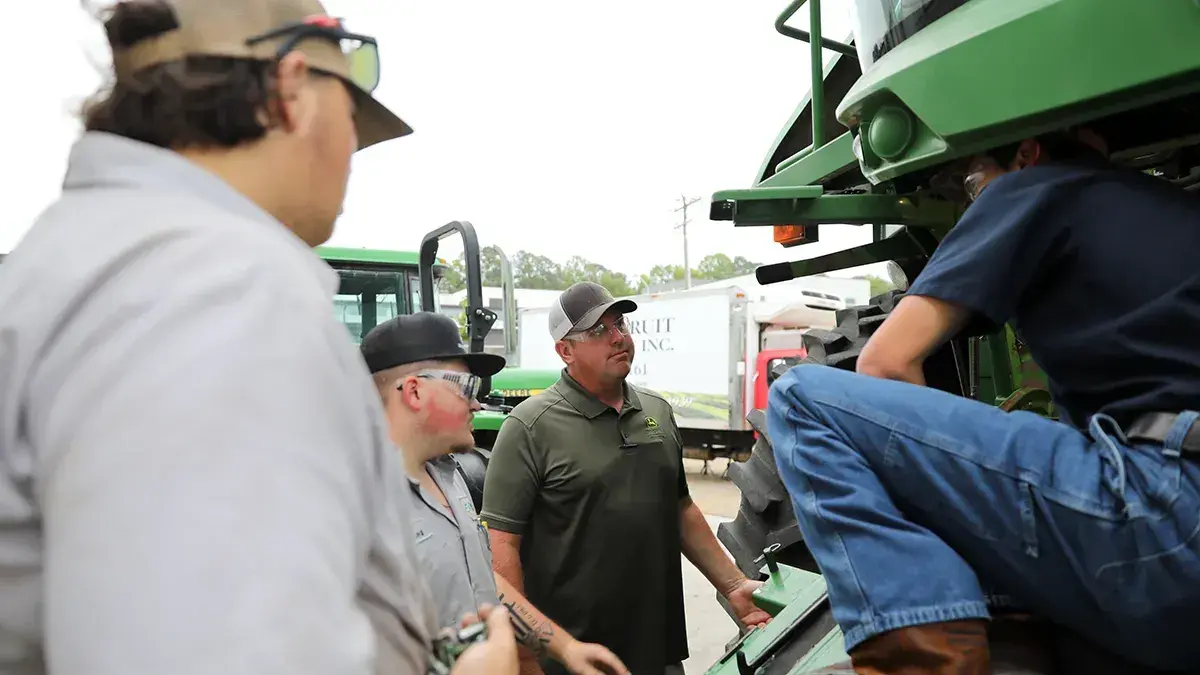
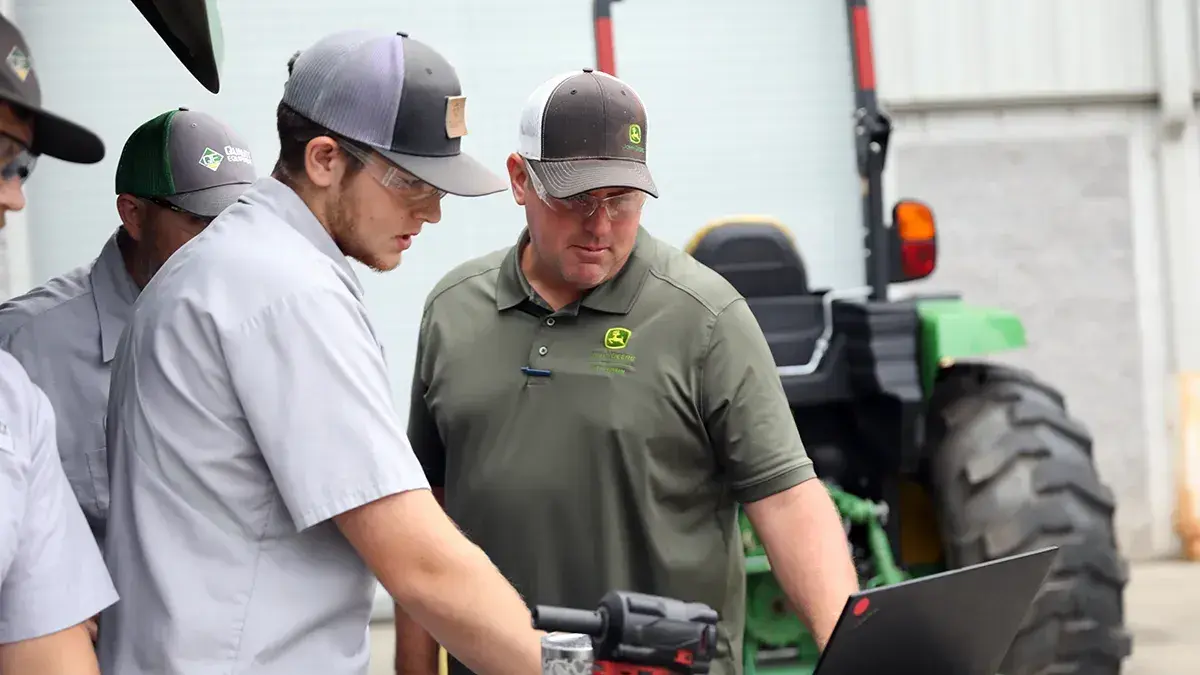
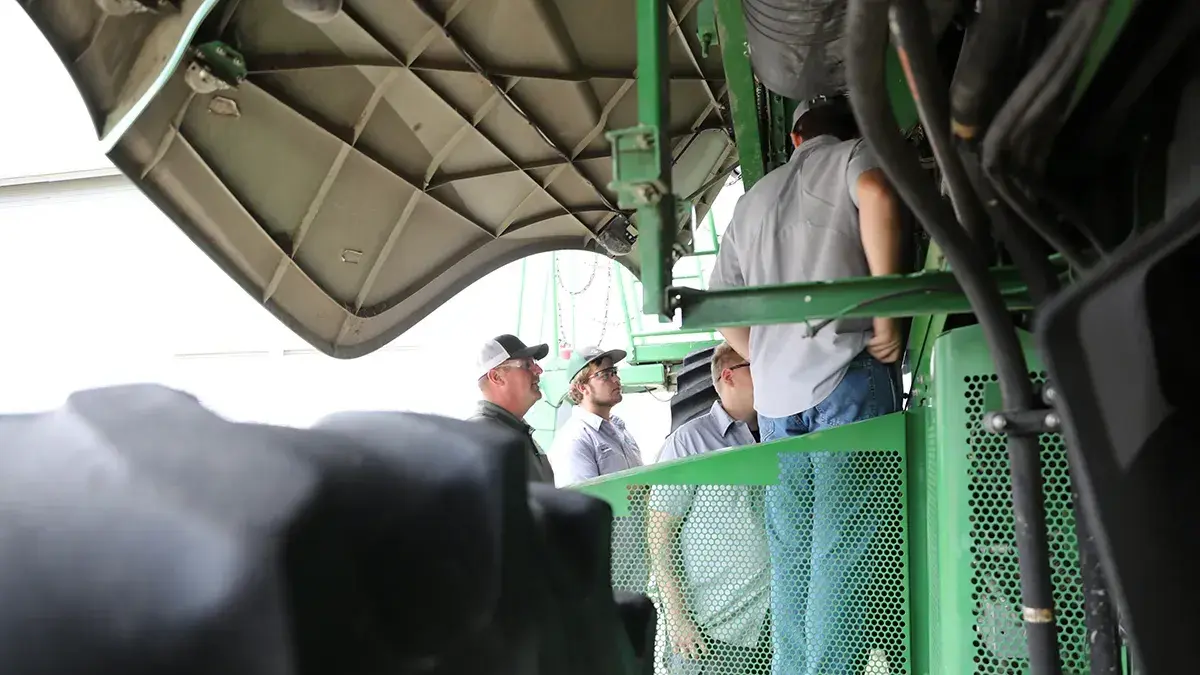
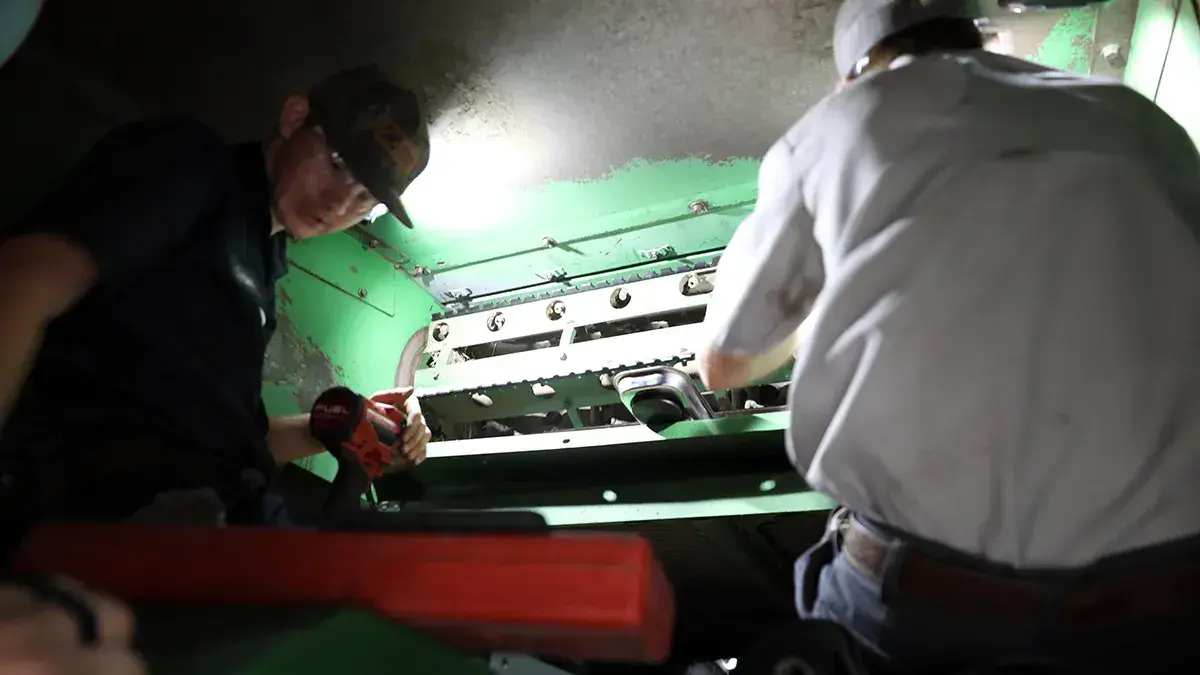
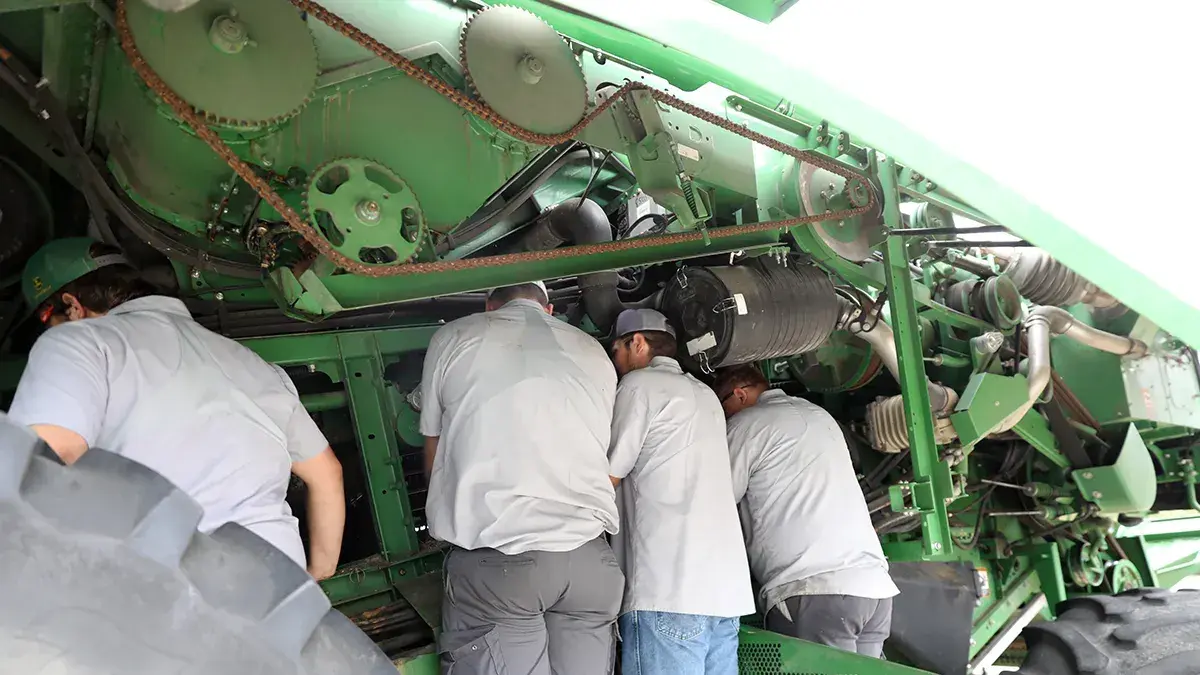
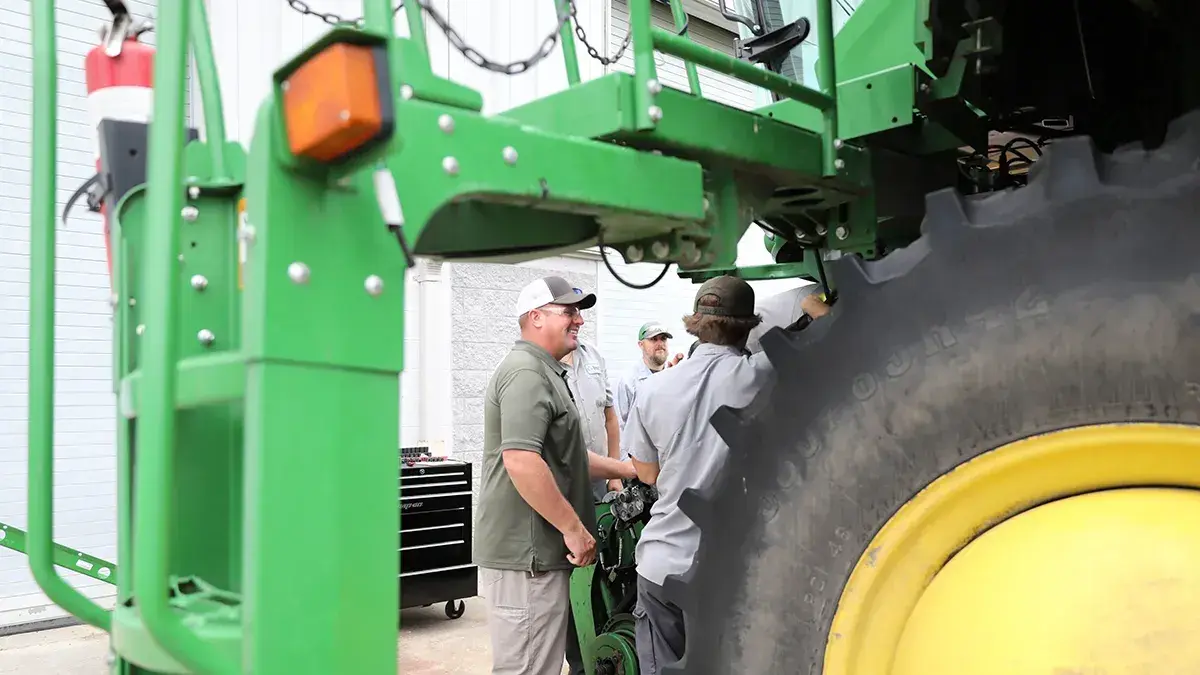
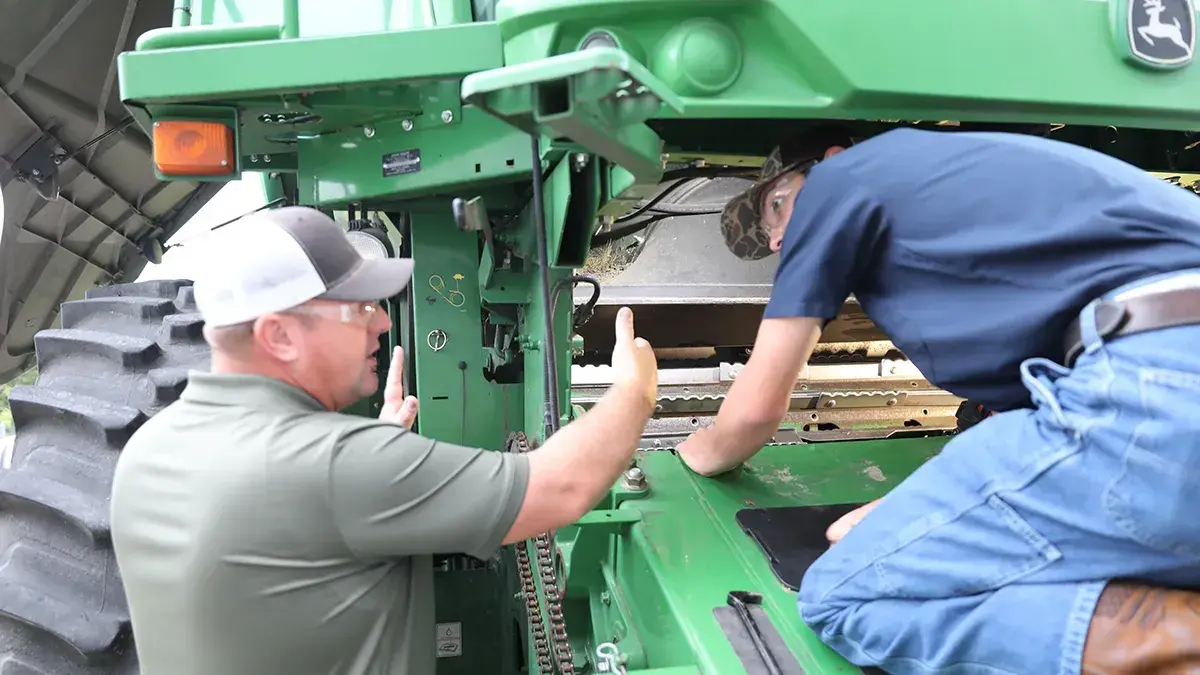
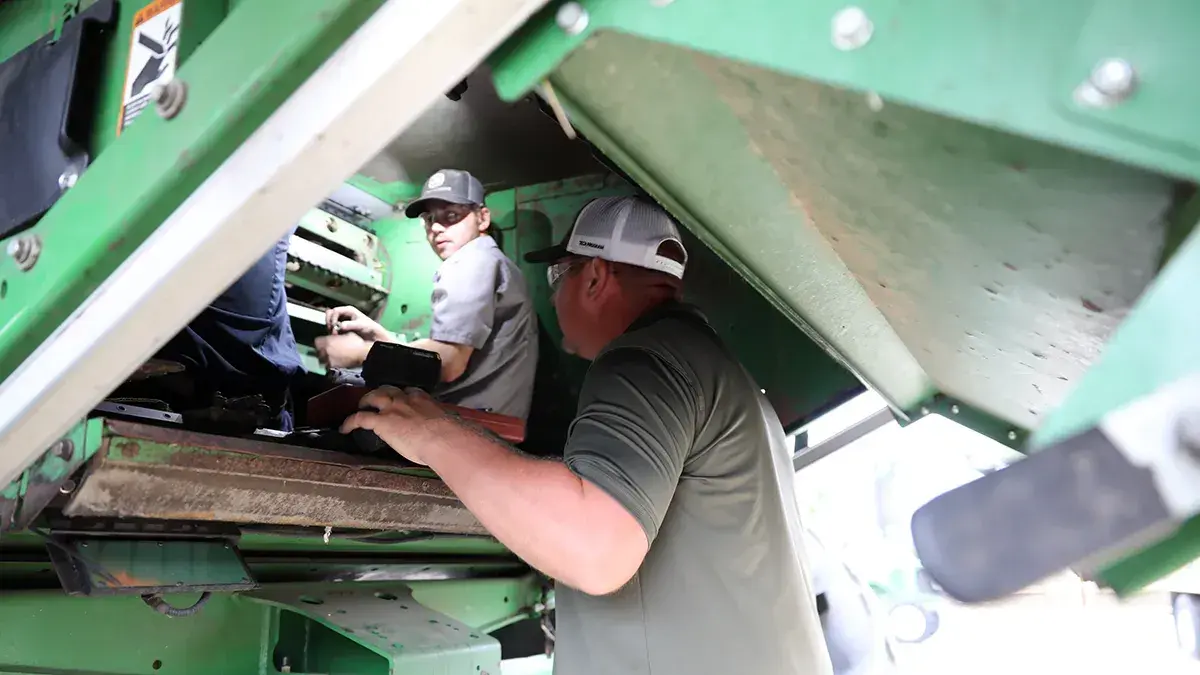
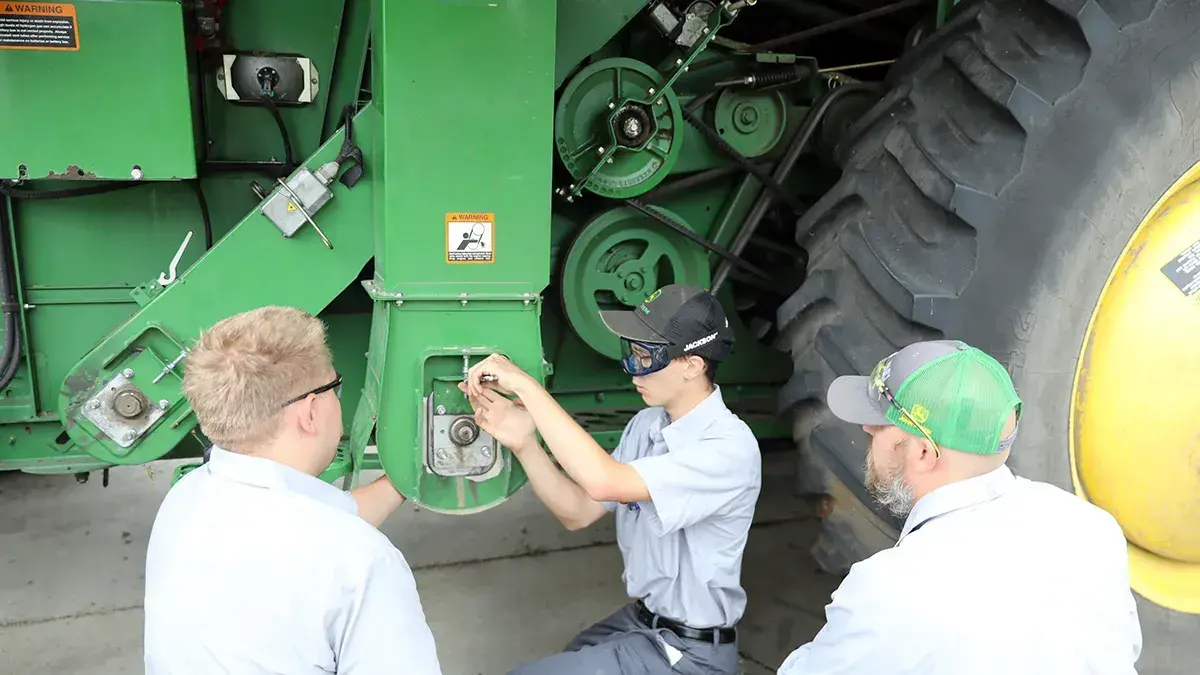
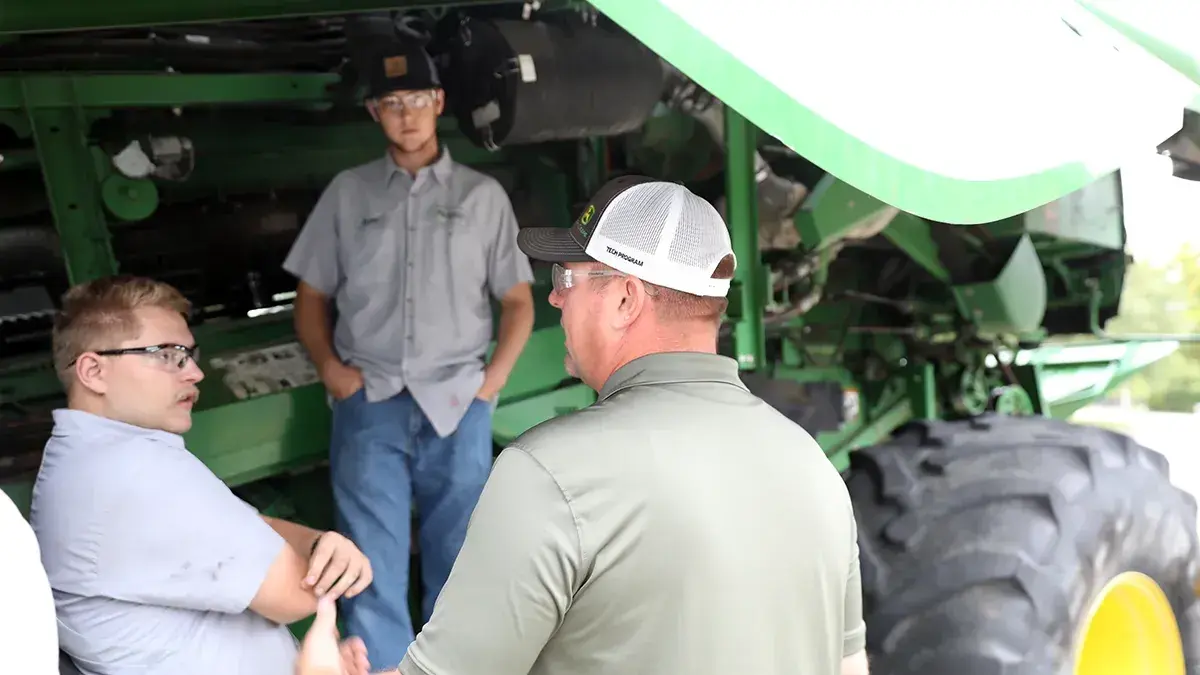
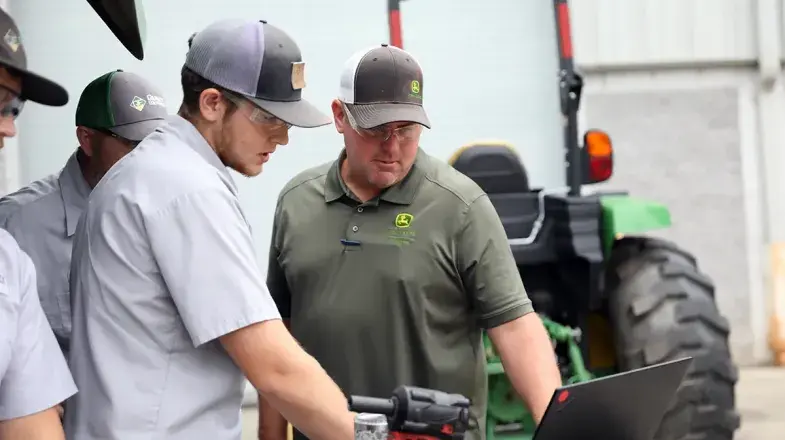
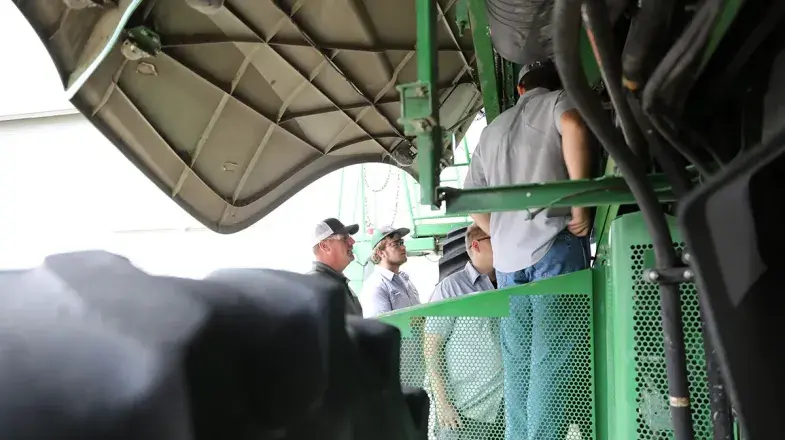
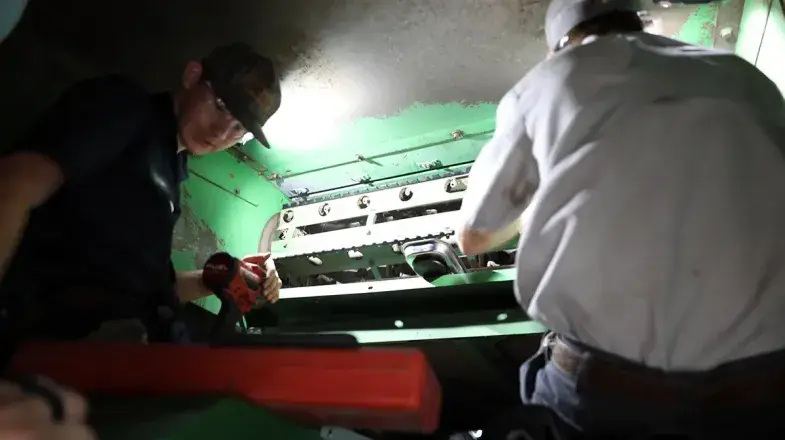
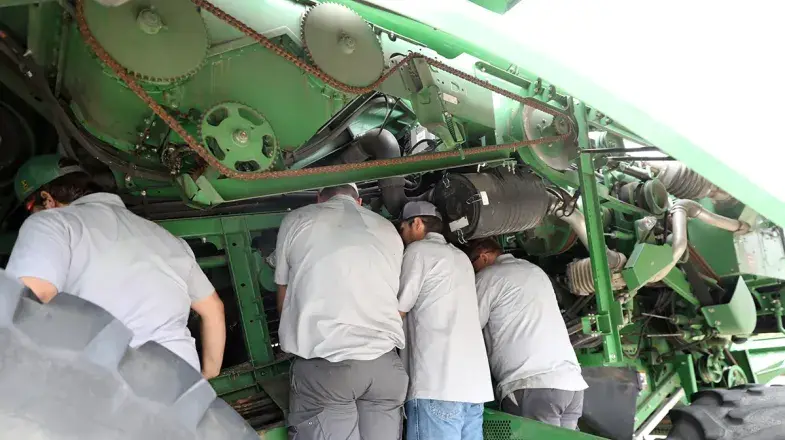
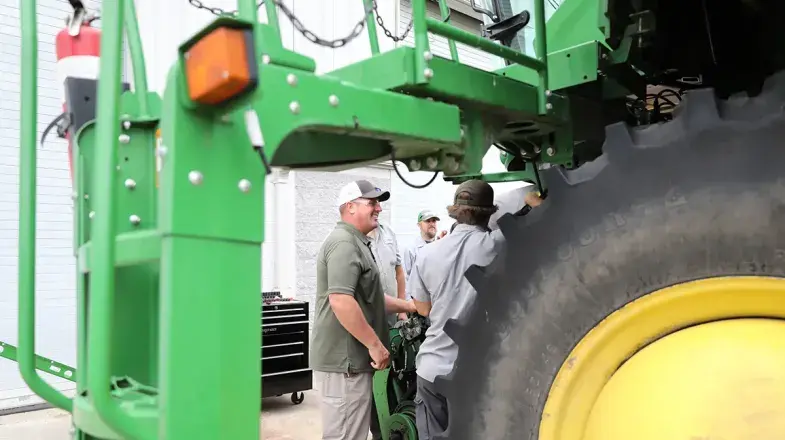
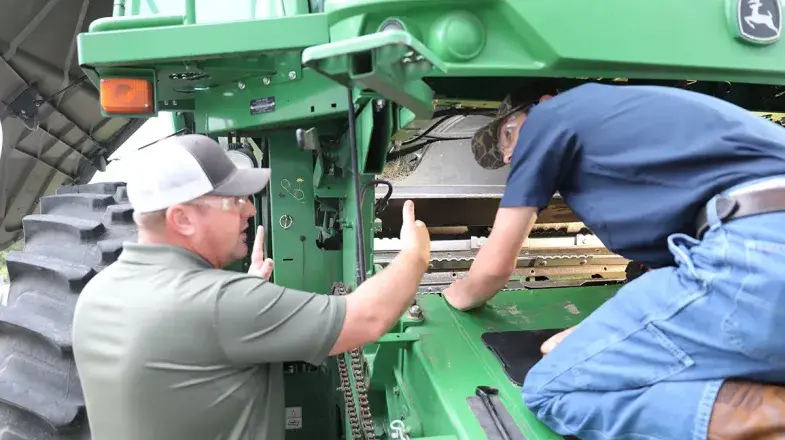
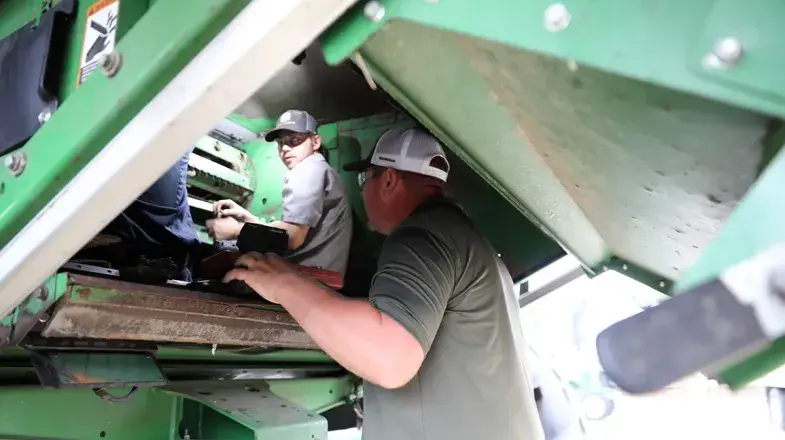
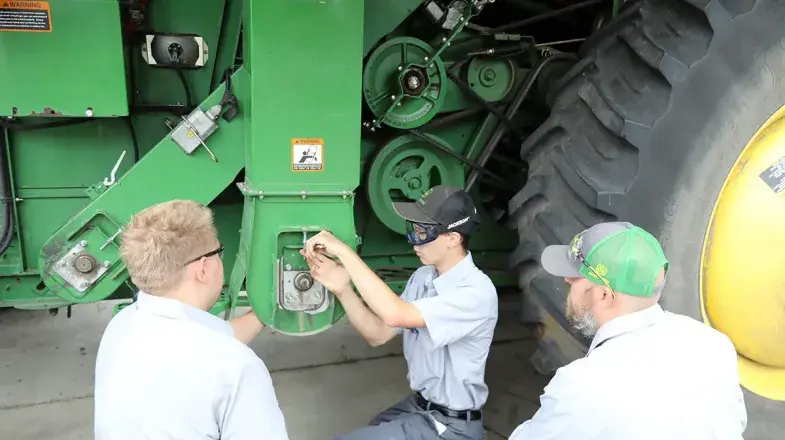
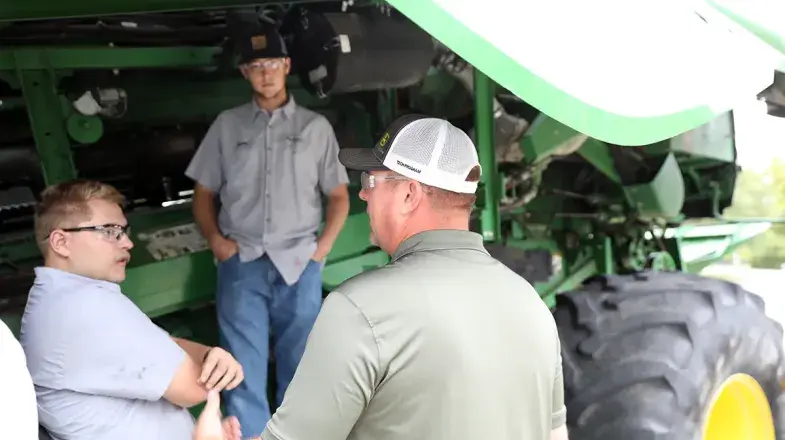
As the sun climbed higher in the sky and the temperature soared into the 90s, more than a dozen Agricultural Systems Technology students clambered over and inside a John Deere combine, replacing damaged and worn parts.
At about 15 feet tall, 30 feet long and weighing nearly 20 tons, the massive combine is too large to fit in the shop on Southern Wake Campus. That means students had work outside in the scorching heat to get the hands-on training they need.
"They'll have to repair equipment in the field in these types of conditions," Assistant Professor Chris Keeler said. "It's better that they learn now if this is really what they want to do."
Still, Keeler offered some relief and set up a large box fan near the front of the combine.
"I brought you some air conditioning," he says with a smile. "Don't say I never did anything for you."
To these students, Keeler does exactly what they need as they prepare for careers as John Deere technicians. He even halted work on the combine mid-morning so they could spend the rest of the day inside on classroom instruction.
"He treats us like adults," said Ayden Davis. "He knows we're going to mess up, but he gets us in the habit of fixing our own mistakes."
"He's not going to give you the answer," agreed Carter Gee. "He'll let you figure it out first."
"You learn more from your mistakes than if you're perfect from the get-go," Keeler said, noting that students "perk up" and listen closely whenever he describes overcoming mistakes he has made.
The Vermont native says he became interested in agriculture and farm equipment early on, helping out on his grandparents' dairy farm whenever he visited. After serving in the Air Force for six years, he returned to Vermont and earned an associate degree in diesel technology while also working as a technician for a Volvo Construction Equipment dealer.
When his wife tired of New England winters and asked to move south to be closer to her family, the combination of skills Keeler picked up on the family farm, in the military, in school and on the job helped him land a position with East Coast Equipment, a John Deere dealer in Nash County.
He spent much of the next decade driving to farms across eastern North Carolina and southern Virginia, repairing machines that did everything from plant seeds and spray pesticides to harvest crops and bale hay.
"I had to learn a lot about how some of these machines work," he said, adding that he found it best to be honest with customers about how much he didn't know about farm equipment.
"I work for the John Deere dealership, so I'm supposed to know exactly what's going on," he said. "But nobody knows everything."
Keeler learned to ask farmers what the equipment was supposed to do and what it was doing instead, using that information to diagnose and fix the problem and get the machine operating again as quickly as possible.
"He's got both the dealer's perspective and the farmer's perspective." Gee said, noting equipment dealers want the job done right while the farmer just wants the machine back in the field quickly, regardless of how it's done.
"The manual tells you one way [to make repairs], but you develop your own technique and shortcuts over time," Keeler said. "Different things work for different people."
Working with farmers and learning the intricacies of various equipment over the years also gave Keeler a teacher's perspective. So, when Paige Kearns, the department head for Wake Tech's Heavy Equipment & Transport Technology programs, asked John Deere if a technician could walk students through different aspects of a combine, they sent Keeler.
Keeler says he enjoyed the experience so much – and Kearns says he was so impressed by the presentation – that the two men kept in touch. Kearns hired him for a permanent teaching position in 2021.
"I didn't want to be turning wrenches forever," Keeler said. "I like showing folks how things work, and I really like working with older students."
Wake Tech is one of only 18 community colleges nationwide to offer specialized John Deere training, where students spend two or three days a week in class and the rest of the week working at a Deere dealership. Most are hired by the dealerships immediately upon earning their Associate in Applied Science degrees.
The only other John Deere Tech programs on the East Coast are in southwest Georgia and upstate New York, so Wake Tech's program attracts students from several states. Gee, for example, drives in from Virginia, where he works at a James River Equipment dealership.
Keeler says the combination of classroom learning and dealership experience provides valuable preparation for students and their future employers alike.
"Dealerships get to spend more time with students, so they're happy," he said. "Students get exposure to equipment both here and on the job."