Events
AI Innovation Week Turns Exploration into Action
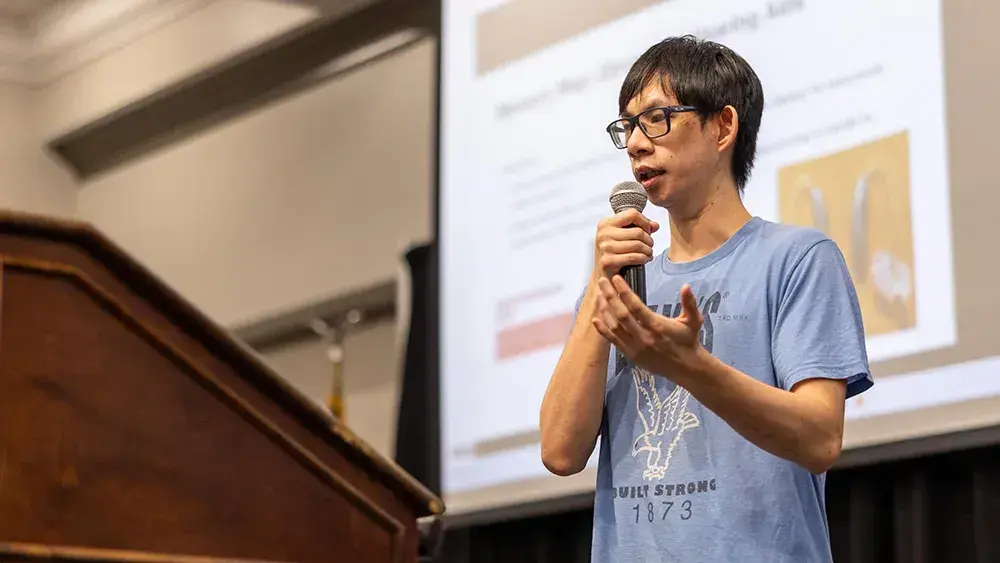
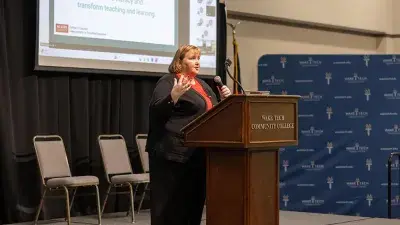
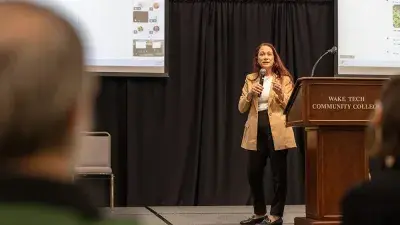
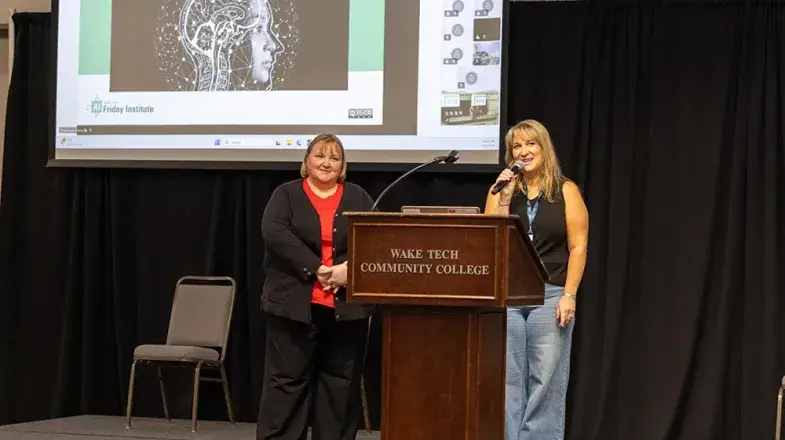
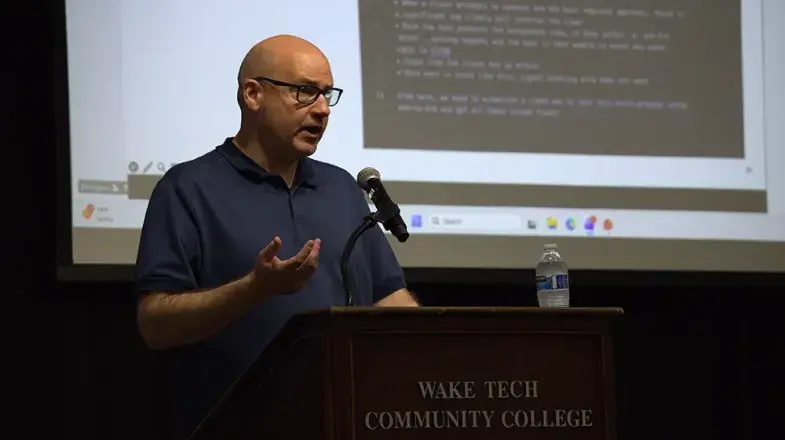
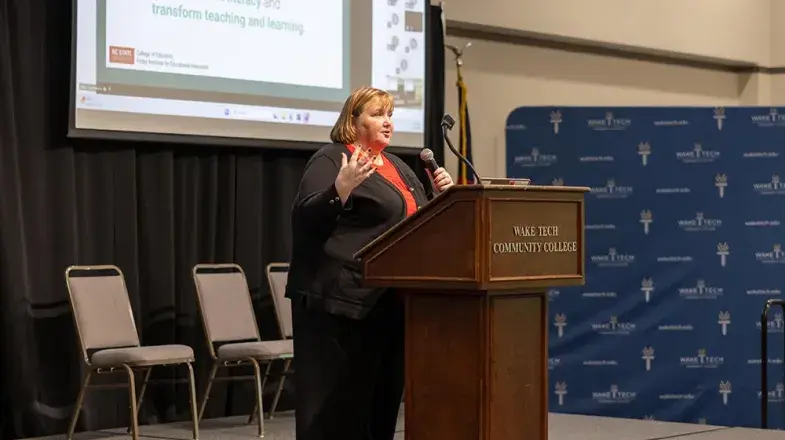
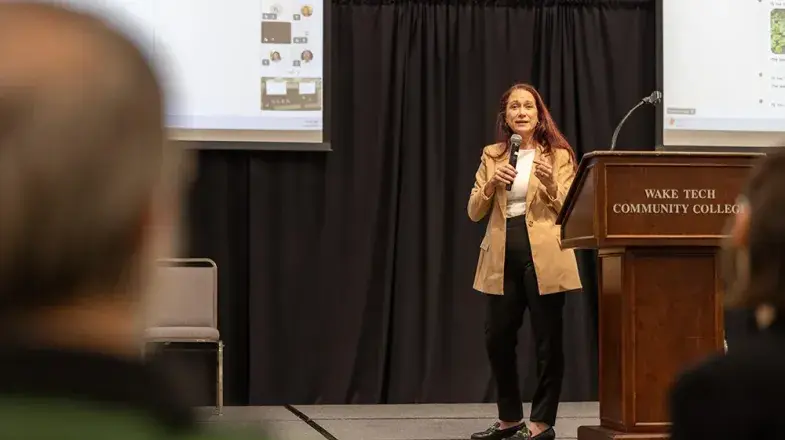
RALEIGH, NC (October 2, 2026) – Wake Tech's first AI Innovation Week brought students, faculty and staff together to explore how artificial intelligence is reshaping learning, teaching and work.
Presented by Wake Tech's Academic Technology & Support Services Department, the five-day event on Southern Wake Campus, featured presentations, conversations, student perspectives and hands-on learning. The goal was to help participants explore and experiment with AI, build confidence and identify practical applications for their work and learning.
"We want AI to feel less abstract and give students, faculty and staff opportunities to see what it looks like in practice, both here at Wake Tech and beyond," said Katie Surber, manager of Instructional Design & Development.
Sessions covered AI-supported teaching and learning, accessibility, AI agents, business grants, student thinking, STEM education and wellness. Faculty and staff shared their own experiments, from developing course guidelines and study aids to building evaluation rubrics and supporting student learning and critical thinking.
Featured speakers brought outside perspectives to Wake Tech. Bill Higgins of IBM presented "Transforming Development in the Age of AI," while Dr. Jacqueline Brown Smith addressed human-centered leadership in an AI-driven world. Mike Reilly and Becky Evans-Wilson of North Carolina State University's Friday Institute for Educational Innovation explored AI in agriculture and the development of AI policies with students.
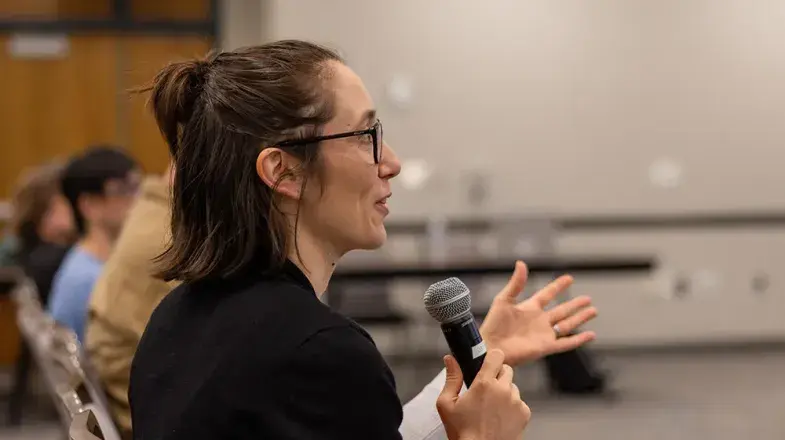
Students took a prominent role in discussions and the Student AI Showcase, demonstrating how they use AI to learn, solve problems and create. They also examined its effects on critical thinking and creativity, the risks of overreliance and its potential influence on their careers.
Their perspectives gave faculty and staff valuable insight into students' experiences with AI and the questions shaping its use.
"I use AI for just about everything in my daily life," said Akshat Vashishtha, who is pursuing an Associate in Arts degree. "I mainly use it for school to help organize my notes and help me understand concepts. AI will continue to advance, and I think it's important that we adapt and learn how to use it responsibly."
Participants also moved beyond presentations to experiment with AI through hands-on activities, tool exploration and connections with colleagues using AI across Wake Tech.
Together, the hands-on learning, outside expertise and campus perspectives advanced the week's broader purpose of helping the college navigate AI with critical thinking and human judgment.
"Success doesn't necessarily mean everyone leaves as an AI expert," Surber said. "I'd consider the event successful if people participate in the conversations, discover something useful, hear perspectives they may not have considered before and feel a little more prepared to navigate AI in their own work or learning."