College Leadership
Wake Tech President Testifies Before U.S. House Committee
Hearing Focuses on Efforts to Build an AI-Ready Workforce




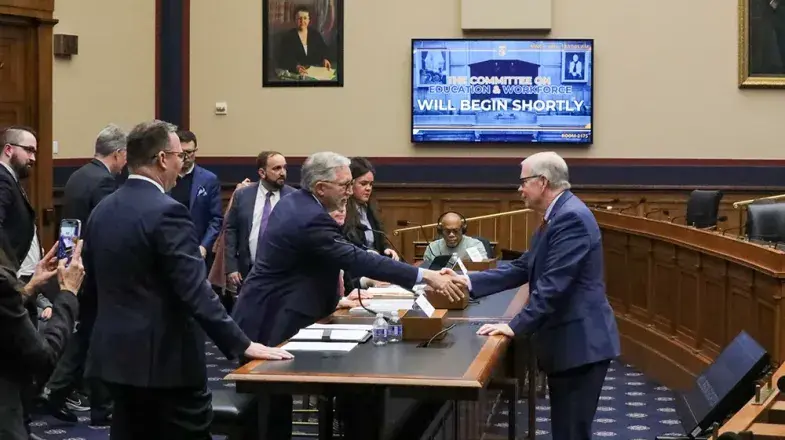
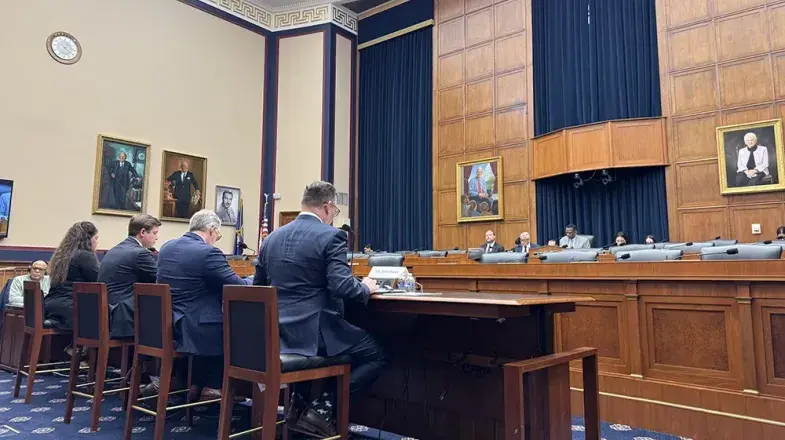

WASHINGTON, D.C. (March 4, 2026) – As artificial intelligence reshapes nearly every industry, Wake Tech is positioning itself at the forefront of workforce education transformation, a role highlighted when President Dr. Scott Ralls addressed members of the U.S. House Committee on Education and Workforce.
Instead of treating AI as a stand-alone discipline, Wake Tech is embedding it across programs that power the regional and national economy, from skilled trades and advanced manufacturing to public safety, health care and design. The goal is to ensure graduates are not only technically proficient but fluent in applying AI responsibly and effectively in real-world settings.
"Our approach to artificial intelligence is not to isolate it within a narrow set of degree programs. Instead, we are intentionally threading AI into programs across the college to strengthen student competitiveness in every field," Ralls said.
Wake Tech's strategy reflects the accelerating demand for AI-enabled talent in energy, infrastructure and automation-related fields. Programs such as electrical systems, HVAC, building automation, automotive technology and architectural design are expanding to meet employer needs tied to electrification and smart systems. This work includes Wake Tech's role as the lead college in a North Carolina pilot – part of a national effort funded by the Siemens Foundation – designed to strengthen the pipeline of skilled electricians through the Careers Electric™ program.
With a strong focus on employer alignment, Wake Tech is one of the most robust apprenticeship colleges in the nation, with more than 170 registered employer partners, including biotechnology leaders Amgen, CSL Seqirus, FUJIFILM Biotechnologies and Eli Lilly.
Inside the classroom, AI is already changing how students learn and practice their craft. Thousands of Wake Tech students are enrolled in courses where AI tools are integrated into instruction, guided by faculty participating in the college's AI Communities of Practice. Students can also earn AI digital badges alongside their degrees, signaling to employers that they possess applied AI literacy within their technical field.
In addition to academic instruction, Wake Tech is investing in advanced simulation environments for public safety and health care training, where AI-powered scenarios enhance realism and preparedness. The college is also leveraging AI to improve student support services through digital agents that expand access while allowing advisors and success coaches to focus on meaningful, one-on-one engagement.
As policymakers consider how education systems can keep pace with rapid technological change, Wake Tech's model underscores the critical role community colleges play in aligning education with evolving workforce demands — and in ensuring students can think critically about when and how to use AI and are ready for what comes next.
"For Wake Tech to remain an engine of economic opportunity, our students must be competitive in their knowledge and application of artificial intelligence," Ralls said. "That means preparing them to use AI as a powerful tool, not as a shortcut. We are committed to ensuring that students are prepared to meet that future with both technical skills and informed judgment."
Watch video of Dr. Ralls testimony before the House committee (YouTube, opens in new tab).